English
 简体中文
简体中文 Français
 日本語
日本語 한국어
한국어 Português
 Русский
 Español




Tel Number
181-3719-5600
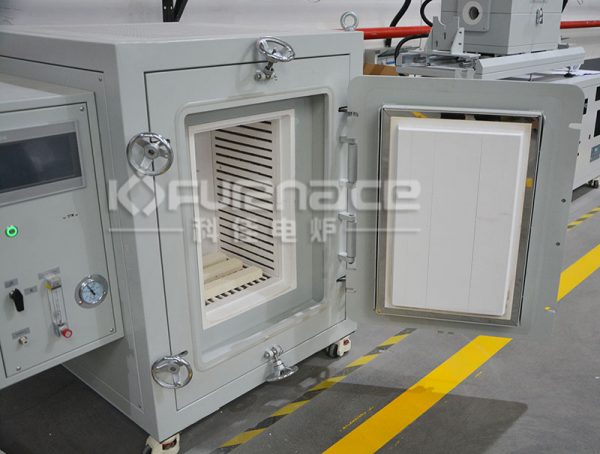
The customized furnace size of a box type atmosphere furnace revolves around key factors such as sample specifications, temperature field uniformity, atmosphere control requirements, equipment safety, and energy consumption. It is also determined based on the structural characteristics of the box type furnace’s “square cavity, multi-faceted heating”. Let’s take a detailed look below!
1. Based on sample size and loading capacity as the core criteria
This is the primary principle for customizing furnace dimensions, which directly determines the length, width, and height of the furnace.
Single sample size: Ensure that the sample (including crucible, holder, and other containers) can be completely placed into the furnace, and a safety gap of 50-100mm should be reserved between the sample and the furnace wall or heating element. This gap can not only prevent local overheating caused by contact between the sample and the furnace wall at high temperatures, but also ensure smooth circulation of the atmosphere in the furnace.
Batch sampling requirement: Calculate the total sample volume for a single experiment, and it is recommended that the total sample volume should not exceed 60% of the effective volume of the furnace. If the sample is too full, it will hinder the circulation of atmosphere, resulting in uneven distribution of atmosphere in the furnace and affecting the experimental results; At the same time, it will increase the heating load and prolong the heating time.
Special sample form: If the sample is in an irregular shape such as a long strip or block, the minimum side length of the furnace should be determined according to the maximum external dimensions of the sample. If necessary, non-standard cavities (such as elongated or raised) can be customized.
2. Optimize dimensions based on temperature field uniformity requirements
The uniformity of the temperature field in a box type atmosphere furnace is closely related to the size of the furnace and the layout of heating elements. The larger the furnace, the more difficult it is to maintain a uniform temperature field.
High precision experimental requirements, such as precision sintering of materials, crystal annealing, etc., require high temperature field uniformity (within ± 3 ℃), and it is recommended not to blindly pursue large furnaces. On the premise of meeting the sample requirements, priority should be given to selecting compact chamber sizes, while requiring manufacturers to adopt multi zone temperature control design (such as three side heating+independent temperature control) to improve temperature field uniformity.
Conventional experimental requirements: The requirement for temperature field uniformity is relatively low (± 5 ℃~± 10 ℃), and the furnace size can be appropriately enlarged, but it is necessary to confirm the temperature field test report provided by the manufacturer to ensure that the effective temperature zone covers the sample placement area.
Attention: The height of the furnace should not be too high, as it can cause a large temperature difference between the upper and lower parts. If the chamber needs to be raised, the manufacturer needs to add auxiliary heating elements at the top.
3. Match the atmosphere type and control requirements
Different atmospheres have different limitations on furnace size, especially corrosive, flammable, explosive, or high vacuum atmospheres, which need to be carefully considered.
Inert atmosphere (nitrogen, argon): With small size restrictions, it can be customized according to sample requirements, but installation positions for gas inlet and outlet need to be reserved to ensure that the gas can evenly replace the air in the furnace.
Reductive/flammable and explosive atmosphere (hydrogen, carbon monoxide): The furnace size should not be too large. The large cavity not only requires more inert gas for purging and replacement, increasing experimental costs, but also increases the risk of leakage; At the same time, a higher power gas path control system is required to ensure stable atmosphere concentration.
Corrosive atmosphere (chlorine gas, hydrogen sulfide): It is recommended to have a smaller furnace size. A smaller chamber is easier to maintain a stable corrosive atmosphere environment, and subsequent anti-corrosion maintenance of the chamber (such as spraying anti-corrosion coatings) is more cost-effective.
High vacuum environment: The vacuum pumping time of large-sized furnaces will be greatly extended, and higher requirements for the sealing performance of the furnace will be made (thicker furnace walls and higher quality seals need to be used), resulting in increased equipment costs. If high vacuum is required for the experiment, it is recommended to choose the smallest chamber size while meeting the sample requirements.
4. Balancing heating power, energy consumption, and heating rate
The size of the furnace is directly linked to the heating power and heating rate. The larger the size, the higher the required heating power and energy consumption.
High temperature experiment (above 1400 ℃): If customizing a large-sized furnace, it is necessary to simultaneously request the manufacturer to increase the heating power to avoid problems such as “insufficient power, slow heating up” or “inability to meet the temperature standards in the high temperature section”. For example, for a box furnace at 1600 ℃, for every 10L increase in furnace volume, the heating power usually needs to be increased by 3-5 kW.
Rapid heating demand: If the experiment requires a faster heating rate (such as 10 ℃/min or more), it is recommended to choose a small-sized furnace. The small chamber has a smaller heat capacity, faster heating rate, and more sensitive temperature response.
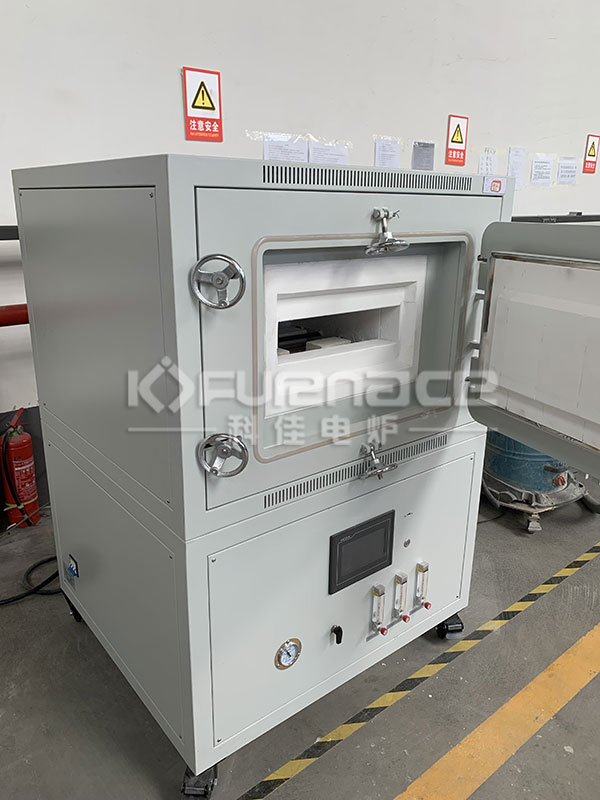
Customized furnace size and atmosphere furnace (click on the image to view product details)
5. Reserve thermal expansion and operation maintenance allowance
Thermal expansion allowance: The refractory material in the furnace will undergo thermal expansion at high temperatures. When customizing, the manufacturer is required to reserve expansion joints in the cavity structure design. At the same time, a gap of 20-30mm should be reserved between the sample bracket and the bottom of the furnace to avoid deformation of the bracket caused by thermal expansion.
Operation and maintenance margin: The opening angle of the furnace door should be large enough to facilitate the installation and retrieval of samples; The installation position of thermocouples should be reserved inside the furnace to ensure that the thermocouples can accurately monitor the temperature of the sample area.
Customized selection suggestions
Provide the manufacturer with detailed parameters of the sample (size, weight, sample container), experimental parameters (maximum temperature, temperature field uniformity requirements, atmosphere type, heating rate), and ask the manufacturer to provide a matching size scheme.Click to learn more Customized box type atmosphere furnaces! Or click on online customer service to learn more about product information!
Contact Information
E-mail: