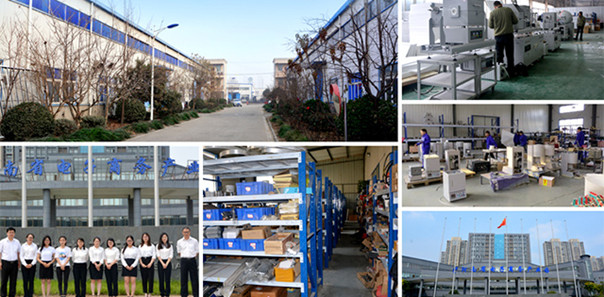
Vertical vacuum furnace
Time:2025-08-04 13:11:35 Click:0
Vertical vacuum furnace is an industrial equipment that achieves material heating treatment in a vacuum environment. Its core advantages are reflected in structural design, process control, application fields, and operation and maintenance. The following is a detailed introduction:
1. Structural design features
Vertical double-layer shell
The outer layer is a water-cooled interlayer, and the inner layer is made of high-purity alumina fiber or imported Morgan fiber, which combines efficient insulation and thermal shock resistance. It can withstand temperatures up to 1800 ℃ and supports rapid cooling and heating operations.
Optimization of vacuum system
Equipped with mechanical pumps and high vacuum units (such as oil diffusion pumps and Roots pumps), the basic pressure can reach 5 × 10 ⁻¹ Pa to 2 × 10 ⁻⁵ Pa, effectively suppressing oxidation and pollution.
The vacuum flange adopts a water-cooled design, combined with fluorine rubber O-ring sealing, to ensure vacuum stability under long-term use.
Modular pipeline and gas control
The inlet is equipped with a float flowmeter or mass flowmeter, and the outlet adopts a KF25 interface integrated four-way valve, supporting multiple gas switching such as oxygen, nitrogen, argon, hydrogen, etc., to meet different process requirements.
2. Advantages of process control
Accurate temperature regulation
Adopting a PID temperature control system with an accuracy of ± 1 ℃, it supports 30 stage temperature rise and fall program programming to achieve complex process curves (such as step heating, insulation, and rapid cooling).
The heating element can be selected from resistance wire, silicon carbon rod or silicon molybdenum rod, with a maximum temperature coverage of 1000 ℃ to 2000 ℃, and a heating rate of ≤ 10 ℃/min (some models can reach 50-100 ℃/min).
Rapid cooling capability
The quenching chamber integrates an oil stirrer and an airflow circulation device. The cooling fan drives the airflow to form a directional quenching airflow after being cooled by a heat exchanger, with a cooling rate of 50 ℃/min.
Some models are equipped with lifting platforms, allowing samples to quickly enter the furnace for heating or leave the furnace for gas cooling, shortening the process cycle.
Atmosphere flexibility
Supports vacuum, inert gas (Ar/N ₂) or reactive gas (H ₂, C ₂ H ₂) environments, suitable for processes such as carburizing, nitriding, and reduction, to avoid high-temperature oxidation of materials.
3. Application area coverage
New energy manufacturing
Sintering of lithium battery electrodes (300-1100 ℃): Optimizing heating conditions to improve material specific capacity and cycle life.
Annealing of photovoltaic silicon wafers: eliminating processing stress and improving photoelectric conversion efficiency.
Metal Refining and Heat Treatment
Powder forming and sintering of refractory metals (tungsten, molybdenum): By using a rotating stirring mechanism to improve purification efficiency, the production cycle is shortened by 30%.
Aerospace component processing: Supports vacuum heat treatment of large-sized components, with a larger maximum furnace load for workpieces.
Semiconductors and Electronics
Annealing and sintering of silicon chips: ensuring the stability of semiconductor device performance.
PECVD/CVD coating: Preparation of silicon thin films, metal thin films, etc. for use in integrated circuits and solar cells.
Research and development of new materials
Research on the phase transition law of materials: observing the crystal growth mechanism through precise temperature control.
Ceramic material sintering: improves density and hardness, applied in the manufacturing of ceramic tiles and vessels.
4. Convenience of operation and maintenance
Automated control
Microcomputer fully automatic control, supports automatic stop at the end of program operation, no need for duty.
The PLC touch screen retains historical data for easy process analysis and optimization.
Modular maintenance
Key components such as heating elements and insulation layers are designed for quick disassembly, reducing replacement time by more than 50% compared to horizontal furnaces.
The circulating water cooling system is equipped with a water cut-off sound and light alarm, which automatically cuts off the heat source to prevent equipment damage.
Security protection design
Install protective covers around the furnace body to prevent high temperature heat radiation from posing a danger to operators.
The observation window and temperature measuring instrument display the real-time status of the sample to ensure process controllability.

Inquiry
Please leave a message here. We will reply you in 24 hours.

 English
 简体中文
 Français
 日本語
 한국어
 Português
 Русский
 Español