English
 简体中文
简体中文 Français
 日本語
日本語 한국어
한국어 Português
 Русский
 Español




Tel Number
181-3719-5600
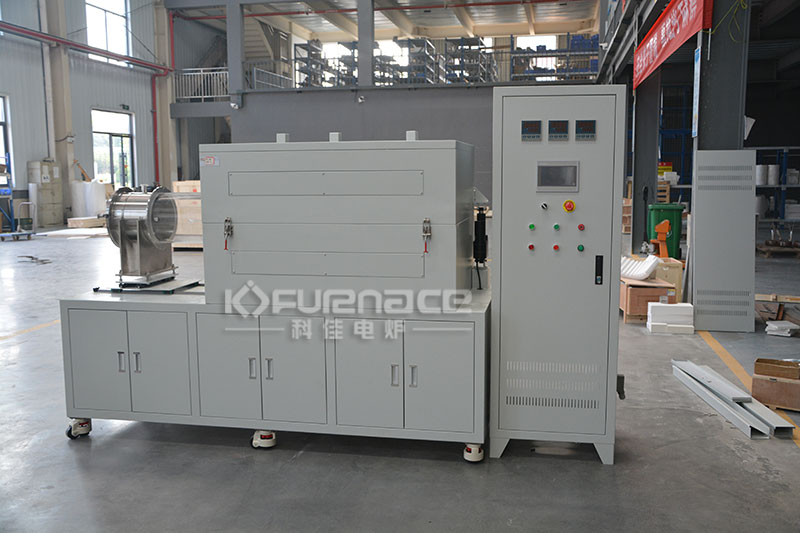
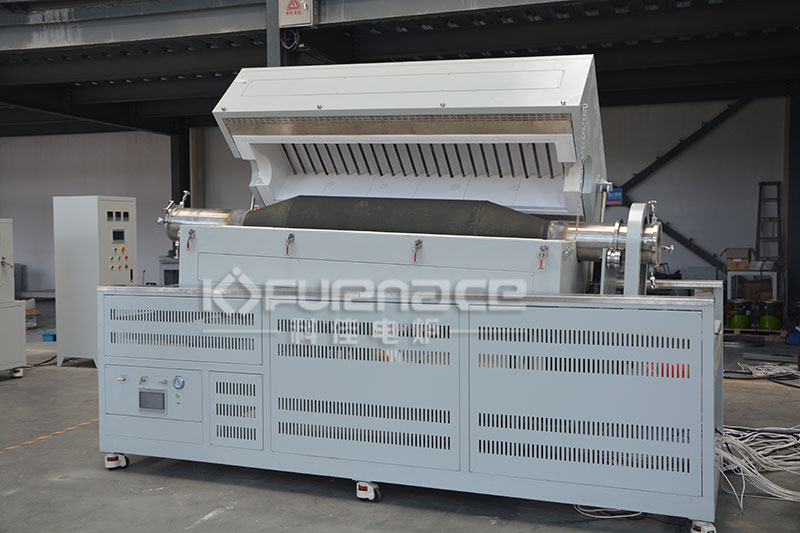
The battery material powder sintering tube furnace is a device designed specifically for sintering lithium battery materials and other powders. Its core function is to achieve high-temperature bonding of powder particles and form a dense crystal structure through good temperature and atmosphere control. Let’s take a detailed look at this tube furnace below!
1. Technical features
Good heating system
Using resistance heating (such as silicon carbon rod, silicon molybdenum rod) or resistance wire heating, heat is transferred through thermal radiation and convection, and the heating rate can reach 0-20 ℃/min (recommended 5-10 ℃/min), meeting the requirements of rapid sintering.
Optimization of heating element layout to ensure temperature uniformity within the furnace ≤ ± 5 ℃, avoiding material performance differences caused by local overheating.
Quick temperature control
Equipped with PID intelligent temperature control system, combined with high-precision thermocouples (such as N-type and S-type), the temperature control accuracy reaches ± 1 ℃, supporting multi-stage temperature curve programming (such as temperature rise, insulation, and cooling segmented control), adapting to different material and process requirements.
For example, the sintering of positive electrode materials for lithium batteries requires better control of temperature gradients to form stable crystal structures and improve battery performance and lifespan.
Flexible atmosphere control
Support vacuum environment (with a vacuum degree of up to 10 ⁻ Pa) and multiple gas configurations (such as nitrogen, argon, hydrogen) to prevent high-temperature oxidation of materials and meet special process requirements such as reduction and carburizing.
Gas flow control ensures the stability of the furnace atmosphere and improves the consistency of sintering quality.
Rotating design optimizes uniformity
Some models are equipped with a rotating system, which drives the furnace tube to rotate around the axis through a motor, causing the powder to roll inside the furnace, enhancing heat transfer and gas contact, avoiding local accumulation, and improving sintering uniformity.
Suitable for continuous production, it can feed and discharge simultaneously, improving production efficiency.
Safety and energy-saving design
Equipped with multiple safety devices such as over temperature protection, leakage protection, and vacuum monitoring to ensure the safety of equipment and operators.
By using good insulation materials (such as ceramic fibers) and air-cooled double-layer structure, the surface temperature is reduced and heat loss is minimized, which is in line with the concept of green production.
2. Application scenarios
Preparation of lithium battery materials
The synthesis and sintering of positive electrode materials (such as lithium iron phosphate and lithium cobalt oxide), by controlling temperature and atmosphere, form stable crystal structures, and improve battery energy density and cycle life.
Sintering of negative electrode materials (such as graphite and silicon carbon composite materials) to optimize pore structure, improve conductivity and charge discharge efficiency.
New material research and development
High temperature sintering of nanomaterials, ceramic powders, metal oxides, etc., exploring the properties and applications of new materials.
For example, the synthesis of carbon nanotubes and graphene requires better control of temperature and atmosphere to avoid structural defects.
Metallurgical Engineering
Sintering of metal powders, alloy annealing treatment, and reduction of metal oxides (such as hydrogen reduction of tungsten oxide to produce metal tungsten powder).
Densification treatment of hard alloys and refractory metal products to enhance material hardness and wear resistance.
other fields
Preparation of fuel cell electrolytes and electrode materials, precision annealing of glass to remove internal stress, high-temperature and high-pressure simulation of geological samples, etc.
3. Selection suggestions
Select temperature range according to process requirements
The sintering of lithium battery materials usually requires 1000-1200 ℃, and some special materials (such as high-temperature alloys) require higher temperatures. It is necessary to confirm the maximum temperature and temperature control accuracy of the equipment.
Select furnace body specifications based on sample size
Confirm the diameter of the furnace tube, heating length, and effective heating zone size to ensure that the sample is completely within a uniform temperature field.
For example, when processing 8-inch wafers, equipment with furnace tube diameter ≥ 200mm and heating zone ≥ 180mm needs to be selected.
Confirm the ability to control the atmosphere
Choose whether to support vacuum and multi-channel gas configuration according to process requirements.
For example, the oxidation process requires the introduction of O ₂, and the reduction process requires the introduction of H ₂, requiring the selection of equipment equipped with a mass flow controller.
Prioritize selecting models with rotation function
If you need to improve sintering uniformity or achieve continuous production, you can prioritize equipment equipped with a rotating system.
Pay attention to device security and usability
Confirm whether safety devices such as over temperature protection and leakage protection are equipped, and whether touch screen operation, program storage, and computer communication functions are supported to improve operational convenience.Click to learn more customized tube furnaces! Or click on online customer service to learn more about product information!
Contact Information
E-mail: