English
 简体中文
简体中文 Français
 日本語
日本語 한국어
한국어 Português
 Русский
 Español




Tel Number
181-3719-5600
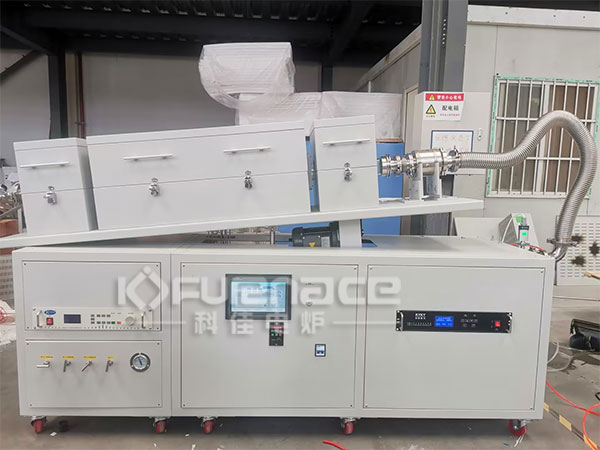
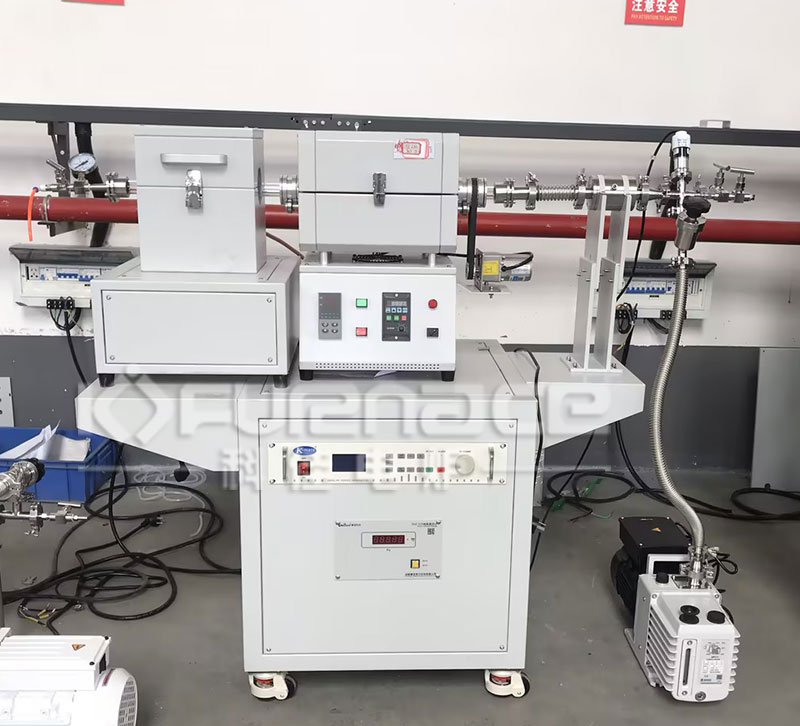
PECVD coating electric furnaces can be made into electrically rotating ones, and the rotating function has great advantages in specific application scenarios. Let’s take a detailed look below!
1. Technical implementation: The rotation function has been maturely applied
Design of Rotating Tilted Furnace
Some PECVD equipment, such as tubular PECVD experimental furnaces, have integrated rotation and tilt functions. Users can preset the furnace rotation speed (such as 1-25 revolutions per minute) or tilt angle (-10 ° to 30 °) through the control panel. For example, a certain model of rotary PECVD system uses a continuously variable speed motor to drive the furnace tube to rotate 360 °, combined with a quartz stopper to achieve powder flipping and ensure temperature field uniformity.
Sealing and Drive Technology
The rotating sealing part adopts magnetic fluid sealing technology, with a surrounding surface temperature of ≤ 45 ℃, which ensures the stability of the vacuum environment and avoids damage to the driving components caused by high temperature. The electric push rod can support the furnace body to tilt at a large angle, making it convenient for material loading and unloading.
2. Functional advantage: Improve film quality and experimental efficiency
Optimization of Temperature Field Uniformity
The rotation function enables the dynamic distribution of materials in the furnace, eliminating local overheating or uneven deposition problems. For example, in the preparation of nanofilm materials, rotation can promote sufficient contact between the reaction gas and the material, improving the uniformity of film thickness.
Enhanced process flexibility
Multi angle deposition: The tilted furnace can adjust the relative angle between the plasma and the material, optimize the direction of film growth, and is suitable for the preparation of anisotropic materials such as graphene.
Dynamic temperature control: Combining rotation and gradient temperature control functions, it can simulate complex heat treatment processes (such as temperature changes during charge and discharge cycles in battery material testing).
Compatibility Expansion
The rotating PECVD equipment is compatible with various deposition techniques such as ALD and magnetron sputtering, and can be used to prepare multi-layer structured thin films through a combination process, meeting the demand for high-precision thin films in fields such as semiconductors and photovoltaics.
3. Application scenario: Covering the needs of thin film preparation in multiple fields
photovoltaic industry
In solar cell coating, rotating PECVD can achieve uniform deposition of silicon nitride anti reflection film and improve photoelectric conversion efficiency. For example, a certain enterprise uses a rotating tilted PECVD equipment to increase the deposition rate of thin films while reducing the risk of substrate damage.
semiconductor manufacturing
Used for depositing dielectric thin films such as silicon dioxide and silicon nitride, the rotation function can reduce edge effects, ensure consistent thickness of thin films on the wafer surface, and meet process requirements.
Research on Nanomaterials
In the preparation of low dimensional materials such as quantum dots and nanowires, rotational PECVD achieves morphology controllable nanostructure growth by controlling the interaction between plasma and materials.
Optical component coating
The rotation function can optimize the refractive index distribution of optical thin films (such as anti reflection films and reflective films), improve the transmittance or reflectivity of devices, and is suitable for high-precision optical components such as lenses and lasers.Click to learn more PECVD devices! Or click on online customer service to learn more about product information!
Contact Information
E-mail: