English
 简体中文
简体中文 Français
 日本語
日本語 한국어
한국어 Português
 Русский
 Español




Tel Number
181-3719-5600
Vacuum tube furnace is a commonly used high-temperature heat treatment equipment in scientific research laboratories and new material research and development fields. It can complete sample high-temperature treatment in a vacuum or protective atmosphere environment, effectively avoiding material oxidation, decarburization, and air pollution at high temperatures. It is widely used in small-scale and pilot production in university laboratories, new energy, ceramics, powder metallurgy, metal materials and other industries. Many procurement personnel are unclear about the working logic and adaptation process of vacuum tube furnaces when selecting models. Below, we will explain the working principle of vacuum tube furnaces and the achievable heat treatment processes.
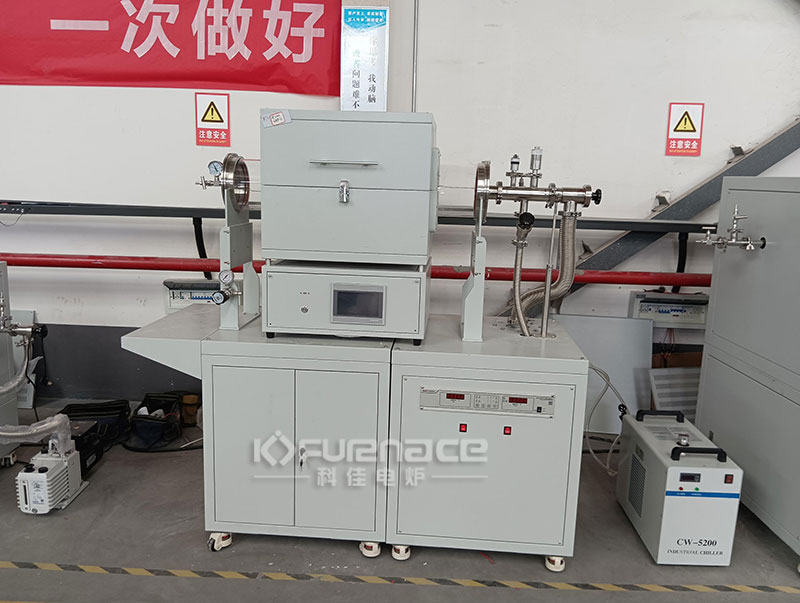
KJ-T1100-S00CK1W Large Diameter Vacuum Tube Furnace (Click on the picture to view product details)
1. Working principle of vacuum tube furnace
A vacuum tube furnace is mainly composed of sealed furnace tubes, heating furnace bodies, vacuum units, temperature control systems, sealing flanges, and inlet and outlet interfaces. Common materials for furnace tubes include quartz tubes, corundum tubes, graphite tubes, etc., and are divided into horizontal and vertical structures.
Its workflow is as follows:
(1). Place the material to be processed inside the furnace tube, seal both ends with flanges and sealing rings to form a sealed chamber;
(2). An external vacuum pump is used to extract air from the inside of the furnace tube, creating a vacuum environment that isolates oxygen and water vapor, preventing sample oxidation and discoloration at high temperatures; Alternatively, after vacuuming, protective gases such as nitrogen and argon can be introduced to achieve an atmosphere that protects the environment;
(3). The temperature control system controls the heating element to raise the temperature, and the heat radiation is conducted to the furnace tube to heat the internal materials; Support program heating, insulation, and cooling, more accurate control of heating rate and constant temperature time, uniform temperature in the temperature zone, ensuring consistency in heat treatment;
(4). After the process is completed, it should be naturally cooled or rapidly cooled with gas according to the process requirements. When the temperature drops to a safe temperature, the vacuum should be released and the processed sample should be taken out.
Simply put, the core of a vacuum tube furnace is “closed chamber vacuum pumping+more accurate temperature control heating”, which achieves high-purity heat treatment experiments that cannot be completed by ordinary air furnaces by isolating air.
2. What heat treatment processes can be achieved by vacuum tube furnace
(1) Vacuum sintering
Vacuum sintering is a commonly used process in vacuum tube furnaces. In a vacuum high-temperature environment, powder particles undergo diffusion and fusion, completing densification of the body and improving material strength and density.
Application: Sintering of ceramic powders, hard alloys, magnetic materials, metal powders, and lithium battery related powders. Vacuum environment can reduce impurities, improve the purity of sintered products, and avoid surface oxidation and peeling of samples.
(2) Vacuum annealing
Annealing is mainly used to eliminate internal processing stresses in materials, refine grains, improve material toughness, and reduce hardness.
Metal and alloy samples will slowly cool down after vacuum high-temperature insulation without oxidation discoloration. Suitable for annealing copper, titanium alloys, 3D printed metal samples, quartz glass, and alloy wires. After treatment, the surface of the workpiece is bright and does not require subsequent grinding and rust removal.
(3) High temperature calcination and pyrolysis
For various precursor powders, decomposition and synthesis reactions are carried out under vacuum or low pressure to remove crystal water and organic impurities inside the powder.
The new energy industry often uses this process for lithium battery materials, catalysts, rare earth oxides, and mineral materials, which can improve powder purity and complete solid-phase synthesis experiments.
(4) Degreasing and debonding (rubber stripping)
Many ceramic green bodies contain binders inside, which need to be decomposed and discharged at high temperatures. The use of a vacuum tube furnace, slow heating, and vacuum environment to evaporate and remove adhesive substances, to prevent cracking and bubbling of the body, is an important process for pre-treatment of ceramic and powder metallurgy bodies.
(5) Tempering treatment
After quenching, some metal materials can be tempered in a vacuum tube furnace to adjust their hardness and toughness.
(6) Atmosphere protection heat treatment
A vacuum tube furnace can not only be evacuated, but also introduce gases such as argon, nitrogen, hydrogen, etc. after vacuuming to achieve atmosphere heat treatment. It can be used for reduction treatment, inert atmosphere sintering, and is suitable for some special materials that are prone to oxidation when exposed to air.
Attention: Ordinary vacuum tube furnaces are not suitable for high-pressure processes, and specialized vacuum gas quenching furnaces are required for high-pressure gas quenching.
3. The main application industries of vacuum tube furnace
(1). University research laboratory: research and development of new materials, various small sample experiments of powders, ceramics, and metals;
(2). New energy materials: lithium battery positive and negative electrodes, catalysts, rare earth materials calcination and sintering;
(3). Powder metallurgy: sintering and annealing of hard alloys and magnetic powders;
(4). Electronic ceramic industry: experimental preparation of piezoelectric ceramics and alumina ceramics;
(5). New metal materials: Heat treatment of easily oxidizable alloys and refractory metal samples.
4. Selection Tips
(1). Matching temperature of furnace tube material: quartz tube generally ≤ 1200 ℃, corundum tube can reach 1600-1700 ℃, and graphite tube is selected for high temperature;
(2). The vacuum degree can be selected as needed, using a regular experimental mechanical pump, while high-purity materials require a molecular pump to achieve high vacuum;
(3). Confirm whether the process requires the introduction of gas and select corresponding gas path components;
(4). To distinguish between small-scale laboratory experiments and continuous production, a multi zone rotary tube furnace can be selected for mass production needs.
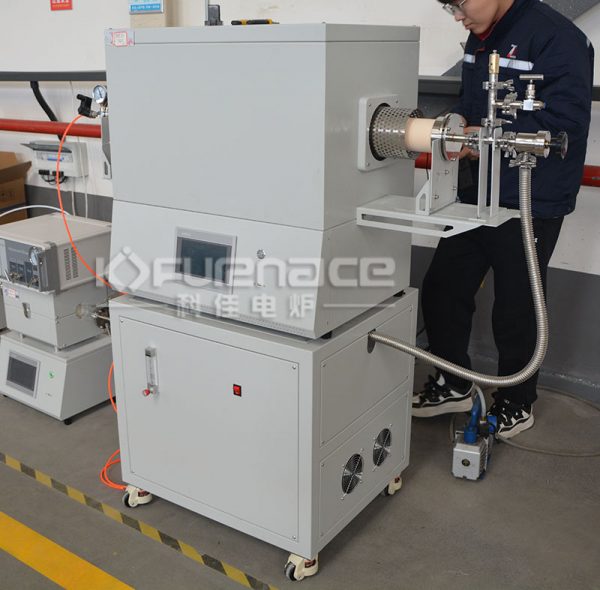
1600 ℃ Atmosphere Tube Furnace (Click on the picture to view product details)
Summary
The vacuum tube furnace relies on a closed vacuum chamber and more accurate temperature control to complete various processes such as sintering, annealing, calcination, debonding, and atmosphere heat treatment. Its advantage is to isolate air and ensure that the surface of the processed sample is bright and pure. It is a commonly used high-temperature equipment for new material research and development. If you have experimental process requirements, you can choose the appropriate specifications based on sample material, target temperature, and vacuum indicators, or support non-standard customization.Click to learn more customized tube furnaces! Or click on online customer service to learn more about product information!
next: the latest article
Contact Information
E-mail: