English
 简体中文
简体中文 Français
 日本語
日本語 한국어
한국어 Português
 Русский
 Español




Tel Number
181-3719-5600
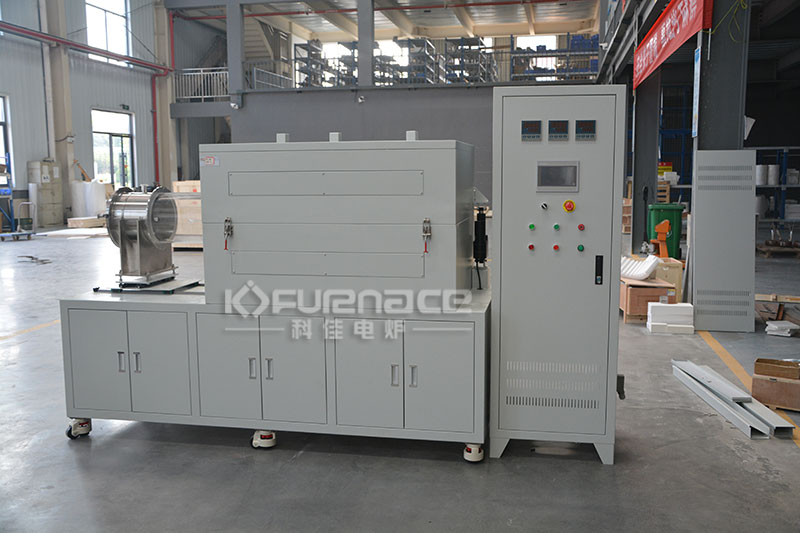
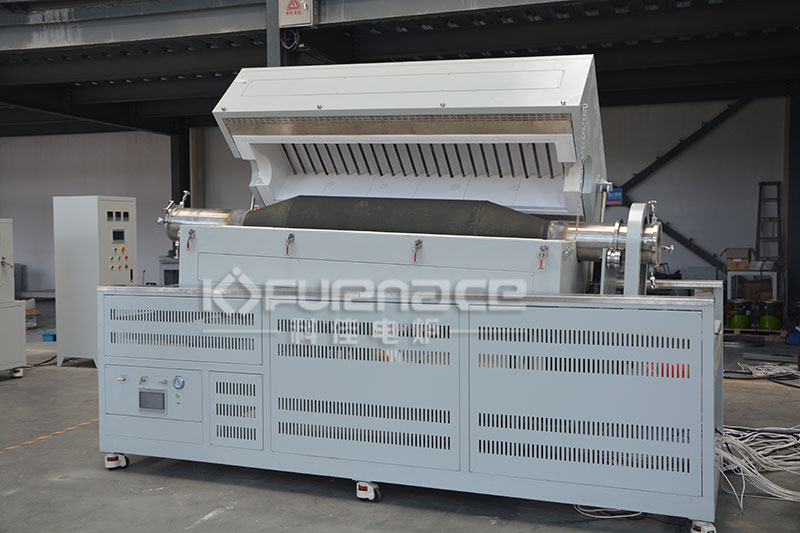
The multi temperature zone large diameter tube furnace combines independent temperature control and large tube diameter design to demonstrate greater advantages in material preparation, process optimization, and experimental efficiency, especially suitable for complex heat treatment, continuous production, and gradient functional material research and development scenarios. Let’s take a detailed look below!
1. Precise control of temperature gradient to meet complex process requirements
Collaborative operation in independent temperature zones
Multi stage temperature program: Each temperature zone can independently set the target temperature, heating rate, and holding time, supporting several stages of stepwise heating programs (such as 30 stages), achieving temperature control from room temperature to 1700 ℃.
Dynamic atmosphere coupling: Different gases (such as N ₂, Ar, H ₂, O ₂) can be switched during the heating, holding, and cooling stages, and temperature gradients can be used to control the material reaction pathway. For example, in the preparation of carbon nanotubes, the high-temperature zone (1200 ℃) catalyzes the cracking of carbon sources, while the low-temperature zone (800 ℃) controls the growth rate to avoid agglomeration.
Avoid thermal interference and pollution
Physical isolation design: The temperature zones are separated by insulation layers (such as alumina fibers) or water-cooled jackets to reduce heat conduction and ensure temperature independence of each zone. For example, in the annealing of semiconductor materials, the first zone (400 ℃) is stress relieved, the second zone (800 ℃) is crystallized, and the third zone (1200 ℃) is activated and doped, without interfering with each other.
Reduce sample transfer: Materials are processed in multiple steps within the same furnace tube to avoid oxidation or contamination in intermediate stages, especially suitable for atmosphere sensitive nanomaterials such as quantum dots and metal organic framework compounds.
2. Large diameter design enhances experimental flexibility and yield
Compatible with various sample sizes
Large scale substrate processing: The diameter of the substrate can reach up to Φ 200-300mm, supporting uniform heating of large-area substrates (such as 12 inch silicon wafers, ceramic plates) or elongated samples (such as carbon fiber bundles, metal strips), meeting industrial scaling needs.
Multi sample parallel experiment: Multiple samples (such as multi kilogram particles) can be placed simultaneously in a large tube diameter, and high-throughput screening can be achieved by controlling different reaction conditions in different temperature zones.
Optimize flow field and atmosphere distribution
Uniform gas flow: A large pipe diameter reduces the gas velocity gradient, ensuring that reaction gases (such as CO, H ₂ O) are evenly distributed on the sample surface and improving reaction consistency. For example, in methane reforming for hydrogen production, temperature gradient simulation of industrial reactor temperature distribution is used to optimize catalyst activity.
Reduce boundary effects: A large tube diameter keeps the sample away from the inner wall of the furnace tube, avoiding local overheating or cold spots, especially suitable for uniform deposition of thin film materials (such as perovskite solar cell layers).
3. Efficient energy saving and intelligent control
Gradient heating reduces energy consumption
Local heating strategy: Apply high power only to the temperature zone that requires high temperature, and maintain low power in the low temperature zone, which is more energy-efficient compared to a single temperature zone furnace. For example, in gradient sintered ceramics, the high-temperature zone (1600 ℃) rapidly densifies, while the low-temperature zone (1200 ℃) controls grain growth and reduces overall energy consumption.
Waste heat recovery and utilization: Waste heat from the cooling stage is recovered through a heat exchanger and used to preheat the intake or heat other equipment, further improving energy efficiency.
Automation and Remote Monitoring
PLC/SCADA system: integrates multi-channel temperature control instruments and industrial grade PLC to achieve automatic optimization of temperature curves, fault diagnosis, and data recording. For example, in continuous production, the system can automatically adjust temperature zone parameters to compensate for environmental temperature fluctuations.
Remote operation and alarm: supports mobile/computer monitoring, real-time push of temperature anomalies, gas leaks and other alarms, reduces manual inspection frequency, and improves experimental safety.
4. Application scenario expansion and industrial upgrading
Research and development of gradient functional materials
Thermoelectric material optimization: By controlling grain orientation through temperature gradient, gradient structures are prepared to improve thermoelectric conversion efficiency. For example, in Bi ₂ Te ∝ – based alloys, a temperature difference of 500 ℃ in the temperature range can induce grain orientation growth and increase ZT value.
Biomedical materials: In the preparation of hydroxyapatite coatings, the temperature gradient simulates the temperature distribution of human bones, optimizes the bonding strength between the coating and the substrate, and enhances the biocompatibility of implants.
Continuous industrial production
Carbon fiber carbonization line: Integrated pre oxidation (200-300 ℃), oxidation (600-1000 ℃), and carbonization (1000-1200 ℃) stages in a large-diameter multi temperature zone furnace, achieving a higher annual production capacity for a single line and increasing efficiency by multiple times compared to traditional intermittent furnaces.
Continuous catalyst regeneration: In the regeneration of petroleum cracking catalysts, the temperature gradient controls the burning rate, avoids catalyst sintering, and extends the service life.
Extreme condition simulation
Aerospace material testing: Simulate temperature gradients in space environments (such as -180 ℃ to 1200 ℃) to test the performance stability of thermal protection materials (such as ceramic based composite materials) under extreme temperature differences.
Nuclear waste treatment: In the glass solidification process, the temperature gradient controls the melting process, reduces the release of volatile nuclides, and improves treatment safety.
5. Selection suggestions
If dealing with large-sized samples, achieving continuous production, or developing gradient functional materials, priority should be given to multi temperature zone large diameter furnaces;
Pay attention to the isolation effect of the temperature zone (such as insulation layer materials, water cooling design), control accuracy (such as the number of thermocouples), and modular expansion capability;
Choose energy-saving configurations based on budget to reduce long-term operating costs.
Summary
The multi temperature zone large-diameter tube furnace has become a commonly used equipment in fields such as materials science, semiconductors, and new energy through temperature gradient control, large-sized compatibility, energy saving, and intelligent operation. Its advantages are not only reflected in the improvement of experimental efficiency and product quality, but also provide technical support for the preparation and industrial application of new materials.Click to learn more customized tube furnaces! Or click on online customer service to learn more about product information!
Contact Information
E-mail: