English
 简体中文
简体中文 Français
 日本語
日本語 한국어
한국어 Português
 Русский
 Español




Tel Number
181-3719-5600
Experimental rotary furnace is a widely used heat treatment equipment in the fields of materials science, chemical engineering, etc. Its core characteristics and working principles can be analyzed as follows:
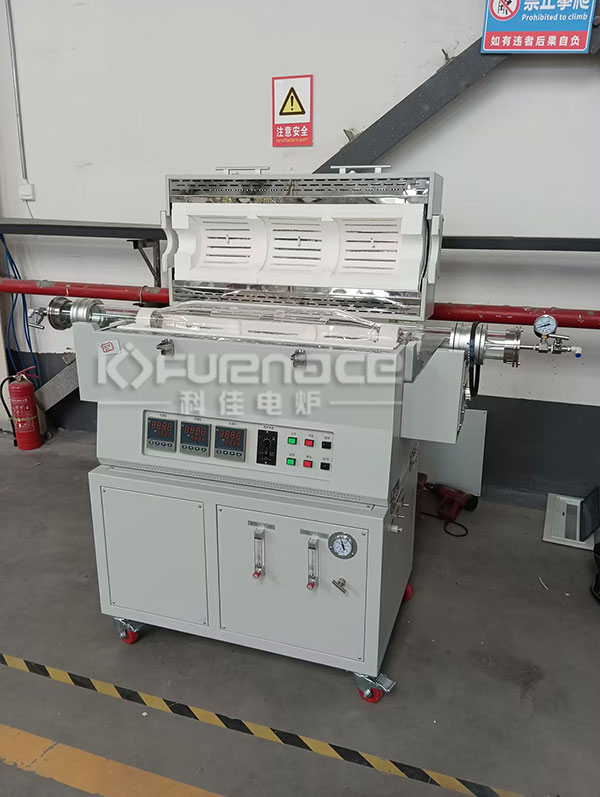
Customized vacuum rotary tube furnace (click on the image to view product details)
1. Core structure
Furnace body: The furnace body of a rotary furnace is usually cylindrical, placed horizontally or slightly inclined, and can rotate around its axis. The material and structure of the furnace body depend on the properties of the processed materials and experimental requirements. Common materials include stainless steel, quartz, alumina fiber ceramics, etc.
Heating system: The heating system of a rotary furnace usually uses electric heating and other methods to ensure that the temperature inside the furnace can reach and be maintained at the required level. The layout of heating elements and the design of temperature control systems are important for achieving better temperature control.
Transmission system: The transmission system is responsible for driving the rotation of the furnace body, usually composed of components such as motors, reducers, and transmission gears. The stability and reliability of the transmission system directly affect the operational efficiency and service life of the rotary furnace.
2. Working principle
The working principle of the experimental rotary furnace is mainly based on material heat treatment and rotary mixing. During the rotation of the furnace body, the material is subjected to the effects of gravity and centrifugal force, constantly rolling and mixing inside the furnace body. At the same time, the heating system heats the furnace body, allowing the materials to undergo heat treatment at high temperatures, such as calcination, roasting, pyrolysis, etc.
3. Core advantages
Uniform heating: Due to the rotation of the furnace body, the material continuously rolls and mixes inside the furnace, allowing heat to be evenly transferred to various parts of the material, avoiding local overheating or underheating.
Efficient mixing: The rotating mixing function enables the materials to be fully mixed in the furnace, improving the uniformity and efficiency of the reaction.
Flexible and controllable: The heating temperature, rotation speed, material residence time and other parameters of the experimental rotary furnace can be flexibly adjusted according to experimental requirements, meeting the needs of different materials and experimental conditions.
Wide applicability: Rotary furnaces are suitable for processing various materials, including solids, liquids, and gases, and can be applied to various heat treatment processes such as calcination, roasting, pyrolysis, reduction, etc.
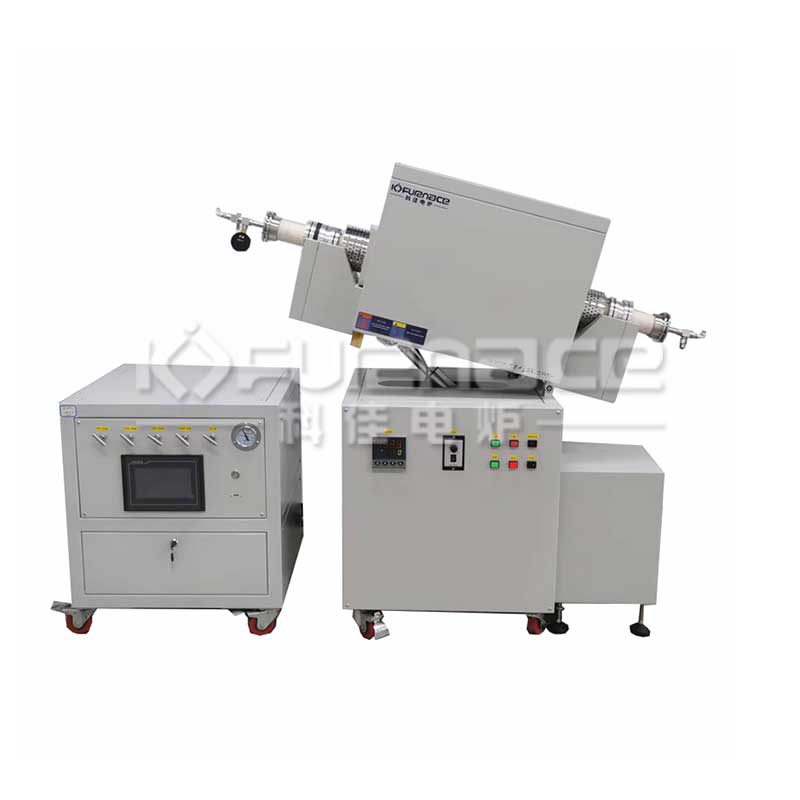
Rotating vacuum rotary tube furnace (click on the image to view product details)
In summary, experimental rotary furnaces play an important role in fields such as materials science and chemical engineering due to their unique structure and principles. Its core advantages lie in uniform heating, material mixing, flexibility and controllability, and wide applicability, making it a widely used experimental equipment in the preparation and research and development of new materials.Click to learn more customized tube furnaces! Or click on online customer service to learn more about product information!
Contact Information
E-mail: