English
 简体中文
简体中文 Français
 日本語
日本語 한국어
한국어 Português
 Русский
 Español




Tel Number
181-3719-5600
In the fields of thin film deposition, material research and development, semiconductor manufacturing, etc., vacuum PECVD tube furnace has become a commonly used equipment in scientific research laboratories and industrial production lines due to its coating process advantages. Compared with ordinary CVD tube furnaces, vacuum PECVD tube furnaces have the core characteristics of convenient temperature control, better atmosphere control, and dense and uniform film layers, which better adapt to precision needs such as low-temperature deposition and precision film preparation. They solve the pain points of traditional equipment such as loose film layers, cumbersome temperature control, and unstable atmosphere. Below, we will comprehensively analyze the vacuum PECVD tube furnace from the aspects of product advantages, core technologies, applicable scenarios, and selection points, to help researchers and procurement personnel better understand and choose with confidence.
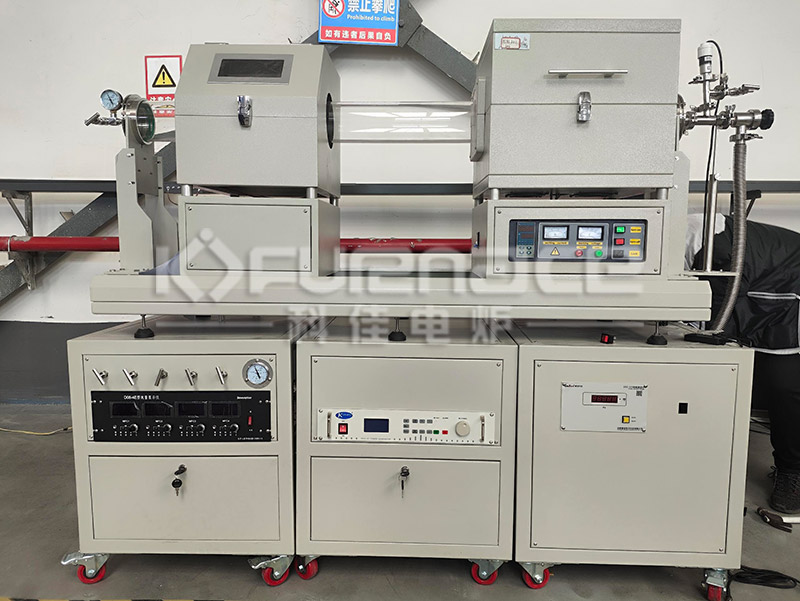
PECVD slide furnace commonly used for graphene growth (click on the image to view product details)
1. Core advantages of vacuum PECVD tube furnace: three highlights directly targeting industry pain points
Vacuum PECVD (Plasma Enhanced Chemical Vapor Deposition) technology is a low-temperature rapid deposition of material thin films using plasma activated reactive gases in a vacuum environment. On the basis of retaining the core advantages of PECVD technology, the vacuum PECVD tube furnace optimizes its structural design, forming three core competencies, which are also the key differences from ordinary tube furnaces.
a. Convenient temperature control: intelligent operation, better adapted to diverse processes
The temperature control accuracy directly determines the quality of thin film deposition. The vacuum PECVD tube furnace adopts an intelligent PID temperature control system, combined with a multi temperature zone heating design, which can achieve better temperature control in the range of room temperature to 1200 ℃, with temperature fluctuations of ≤± 1 ℃, meeting the deposition temperature requirements of different materials such as graphene, silicon dioxide, and silicon nitride. At the same time, the equipment is equipped with a visual operation panel and a programmable control system, supporting preset process curves. One click startup can complete the entire process of heating, constant temperature, and cooling without the need for manual real-time monitoring, greatly reducing operational difficulty and improving experimental and production efficiency. Whether it is small-scale laboratory research and development or industrial scale production, convenient and fast temperature control can be achieved.
b. Controllable atmosphere: convenient regulation to ensure the purity of the film layer
Vacuum environment and atmosphere control are the core of PECVD process. The vacuum PECVD tube furnace adopts a highly sealed furnace body structure, which can achieve a high vacuum degree of 10 ⁻²~10 ⁻³ Pa, effectively avoiding impurities such as air and moisture from entering the reaction system, preventing film oxidation and doping, and ensuring film purity. At the same time, the equipment is equipped with a high-precision gas flow control system, which supports the separate or mixed introduction of various reaction gases such as argon, nitrogen, hydrogen, etc. The flow regulation is controllable, and the atmosphere ratio and pressure can be flexibly adjusted according to different deposition process requirements to achieve control of film composition and thickness, solving the problems of unstable atmosphere and uneven film composition in traditional equipment.
c. Dense film layer: Low temperature deposition enhances product performance
Compared to ordinary CVD tube furnaces, vacuum PECVD tube furnaces use plasma activated reaction gases to achieve thin film deposition at lower temperatures (200-800 ℃), avoiding damage to substrates caused by high temperatures, and are particularly suitable for thin film preparation of thermosensitive materials. At the same time, the high activity of plasma can promote the full reaction of reaction gases, forming a dense and uniform film layer with strong adhesion, smooth surface, and no defects such as pinholes or cracks, greatly improving the electrical, optical, and mechanical properties of the film. Whether it is insulation film for semiconductor chips, electrode film for new energy materials, or functional thin films in scientific research fields, they can all meet higher application requirements.
2. Core technology of vacuum PECVD tube furnace: laying a solid foundation for equipment performance
A good vacuum PECVD tube furnace cannot do without the support of core technology. Its key technologies mainly focus on the three modules of vacuum system, heating system, and plasma system, which directly determine the stability and process effect of the equipment.
-Vacuum system: It adopts a molecular pump and mechanical pump linkage design, with fast vacuum pumping speed and stable vacuum degree. It is equipped with vacuum detection and protection devices, which can monitor the vacuum status in real time, avoid insufficient vacuum degree affecting the process effect, and prevent equipment damage.
-Heating system: The furnace tube is made of high-purity quartz tube, which is resistant to high temperature and corrosion. The heating element is made of resistance wire or silicon carbon rod, with a reasonable layout to ensure uniform temperature field inside the furnace, no local overheating phenomenon, and extend the service life of the equipment.
-Plasma system: Equipped with a high-frequency plasma generator, the plasma concentration can be adjusted, and the plasma power can be flexibly adjusted according to process requirements to activate reaction gases, improve deposition efficiency and film quality, and adapt to the deposition needs of different types of thin films.
3. Application scenarios of vacuum PECVD tube furnace: covering multiple fields of scientific research and industry
With the advantages of convenient temperature control, controllable atmosphere, and dense film layer, vacuum PECVD tube furnace is widely used in various fields such as scientific research, semiconductors, new energy, and new materials, and is suitable for various thin film deposition scenarios, including:
a. In the field of scientific research laboratories, universities and research institutes are used for the research and development of graphene, two-dimensional materials, nanofilms, and semiconductor materials, which can achieve the preparation and performance testing of various functional films and help promote scientific research projects.
b. In the field of semiconductor manufacturing, insulation films (silicon dioxide, silicon nitride) and passivation film deposition are used for semiconductor chips, as well as the preparation of metal electrodes to ensure the electrical performance and stability of chips.
c. In the field of new energy, electrode films and protective film deposition for lithium batteries and solar cells are adapted to improve the energy density, cycle life, and stability of batteries.
d. In the field of new materials, it is used for the preparation of functional ceramics, optical thin films, and superconducting materials to meet the performance requirements of precision materials.
4. Key points for selecting vacuum PECVD tube furnace: matching requirements, pit avoidance guide
When purchasing or selecting a vacuum PECVD tube furnace, it is necessary to consider the process requirements and usage scenarios, and focus on the following four points to avoid blind selection:
a. Clarify the process parameter requirements
Based on the deposition material, film thickness, and process temperature, determine the temperature range, vacuum degree, and plasma power of the equipment to avoid insufficient or excessive equipment parameters, resulting in cost waste or inability to achieve the process.
b. Pay attention to device stability and durability
Prioritize selecting equipment with good furnace sealing performance, durable heating elements, and stable vacuum systems. Check the material, manufacturing process, and testing reports of the equipment to ensure long-term continuous operation stability and reduce maintenance costs.
c. Adaptation operation and after-sales needs
Laboratory users can choose small stoves and pay attention to ease of operation; Industrial users can choose large, fully automatic models to improve production efficiency. At the same time, choose manufacturers with a comprehensive after-sales system to provide installation, debugging, operation training, maintenance and other services to ensure the normal operation of the equipment.
d. Balancing cost-effectiveness and customized needs
There is no need to blindly pursue higher configurations. On the premise of meeting process requirements, compare equipment parameters, quality, and price to choose products with higher cost-effectiveness. If there are special process requirements, you can choose manufacturers that support non-standard customization and tailor vacuum PECVD tube furnaces to meet your own needs.
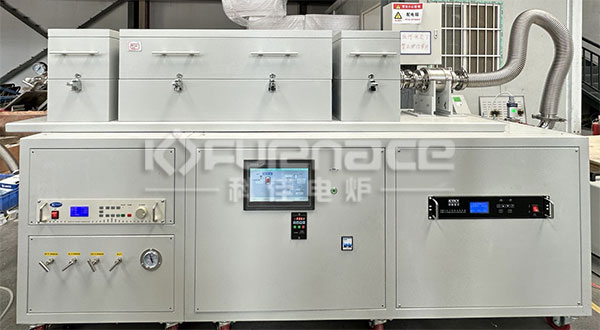
Rotating and tilting PECVD electric furnace (click on the image to view product details)
5. Summary
The vacuum PECVD tube furnace has the core advantages of convenient temperature control, controllable atmosphere, and dense film layer, which solves many pain points of traditional thin film deposition equipment and has become a commonly used equipment in the field of precision thin film preparation. Whether it is material research and development in scientific research laboratories or large-scale production on industrial production lines, choosing a vacuum PECVD tube furnace that is suitable for one’s own needs can not only improve the efficiency and quality of thin film deposition, but also reduce operation and maintenance costs, helping scientific breakthroughs and industrial upgrading.
In the selection process, by clarifying the process requirements, paying attention to the core parameters of the equipment and the strength of the manufacturer, we can better select the vacuum PECVD tube furnace with high cost-effectiveness and strong adaptability, which will safeguard scientific research and production.Click to learn more PECVD devices! Or click on online customer service to learn more about product information!
Contact Information
E-mail: