English
 简体中文
简体中文 Français
 日本語
日本語 한국어
한국어 Português
 Русский
 Español




Tel Number
181-3719-5600
As a core equipment for precision welding, hard alloy processing, radiator manufacturing, and aerospace component production, the selection of vacuum brazing furnace directly determines the welding quality, production efficiency, and usage cost. Many purchases only focus on price and appearance, ignoring key technical parameters, resulting in problems such as weak brazing, uneven temperature field, substandard vacuum degree, and high energy consumption in the later stage. Below is a detailed list of the core parameters that must be focused on when purchasing vacuum brazing, to help you choose the right one and avoid detours.
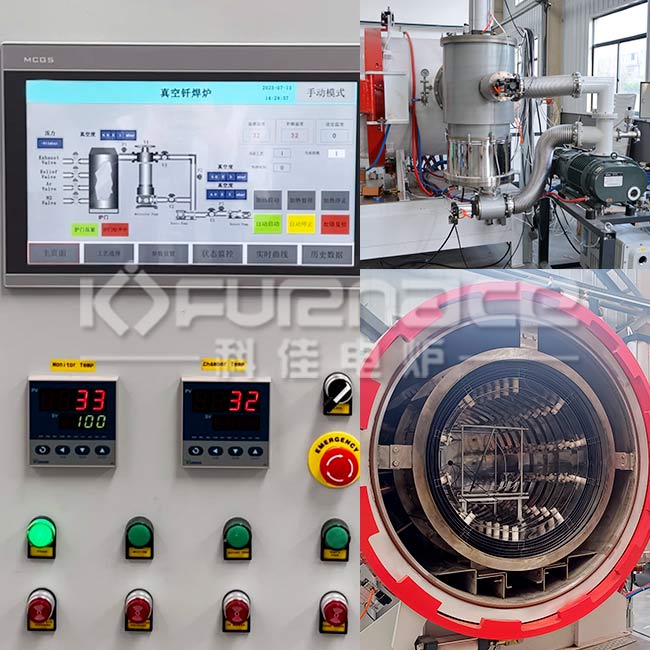
Metal insulation screen experimental vacuum furnace (click on the picture to view product details)
1. Vacuum level: the core indicator determining the quality of brazing
Vacuum degree is the most fundamental and critical parameter of vacuum brazing furnace, which directly affects the degree of surface oxidation of the workpiece, the smoothness of the weld seam, and the forming effect.
Conventional copper brazing and stainless steel brazing generally require a maximum vacuum degree of 10 ⁻ Pa level;
Aviation components and precision parts with extremely high surface quality requirements need to reach 10 ⁻⁴ Pa or even higher.
When making a purchase, one should not only look at the manufacturer’s labeled maximum vacuum, but also pay attention to the leakage rate, pumping speed, and holding time. Although inferior equipment can achieve high vacuum in a short period of time, its pressure holding capacity is poor, and the vacuum degree fluctuates greatly in actual production, which can easily cause oxidation and scrap of workpieces.
2. Maximum operating temperature and long-term use temperature
The temperature parameters of the vacuum brazing furnace should distinguish between the highest temperature and the long-term stable operating temperature.
The commonly used brazing process temperature ranges from 800 ℃ to 1300 ℃;
The brazing temperature for aluminum is relatively low, while the brazing temperature for hard alloys and ceramic metals is higher.
It is recommended to choose models with actual long-term operating temperatures 50-100 ℃ higher than the process temperature to avoid long-term full load operation of the equipment, reduce heating element aging, furnace lining deformation, temperature field drift and other problems. At the same time, attention should be paid to the heating rate and cooling control, and whether the heating and cooling curves are programmable, which directly affects the stress and deformation of the workpiece.
3. Uniformity of temperature field: avoid uneven flow of solder and local defects
Poor uniformity of temperature field is one of the main reasons for poor brazing, which can easily lead to poor local fusion, excessive temperature difference, and excessive deformation.
A good industrial grade vacuum brazing furnace typically has an effective heating zone temperature difference controlled within ± 3 ℃ to ± 5 ℃, and high-precision laboratory equipment can achieve higher standards.
When selecting, it is necessary to inquire with the manufacturer about the effective working area size and temperature field test report, and if necessary, require actual testing and verification. Especially for mass production of workpieces, uneven temperature field can directly lead to a significant decrease in yield rate.
4. Effective workspace size: matching workpiece size with furnace loading capacity
Many users only look at the external size of the device and ignore the effective heating area, resulting in the workpiece not being able to fit in or the furnace loading being very small.
Before procurement, it is necessary to clarify:
Maximum workpiece size
Single loading capacity
Shelves and trays occupy space
The effective working room of the equipment should be slightly larger than the actual workpiece, with reasonable gaps reserved to ensure hot air circulation and uniform temperature. Blindly selecting large equipment to increase investment and selecting small equipment that cannot meet production capacity are common misconceptions.
5. Furnace structure and furnace material
The common structures of vacuum brazing furnaces include single chamber, double chamber, horizontal, vertical, etc
Horizontal single/double chamber vacuum brazing furnaces are commonly used for small and medium-sized workpieces and mass production;
Long, large, and vertical workpieces are suitable for vertical structures.
When choosing, attention should be paid to the lining material and insulation layer structure, which determine the insulation effect, energy consumption, and equipment life. Common vacuum brazing furnace materials include alumina fiber, graphite, molybdenum screen, etc.
6. Vacuum system configuration: determining stability and maintenance costs
The vacuum system mainly includes vacuum pump units, vacuum valves, vacuum measuring instruments, etc., which are the “heart” of the equipment.
Low end equipment commonly uses simple pump sets, which have high noise, slow pumping speed, and are prone to malfunctions;
Regular manufacturers are equipped with multi-stage vacuum pump sets, which provide fast pumping, stable vacuum, and long service life.
At the same time, attention should be paid to whether it has inflation, partial pressure, and gas cooling functions. Many brazing processes require the introduction of inert gas protection or rapid cooling, and the lack of functions will directly limit the scope of use.
7. Temperature control system and degree of automation
Intelligent temperature control system is a standard configuration for modern vacuum brazing furnaces, with a focus on:
temperature control accuracy
Multi segment programming ability
Overtemperature alarm, overcurrent protection, vacuum interlock protection
Functions such as data recording and remote monitoring
Equipment with a high degree of automation can reduce manual operation errors, ensure consistency of products in each furnace, and is particularly suitable for large-scale production.
8. Cooling system and safety protection mechanism
The cooling rate after brazing affects the metallographic structure and hardness of the workpiece, and the equipment needs to have controllable cooling function.
At the same time, it is necessary to improve security protection:
Overtemperature power-off protection
Vacuum abnormality alarm
Abnormal water pressure and air pressure protection
Leakage and overload protection
Inadequate security configuration not only damages equipment, but also poses serious production risks.
9. Brand strength and after-sales service
Finally, and more easily overlooked, vacuum brazing furnaces are large precision equipment, and after-sales service is more important than price.
When choosing, prioritize:
Professional manufacturers, not traders
Having comprehensive installation, debugging, and training services
Stable supply of vulnerable parts
Timely response to faults
Low priced equipment often eliminates the need for research and development, quality inspection, and after-sales service, appearing to save money, but the losses from later maintenance downtime far exceed the price difference.
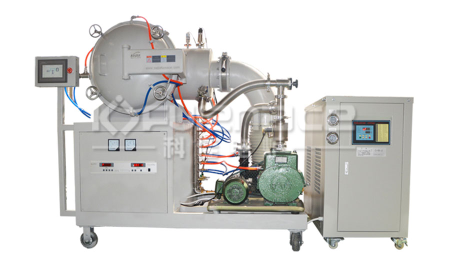
A commonly used high-temperature vacuum brazing furnace (click on the image to view product details)
Summary
When purchasing a vacuum brazing furnace, we must not only compare prices, but also consider the core parameters of vacuum degree, temperature, temperature field uniformity, effective working area, vacuum system, temperature control system, safety, and after-sales service. Only when the parameters match the process requirements, the equipment quality is reliable, and the after-sales service is guaranteed, can the brazing yield be truly improved, production costs be reduced, and stable and efficient production be achieved.Click to learn more customized vacuum furnaces! Or click on online customer service to learn more about product information!
Contact Information
E-mail: