English
 简体中文
简体中文 Français
 日本語
日本語 한국어
한국어 Português
 Русский
 Español




Tel Number
181-3719-5600
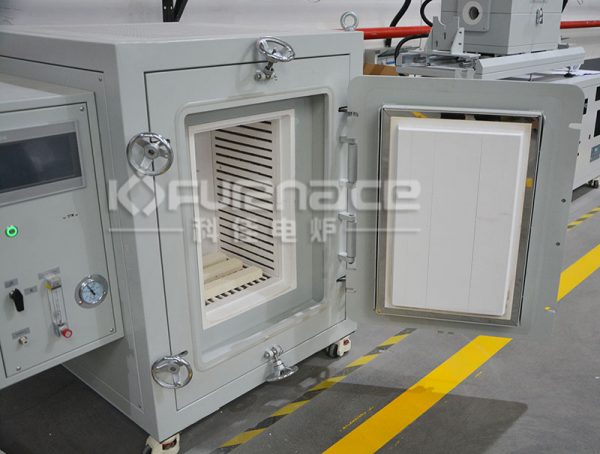
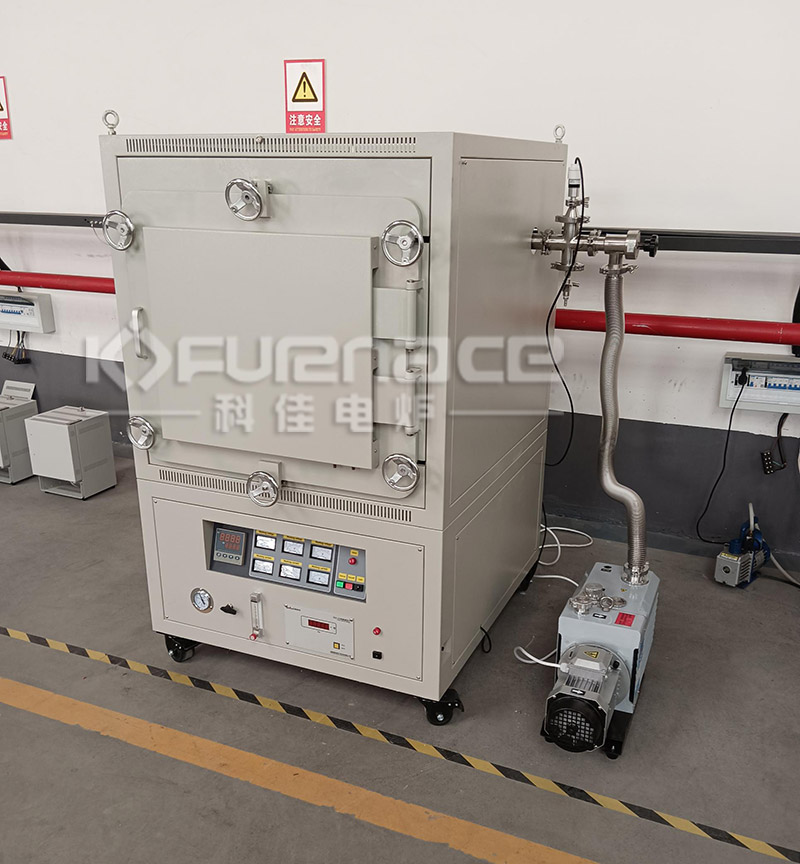
In scenarios such as new material research and development, laboratory small-scale sintering, and metal heat treatment, small box type atmosphere furnaces have become commonly used equipment for scientific research institutions and small and medium-sized enterprises due to their compact size, accurate temperature control, and controllable atmosphere. In 2026, with the increasing demand for refined heat treatment processes, the selection of small box type atmosphere furnaces should not only focus on price, but also on five core parameters. This can avoid process failures caused by low-end configurations and prevent cost waste caused by high-end configurations. Let’s take a detailed look below!
1. Temperature parameters: matching process, rejecting blind pursuit of high temperature
Temperature is the core performance of the atmosphere furnace, which directly determines the applicable process range. It is necessary to focus on the three major indicators of maximum working temperature, temperature control accuracy, and temperature field uniformity.
Maximum operating temperature: In 2026, mainstream small atmosphere furnaces are divided into three levels: below 1200 ℃ (resistance wire heating, suitable for ordinary ceramics and annealing treatment), 1200-1600 ℃ (silicon carbon rod heating, suitable for powder metallurgy and conventional sintering), and 1600-1700 ℃ (silicon molybdenum rod heating, used for precision ceramics and high-temperature alloy research and development). Selection principle: The actual process temperature should be 100-200 ℃ lower than the maximum temperature of the equipment to avoid long-term full load operation and shorten the furnace life.
Temperature control accuracy: For ordinary experiments, ± 5 ℃ basic PID control is sufficient; Research grade and precision sintering require ± 1 ℃ multi-stage programming temperature control, supporting 30 stage process curve storage, which can more accurately replicate the heating, insulation, and cooling processes.
Uniformity of temperature field: Small furnaces (volume ≤ 20L) need to reach ± 5-10 ℃ to ensure consistent heating of samples in the furnace and avoid local overburning or undercorning, which may affect experimental reproducibility.
2. Furnace parameters: size adaptation, material determines lifespan
The furnace is the core component that carries the sample, and the size matching and material high temperature resistance directly affect the efficiency of use and equipment durability.
Furnace dimensions (depth x width x height): In 2026, mainstream small specifications include 100 x 100 x 100mm (1L, micro sample/teaching), 150 x 150 x 150mm (3.4L, standard experiment), 200 x 150 x 150mm (4.5L, small and medium batch), and 800x800x800mm (512L, mass production). Selection tips: The sample size should be 20-30mm smaller than the furnace, leaving space for gas flow and heat radiation to avoid uneven heating caused by the sample being tightly attached to the furnace wall.
Furnace material: High purity alumina fiber is preferred, which has the advantages of thermal shock resistance, low volatility, and no powder shedding, and is suitable for high temperatures above 1600 ℃; For temperatures below 1200 ℃, ordinary ceramic fibers are available for higher cost-effectiveness. Poor quality materials are prone to cracking and falling off at high temperatures, contaminating samples and shortening equipment lifespan.
3. Atmosphere and vacuum parameters: sealing is more important, adapting to gas requirements
The core value of an atmosphere furnace is to isolate the air and provide a controllable atmosphere. In 2026, the key factors to consider when purchasing are sealing performance, applicable atmosphere, and vacuum degree.
Sealing performance: The furnace door needs to be sealed with a fluororubber O-ring and metal bellows, with a leakage rate of less than 1 × 10 ⁻⁴ Pa · m ³/s, to prevent air infiltration or protect against gas leakage. Avoid single channel ordinary rubber seals, which are prone to aging and failure at high temperatures, leading to sample oxidation.
Applicable atmosphere: Conventional anti oxidation options include nitrogen (N ₂) and argon (Ar), and it is necessary to confirm that the equipment supports gases with high purity; The reduction process (such as metal oxide reduction) should be explosion-proof, compatible with reducing gases such as hydrogen (H ₂), and equipped with gas interlock and leak alarm devices.
Vacuum degree: For ordinary protective atmosphere, a mechanical pump (10Pa level) can be selected; High cleanliness and oxidation free sintering require the use of a molecular pump (≤ 6.67 × 10 ⁻ ³ Pa), which is suitable for complex processes such as semiconductor materials and lithium battery cathodes.
4. Heating and temperature control system: prioritize stability while also considering intelligence
The heating element and control system determine the heating efficiency, temperature stability, and ease of operation of the equipment. In 2026, the mainstream configuration will focus more on “energy saving+intelligence”.
Heating element: For temperatures below 1200 ℃, choose high resistance alloy wire with a lifespan of ≥ 2000h; for temperatures between 1200-1600 ℃, choose silicon carbon rod with a lifespan of ≥ 5000h; for temperatures above 1600 ℃, choose silicon molybdenum rod with high temperature resistance and oxidation resistance, suitable for long-term high-temperature operation. Avoid selecting inferior heating elements as they may cause local overheating and breakage, affecting the continuity of the experiment.
Control system: The basic model is equipped with a PID intelligent temperature control meter, which is easy to operate; The high-end model is equipped with a color touch screen, supporting multi segment programming, real-time temperature curve display, USB data export, remote monitoring and data tracing, suitable for the refined management needs of scientific research and small batch production.
5. Safety and energy-saving parameters: Avoiding risks and reducing costs
In 2026, safety and energy conservation will become mandatory indicators for the selection of small box type atmosphere furnaces, directly related to operational safety and long-term usage costs.
Safety configuration: It must have over temperature power-off, disconnection protection, overcurrent/leakage protection; Explosion proof doors and pressure relief valves are required for handling flammable and explosive samples; The reducing atmosphere furnace needs to be equipped with gas leakage alarm and forced exhaust system to eliminate safety hazards.
Energy saving design: Prioritize double-layer/three-layer shell+forced air cooling structure, shell temperature<60 ℃, reduce heat dissipation loss; The insulation layer is made of ceramic fiber, which has good insulation effect, low standby energy consumption, and meets energy-saving standards.
Summary: Core Logic for Purchasing in 2026
The selection of small box type atmosphere furnaces is not about higher parameters being better, but about more accurate matching of needs. Firstly, clarify the process temperature, sample size, and atmosphere type, and then focus on the above five parameters: temperature matching process, furnace rifling adapted sample, sealing to ensure atmosphere, system balancing stability and intelligence, safety and energy saving to reduce risks.
In 2026, high-quality small box type atmosphere furnaces need to meet the four characteristics of more accurate temperature control, reliable sealing, safety and energy saving, and strong adaptability. They can not only meet the needs of laboratory research, but also adapt to small and medium-sized enterprises’ small-scale production, avoiding resource waste and process risks caused by blind selection.Click to learn more customized atmosphere furnaces! Or click on online customer service to learn more about product information!
Contact Information
E-mail: