English
 简体中文
简体中文 Français
 日本語
日本語 한국어
한국어 Português
 Русский
 Español




Tel Number
181-3719-5600
Vacuum tube furnace is the core equipment for material sintering, CVD deposition, heat treatment, powder modification and other scenarios. It is indispensable for university laboratories, research institutes, and industrial and mining enterprises. But in the market, there are various brands, chaotic parameters, and large differences in configuration. Many people only look at the price and buy it. Either the temperature field is uneven, the sample is scrapped, or the vacuum leaks, the experiment fails, and even frequent malfunctions and after-sales disputes. They spend money and delay things.
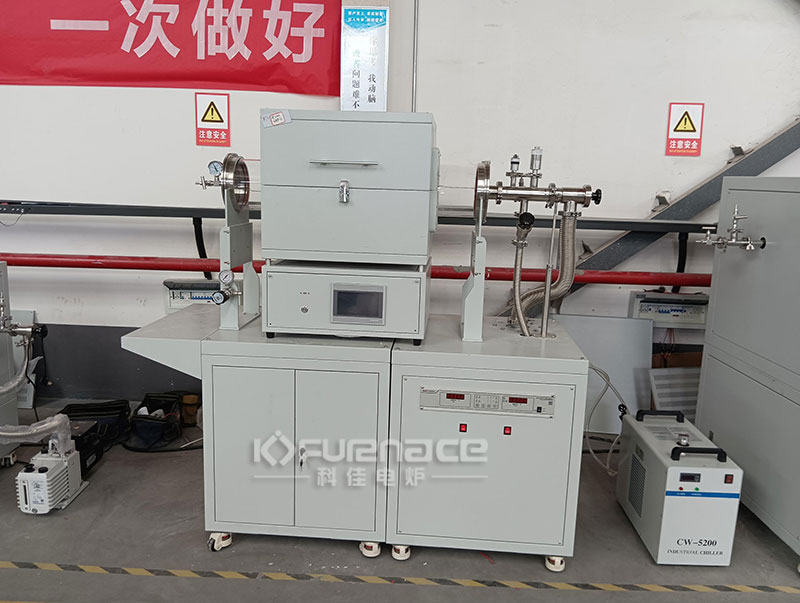
KJ-T1100-S00CK1W Large Diameter Vacuum Tube Furnace (Click on the picture to view product details)
I have been working on tube furnace technology for 17 years, and today I will explain all 5 industry recognized hard indicators at once, from temperature, furnace tube, vacuum, temperature control to safety. They are all effective measures to avoid pitfalls. Before purchasing, check each item carefully, and 90% of pitfalls can be avoided!
1. Temperature hardness index: Don’t just look at the highest temperature, long-term stable temperature+temperature field uniformity is the core
Temperature is the soul of a tube furnace. Many businesses falsely label the highest temperature, but in reality, the temperature difference is significant over a long period of time, which directly leads to substandard sintering of samples and poor coating quality.
1.1. Maximum temperature and long-term use temperature (with necessary margin)
Common gears: 1200 ℃, 1400 ℃, 1700 ℃, choose as needed.
Principle of avoiding pitfalls: The long-term working temperature must be 50-100 ℃ lower than the maximum temperature! For example, if 1100 ℃ is commonly used, choose the 1200 ℃ model; Long term 1300 ℃, choose the 1400 ℃ model.
Consequences of stepping on the pit: Long term use of the highest temperature at full load causes rapid aging of heating elements, which can break down in 3-6 months and result in high maintenance costs.
1.2. Uniformity of temperature field (determining sample consistency)
Core requirements: The temperature difference within the effective constant temperature zone should be ≤± 5 ℃, and for precision scenarios such as CVD and semiconductors, it should be ≤± 3 ℃.
Constant temperature zone length: 200-300mm is commonly used in laboratories, and 400-500mm is selected for small batch production; the total length of the sample must be completely within the constant temperature zone, otherwise the temperature at both ends will be insufficient and the middle will overheat, resulting in the sample being scrapped.
Priority multi temperature zone: Independent temperature control in dual/triple temperature zones, more uniform temperature field, suitable for high-precision processes such as diamond powder deposition and thin film growth.
1.3. Heating rate (adapted to the process to avoid cracking)
Conventional: 1-10 ℃/min, high temperature range (>1000 ℃) is recommended to be ≤ 3 ℃/min to prevent sample thermal expansion and contraction cracking.
Rapid heating: Choose a high-power model, but it needs to be matched with insulation layer, otherwise it will have high energy consumption and hot furnace shell.
2. Furnace tube hardness index: material+size+seal, if selected incorrectly, it will directly leak gas and contaminate the sample
The furnace tube is the “heart” of the vacuum tube furnace, which comes into direct contact with the sample and atmosphere. Poor material quality can cause powder loss, cracking, and impurity precipitation. Poor sealing can lead to air leakage, resulting in complete blank pumping and experimental waste.
2.1. Material selection (choose according to temperature and atmosphere, don’t be greedy for cheap)
High purity corundum tube (Al ₂ O ∝ ≥ 99%): high temperature resistance (≤ 1200 ℃), acid and alkali resistance, no powder shedding, no impurity precipitation, suitable for reducing atmospheres such as hydrogen and methane, CVD gold-plated corundum, powder sintering.
Quartz tube: ≤ 1100 ℃, high cleanliness, good transparency, but not resistant to high temperatures and prone to cracking, only suitable for low-temperature experiments or small-scale trial production.
Silicon carbide tube: ≤ 1400 ℃, high temperature resistance, good thermal conductivity, but high price, suitable for high-temperature industrial scenarios.
2.2. Size matching (inner diameter+length, reserved margin)
Inner diameter: The maximum outer diameter of the sample (including fixtures/crucibles) is ≤ 90% of the furnace tube inner diameter, with a 10% margin reserved to avoid collision with the inner wall. For example, if the sample diameter is 45mm, choose a furnace tube with an inner diameter of ≥ 60mm.
Length: Heating zone length ≥ total sample length+100mm, ensuring stable airflow and uniform temperature.
2.3. Sealing performance (vacuum leak resistance is the bottom line)
Flange: KF/ISO standard vacuum flange, made of stainless steel material, corrosion-resistant and has good sealing performance.
Sealing ring: High temperature metal sealing ring/fluororubber sealing ring, temperature resistance ≥ 200 ℃, to prevent air leakage.
Test standard: After vacuuming to 10 ⁻¹ Pa, turn off the pump, and within 1 hour, the vacuum degree should rise to ≤ 6Pa, which is qualified.
3. Vacuum hardness index: vacuum degree+pumping speed+stability, the purity of the atmosphere depends entirely on it
The vacuum system determines the purity of the atmosphere inside the furnace, directly affecting whether the sample is oxidized and whether the coating contains impurities. It is the key to CVD, bright annealing, and high-purity material preparation.
3.1. Vacuum level (choose according to the process, don’t blindly pursue high vacuum)
Low vacuum (conventional): single-stage rotary vane pump with a maximum vacuum of 10 ⁻¹ Pa, meeting the requirements of inert gas protection and ordinary heat treatment, sufficient for laboratory use.
High vacuum (precision): a combination of mechanical pump and molecular pump, with a maximum vacuum of 10 ⁻ ²~10 ⁻ ³ Pa, suitable for CVD, semiconductor, and nanomaterials, to prevent impurity pollution.
3.2. Extraction rate (determines efficiency, adapts to loading amount)
Laboratory: ≥ 2L/s, achieve the target vacuum level within 30 minutes.
Small batch production: ≥ 4L/s, can quickly evacuate even with a large amount of material.
3.3. Vacuum stability (long-term operation without falling back)
High quality equipment: continuous operation for 24 hours, vacuum fluctuation ≤ ± 1Pa, no air leakage, no pressure drop.
Avoiding pitfalls: Poor sealing of low-priced confidential materials, repeated drops in vacuum degree, frequent pumping wasting time, and oxidation and scrapping of samples.
4. Temperature control hard indicators: accuracy+program+stability, precise data without overturning
The temperature control system is the “brain” of the tube furnace, with poor accuracy, chaotic programs, fluctuating temperatures, poor sample consistency, and invalid experimental data.
4.1. Temperature control accuracy (core: ± 1 ℃)
Standard configuration: PID intelligent temperature controller, temperature control accuracy ± 1 ℃, display accuracy ± 0.1 ℃.
Sensor: S-type thermocouple (0-1600 ℃), high temperature resistance, high accuracy, long service life, avoid using cheap K-type thermocouples (≤ 1200 ℃).
4.2. Program temperature control (multi segment curve, suitable for complex processes)
Requirement: Support program heating/insulation/cooling for more than 30 stages, with the ability to set step heating, insulation duration, and cooling rate. One click operation without the need for manual monitoring.
Scenario: Complex processes such as CVD deposition, ceramic sintering, and metal annealing are used to more accurately reproduce temperature curves.
4.3. Long term stability (continuous operation without drift)
High quality equipment: continuous operation for 1000 hours, temperature drift ≤ ± 5 ℃, no sensor aging, no temperature control failure.
Avoiding pitfalls: Low priced machines use inferior temperature controllers, and after 3 months, the temperature drift is severe, and the experimental data is unreliable.
5. Hard safety indicators: multiple protection+explosion-proof design, zero risk of high temperature and high pressure
The high temperature (1000 ℃+) of the vacuum tube furnace may also be filled with flammable gases such as hydrogen and methane. If the safety configuration is not in place, it can easily cause explosions, burns, and fires.
5.1. Basic security protection (must be fully equipped, indispensable)
Overtemperature alarm+automatic power-off: If the temperature exceeds the set value of 50 ℃, an alarm will be immediately triggered and the heating power will be cut off to prevent the furnace from burning out.
Broken thermocouple protection: If the thermocouple is damaged/detached, it will automatically stop heating to avoid out of control overheating.
Vacuum degree abnormal protection: If the vacuum degree is lower than the set value, an automatic alarm will be triggered to prevent air leakage and oxidation.
Furnace body anti scalding: double-layer shell+high-purity alumina fiber insulation, furnace shell surface temperature ≤ 60 ℃, to avoid burns.
5.2. Atmosphere safety (explosion-proof must be selected for flammable gases)
Hydrogen/methane gas supply: Explosion proof design, equipped with anti backfire device, explosion-proof valve, tail gas combustion tower, to eliminate the risk of explosion.
Gas circuit: stainless steel pipeline+solenoid valve, automatic cut-off of gas leakage, safe and environmentally friendly.
5.3. Material safety (no harmful substance precipitation)
Insulation layer: high-purity alumina fiber, asbestos free, dust-free, does not shed powder at high temperatures, and does not contaminate the sample.
Heating element: resistance wire/silicon carbon rod/silicon molybdenum rod, high temperature resistance, no volatilization, no impurity precipitation.
Final summary: Choose the golden formula and avoid the 99% pitfalls
Reliable vacuum tube furnace=temperature (long-term stable temperature+uniform ± 5 ℃)+furnace tube (high-purity corundum/quartz+sealed and leak proof)+vacuum (adapted to vacuum degree+stable and pressure resistant)+temperature control (PID ± 1 ℃+multi-stage program)+safety (multiple protection+explosion-proof)
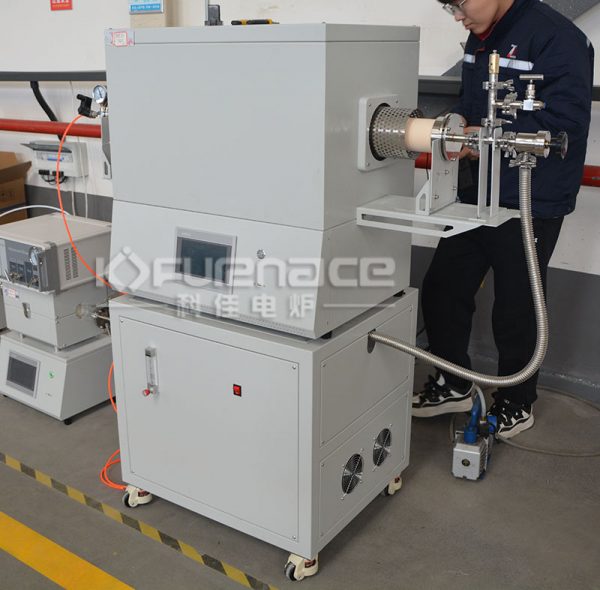
1600 ℃ Atmosphere Tube Furnace (Click on the picture to view product details)
Remember: low-priced machines save on core configurations, compromise long-term stability, delay experimental progress, and waste sample costs! Before purchasing, check these 5 hard indicators one by one, and prioritize selecting brands from the source manufacturer, with qualifications, able to provide test reports, and after-sales warranty of ≥ 1 year. Don’t just look at the price!Click to learn more customized tube furnaces! Or click on online customer service to learn more about product information!
Contact Information
E-mail: