English
 简体中文
简体中文 Français
 日本語
日本語 한국어
한국어 Português
 Русский
 Español




Tel Number
181-3719-5600
In fields such as powder metallurgy, ceramic materials, and new energy battery materials, atmosphere sintering requires high temperature stability, atmosphere sealing, and temperature field uniformity of the equipment. Customized lifting furnaces have become the core equipment for atmosphere sintering due to their convenient loading and unloading of materials, adaptability to large-sized workpieces, and ability to achieve vacuum/atmosphere protection. However, the customized lifting furnace parameters in the market are complex, and if the selection is improper, problems such as product oxidation, uneven sintering, and frequent equipment failures may occur. Here are 5 key parameters that cannot be ignored to help you select more accurately and adapt to sintering process requirements!
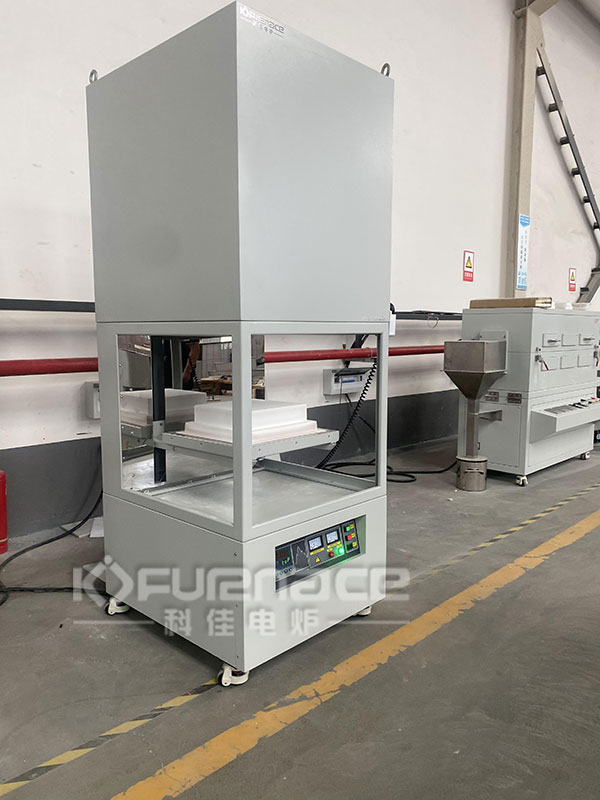
Customized bell furnace (click on the image to view product details)
1. Temperature parameters: matching sintering process, taking into account long-term stability
Temperature is the core of atmosphere sintering, directly determining the density and performance of material sintering. Selection should focus on the four major indicators of maximum working temperature, long-term use temperature, temperature control accuracy, and temperature field uniformity.
The maximum working temperature and long-term use temperature: The sintering temperature of different materials varies greatly. Alumina sintering commonly uses 1600 ℃, zirconia requires 1700-1800 ℃, and powder metallurgy refractory materials can reach above 1800 ℃. It should be noted that the long-term operating temperature should be 50-100 ℃ lower than the maximum temperature, which is the key to protecting furnace materials and extending equipment life. For example, for a furnace with a maximum temperature of 1700 ℃, the recommended long-term operating temperature is ≤ 1600 ℃.
Temperature control accuracy: Precision sintering requires a temperature control accuracy of ± 1 ℃, using multi-stage PID or fuzzy control algorithms to avoid product performance differences caused by temperature fluctuations. Ordinary sintering scenarios can be relaxed to ± 2 ℃, but high-precision ceramics and semiconductor materials must be strictly controlled.
Uniformity of temperature field: refers to the temperature deviation of the effective heating area in the furnace. Equipment with uniform temperature field can reach ± 5 ℃, while conventional good equipment has a temperature deviation of ± 3 ℃. Uneven temperature field can lead to inconsistent sintering degree between the edge and center of the workpiece, resulting in cracking, deformation and other problems. When customizing, the size of the uniform temperature zone should be determined according to the workpiece size to ensure that the workpiece is completely within the uniform temperature zone.
2. Atmosphere and vacuum parameters: eliminate oxidation and ensure sintering purity
The core of atmosphere sintering is oxygen free and impurity free. The sealing of the furnace body, the accuracy of atmosphere control, and the vacuum degree directly affect the purity of the product, especially suitable for protective atmospheres such as argon, nitrogen, and hydrogen.
Sealing performance of furnace body: The furnace door and top should be sealed with high-temperature silicone rubber and water-cooled structure to prevent aging and leakage of sealing components at high temperatures. When customizing, it is necessary to confirm the high temperature resistance of the sealing material to avoid gaps that may cause air infiltration and oxidation of the product after long-term use.
Vacuum degree and pressure rise rate: For processes that require pre vacuuming, it is recommended to achieve a maximum vacuum degree of 10 ⁻ Pa, which can quickly remove air from the furnace. The pressure rise rate (the decrease in vacuum degree per unit time) should be ≤ 6Pa/h. The lower the value, the better the sealing performance, which can reduce the consumption of protective gas and lower costs.
Atmosphere control accuracy: Equipped with high-precision gas flow meters, supporting various atmosphere switching such as argon, nitrogen, hydrogen, etc., with high flow control accuracy and lower oxygen content control, ensuring stable atmosphere in the furnace and avoiding decarbonization and oxidation of products. At the same time, it is necessary to reserve a quick interface for the gas path, which is convenient for matching with the mixing system and adapting to the complex atmosphere sintering requirements.
3. Furnace and heating element parameters: Suitable for workpieces, durable and energy-saving
The furnace is the core that carries the workpiece and realizes heating. The heating element determines the heating efficiency and service life. Customization requires comprehensive selection based on the size, weight, and sintering temperature of the workpiece.
Furnace material and size: Vacuum formed high-purity alumina lightweight material is preferred for the furnace, with small heat storage capacity, resistance to rapid cooling and heating, no slag shedding, excellent insulation performance, and much higher energy-saving effect than old-fashioned electric furnaces. The size needs to be customized according to the maximum size of the workpiece and the single feeding amount, with a reserved 2-3cm gap to ensure smooth thermal circulation. For example, if the workpiece diameter is 300mm, it is recommended that the furnace inner diameter be ≥ 350mm.
Heating element selection: Silicon carbon rods are preferred for temperatures between 1200-1400 ℃, silicon molybdenum rods are preferred for temperatures between 1600-1800 ℃, and tungsten and molybdenum heating elements can be used for sintering high-temperature refractory materials. Silicon molybdenum rods have strong oxidation resistance and long service life, making them the mainstream choice for atmosphere sintering. When customizing, it is necessary to confirm the layout of the heating element and prioritize five sided heating to ensure uniform temperature field.
Power matching: Power needs to be calculated based on furnace volume, maximum temperature, and heating rate. The larger the volume and the higher the temperature, the greater the power demand.
4. Lifting mechanism parameters: stable and safe, suitable for heavy load requirements
The core advantages of the lifting furnace are bottom loading and trolley lifting, which facilitates the loading and unloading of large-sized and heavy-duty workpieces. The smoothness of lifting, load-bearing capacity, and driving mode directly affect operational safety and equipment stability.
Drive mode: Priority is given to using servo motors and precision screw drives, with adjustable lifting speed, smooth operation, accurate positioning, and no lagging or shaking phenomena. In heavy-duty scenarios (with a load capacity of ≥ 500kg), hydraulic drive can be used, which has strong power and is suitable for loading and unloading large workpieces.
Load bearing capacity: Customized according to the weight of the workpiece, 50-200kg can be selected for small batches in the laboratory, and 500-1000kg is required for industrial batch production. The material of the material rack is preferably molybdenum, graphite, or silicon carbide, which is resistant to high temperatures, has strong load-bearing capacity, and avoids deformation under high temperatures.
Stability of lifting: It is necessary to equip guide rails to ensure that the trolley does not deviate or tilt during the lifting process, and to prevent the workpiece from falling and being damaged. Simultaneously set up lifting limit protection to prevent equipment failure caused by overtravel operation.
5. Control system and safety parameters: intelligent, convenient, safe and reliable
Customized lifting furnaces need to adapt to industrial automation requirements. Intelligent control and safety protection devices are the guarantee for long-term stable operation, especially suitable for 24-hour continuous production scenarios.
Intelligent control system: using touch screen+PLC control, supporting 30-50 segment heating curve programming, fully automatic heating, insulation, and cooling, parameters can be modified during operation, without the need for manual duty. Equipped with a communication interface, it can be connected to a computer for remote control, data recording, and report output, facilitating process traceability and optimization.
Safety protection device: It must be equipped with functions such as over temperature alarm, thermocouple protection, overcurrent protection, leakage protection, gas leakage detection, etc. In case of abnormalities, it will automatically cut off power and gas to ensure the safety of operators and the integrity of equipment. High temperature conditions require the installation of a furnace body air cooling system to reduce the shell temperature (≤ 60 ℃) and avoid burns.
Summary
The selection of customized lifting furnaces for atmosphere sintering focuses on temperature adaptation process, atmosphere purity assurance, furnace adaptation to workpieces, smooth and safe lifting, and intelligent and reliable control. Five key parameters are interrelated and indispensable: temperature parameters determine sintering quality, atmosphere parameters prevent oxidation pollution, furnace and heating elements affect efficiency and lifespan, lifting mechanisms are related to operational safety, and control systems and safety devices ensure long-term stable operation.
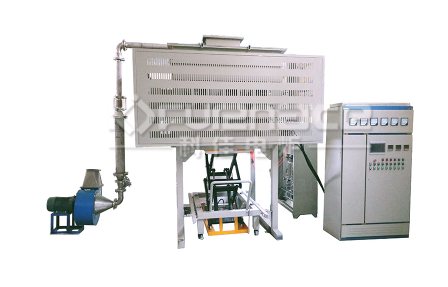
Elevating hydraulic bell jar atmosphere furnace (click on the picture to view product details)
When customizing, it is recommended to prioritize manufacturers with mature cases and on-site debugging capabilities based on their own workpiece size, sintering temperature, atmosphere type, and production batch size, to avoid blindly pursuing low prices, which may lead to frequent failures and low product qualification rates in the later stage.Click to learn more Customized muffle furnaces! Or click on online customer service to learn more about product information!
Contact Information
E-mail: