English
 简体中文
简体中文 Français
 日本語
日本語 한국어
한국어 Português
 Русский
 Español




Tel Number
181-3719-5600
Vacuum sintering furnace is a commonly used core high-temperature heat treatment equipment in the production workshops of hard alloy cutting tools, industrial ceramics, powder metallurgy parts, and university material laboratories. Many novice purchasers cannot distinguish the difference between ordinary muffle furnaces, atmosphere furnaces, and vacuum sintering furnaces, and are not sure which materials can be processed and what process pain points can be solved by vacuum sintering furnaces.
Starting from the basic principles, this article focuses on dismantling the three mainstream application scenarios of hard alloys, high-performance ceramics, and powder metallurgy, sorting out the core advantages of vacuum sintering compared to ordinary air sintering, and supplementing the key points for selecting and avoiding pitfalls. It is suitable for production enterprises to purchase and scientific research laboratories to select and read, and the content is in line with the real production process of the industry.
1. What is the function of a vacuum sintering furnace? Core working principle
(1). Basic Definition
A vacuum sintering furnace is a closed high-temperature heat treatment equipment that uses a vacuum pump to remove the air inside the furnace, creating an oxygen free and low impurity negative pressure environment. At high temperatures, the powder pressed green body undergoes atomic diffusion, particle bonding, and internal pore discharge, completing densification molding and turning loose powder green bodies into high-strength solid parts.
(2). Complete process flow (4 steps to understand equipment function)
Loading sealing: Place hard alloy, ceramic, and metal powder compacts into the furnace, seal the furnace door to achieve complete airtightness;
Vacuum degassing: mechanical pump+molecular pump staged pumping, discharging active gases such as oxygen, water vapor, nitrogen, etc., to avoid high-temperature oxidation;
Heating and degreasing+high-temperature sintering: Heat up in stages according to the PID program, first remove the adhesive (paraffin, resin) inside the billet, and then raise it to 1300-2000 ℃ for insulation, resulting in dense fusion of powder particles;
Vacuum/Atmosphere Cooling: After insulation is completed, nitrogen and argon inert gases are filled and rapidly cooled to obtain non oxidized, high-density finished products.
(3). 4 core advantages of vacuum sintering (why can’t it be replaced by ordinary electric furnaces)
Avoid oxidation and decarbonization
Tungsten, cobalt, titanium, silicon, zirconium and other elements will generate brittle oxides when exposed to oxygen at high temperatures, resulting in surface peeling and internal brittleness of air sintered products; The vacuum anaerobic environment solves this problem, stabilizes the carbon content of the material, and ensures that the hardness and toughness meet the standards.
Improve product density and reduce porosity
Negative pressure environment will actively extract the enclosed gas inside the billet, making the powder particles adhere more tightly, increasing the density at the same temperature, significantly improving the strength and wear resistance of the parts, and reducing the rate of fracture and scrap.
Low impurities, high purity, and strong consistency in performance
No air impurities infiltrate, can restore the original oxide film on the surface of the powder, clean grain boundaries, suitable for high-precision cutting tools, electronic ceramics, medical implants and other high-purity products.
Process integration, reducing production costs
Defatting and sintering are completed in the same furnace without the need to transfer the workpiece, reducing collision and oxidation; No need for extensive protection of fillers, simplified production process, suitable for mass industrial production.
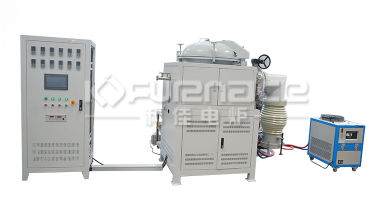
Multi heating chamber vacuum muffle furnace (click on the picture to view product details)
2. Core application scenario one: Hard alloy industry (commonly used application areas for vacuum sintering furnaces)
Hard alloy is the mainstream application scenario of vacuum sintering furnace, and 90% of tungsten steel cutting tools and wear-resistant molds on the market rely on vacuum sintering forming.
(1). processed materials
WC Co tungsten carbide cobalt hard alloy, tungsten titanium cobalt alloy, TiC/TiN metal ceramic, gradient hard alloy.
(2). Typical products and segmented scenarios
a. Cutting tools for machining
CNC turning tools, milling cutters, drill bits, taps, CNC blades, woodworking tools, PCB micro drills.
Process requirements: The vacuum environment ensures that the cobalt binder evenly wets the tungsten carbide particles, without decarburization or oxidation, resulting in higher tool hardness and improved wear resistance. Air sintering is prone to surface cobalt depletion and rapid tool wear and chipping.
b. Wear resistant parts for mining/engineering machinery
Coal mining machine cutters, mining drill bits, shield tunneling tools, sand and gravel crushing hammers, and wear-resistant nozzles for oil drilling.
Process requirements: Vacuum high-density sintering to enhance impact toughness, resist gravel impact without cracking, and adapt to harsh working conditions.
c. Stamping wear-resistant mold
Cold stamping mold, stretching mold, powder pressing mold, wear-resistant ejector pin, wire drawing mold.
Process requirements: Low porosity, high dimensional accuracy, minimal deformation after sintering, reducing subsequent polishing processes.
Requirements for exclusive equipment for hard alloy sintering
Sintering temperature range: 1300 ℃~1600 ℃;
Vacuum requirement: Medium to high vacuum of 10 ⁻¹~10 ⁻³ Pa;
Standard integrated function, segmented carbon control, to prevent carbonization/decarburization scrap.
3. Core application scenario 2: High performance industrial ceramics (structural ceramics+functional ceramics)
Ordinary alumina ceramics can be air sintered, but special ceramics such as silicon nitride, silicon carbide, and zirconia must be sintered in a vacuum furnace.
(1). processed materials
Structural ceramics: alumina Al ₂ O ∝, zirconia ZrO ₂, silicon nitride Si ∝ N ₄, silicon carbide SiC, aluminum nitride AlN;
Functional ceramics: piezoelectric ceramic PZT, transparent YAG laser ceramic, dielectric ceramic, semiconductor ceramic substrate.
(2). Segmented application scenarios
a. Mechanical wear-resistant structural ceramics
Ceramic bearings, mechanical seal rings, ceramic valve cores, high-temperature turbine blades, wear-resistant ceramic plungers.
Vacuum sintering function: suppresses abnormal grain growth, reduces sintering temperature by 50~150 ℃, improves ceramic thermal shock resistance and bending strength, and avoids decomposition failure of silicon-based ceramics under high temperature air.
b. Electronic semiconductor ceramic components
Integrated circuit ceramic substrate, high-voltage insulating ceramic, electronic packaging ceramic, filter piezoelectric ceramic.
Process requirements: Vacuum impurity free sintering to ensure electrical properties such as insulation, thermal conductivity, and piezoelectricity, and to eliminate problems such as leakage and poor thermal conductivity caused by pores.
c. Optical/New Energy Special Ceramics
YAG transparent laser ceramics, fuel cell ceramic electrolytes, and solid-state battery ceramic separators.
Process requirements: High purity vacuum environment, isolation of oxygen impurities, ensuring compliance with standards for transparency and ion conductivity.
Core advantages of ceramic vacuum sintering
The vacuum environment reduces the internal closed pores of ceramics, and the finished product’s light transmission, thermal conductivity, and mechanical properties far exceed those of atmospheric pressure sintering; Silicon nitride and other easily decomposable ceramics, vacuum can suppress high-temperature decomposition and stabilize crystal structure.
4. Core application scenario three: Powder metallurgy full category parts (MIM/iron-based/stainless steel/high-temperature alloy)
Powder metallurgy is a near net forming process, and almost all complex small metal parts are improved in performance by vacuum sintering, covering the automotive, 3C, aerospace, and medical industries.
(1). processed materials
Iron based powder, copper based powder, 316L stainless steel, MIM injection molded stainless steel, high-speed steel M2, nickel based high-temperature alloy, titanium alloy, tungsten molybdenum refractory metal.
(2). Segmented application scenarios
a. Automotive precision structural components
Automobile gearbox gears, camshafts, sprockets, engine oil bearing, valve seats, turbocharger blades.
Vacuum sintering function: prevents oxidation of alloy elements such as chromium and manganese, stabilizes part size, increases fatigue strength, improves corrosion resistance, and replaces machining to reduce costs.
b. MIM Metal Injection Molding Small Parts
3C electronic mobile phone hardware, medical titanium alloy implants, watch cases, micro gears, medical equipment surgical accessories.
Process requirements: degreasing sintering vacuum furnace, removing a large amount of organic adhesives, no oxidation, no surface blackening, no impurities in biomedical titanium alloys, meeting medical standards.
c. Refractory metals and high-temperature alloy parts
Tungsten molybdenum electrodes, high-temperature furnace heating elements, aviation high-temperature alloy blades, sputtering targets, nuclear industry structural components.
Process requirements: Ultra high temperature vacuum sintering above 2000 ℃, isolated from air to prevent tungsten and molybdenum from high-temperature oxidation and powdering, achieving high-density and refractory metal component forming.
d. Magnetic powder material
Neodymium iron boron permanent magnets, samarium cobalt rare earth magnets, and soft magnetic alloy powders.
Vacuum sintering prevents oxidation of rare earth elements and ensures stable magnetic properties such as magnetic flux and coercivity, which is a production process for permanent magnet materials.
5. Other niche expansion application scenarios
Metal ceramic composite materials and gradient functional materials: achieve fusion of different metal/ceramic layers under vacuum, without interface oxidation delamination;
Carbon/carbon composite materials, graphite products: high-temperature vacuum carbonization, densification treatment;
Precious metal target materials and rare metal parts: high-purity vacuum environment to avoid oxidation loss of precious metals;
Laboratory research small batch samples: a small vertical vacuum sintering furnace used for new material research and formulation comparison experiments.
6. Procurement selection avoids pitfalls: matching vacuum sintering furnace parameters according to application scenarios
(1). Match temperature according to material
Ordinary powder metallurgy (iron/copper based): 1000-1200 ℃;
Hard alloy and zirconia ceramics: 1300~1600 ℃;
Silicon carbide, silicon nitride, tungsten molybdenum refractory metals: 1800-2200 ℃.
Avoiding pitfalls: Beware of merchants falsely labeling the highest temperature, and ensure long-term stable operating temperature instead of just looking at instantaneous peak temperature.
(2). Match vacuum degree according to product purity
Ordinary powder metallurgy parts: medium vacuum 10 ⁻¹~10 ⁻² Pa (only equipped with mechanical pump);
Hard alloy, stainless steel MIM: high vacuum 10 ⁻ ³ Pa (mechanical pump+molecular pump combination);
Semiconductor ceramics, rare earth permanent magnets, medical titanium alloys: ultra-high vacuum of 10 ⁻³~10 ⁻⁴ Pa.
(3). Selection of furnace structure
Large quantities of hard alloy and powder metallurgy parts: horizontal vacuum sintering furnace with large furnace volume and convenient loading and unloading of materials;
Laboratory small samples, ceramic substrates, trace new materials: vertical small vacuum sintering furnace;
(4). Must have functions (common across three major industries)
Programmable PID temperature control with over 30 segments, supporting complete temperature rise insulation cooling process storage;
Multiple safety alarm interlocks for overheating, water outage, gas leakage, and coupling failure;
Can be filled with inert atmospheres of nitrogen and argon, suitable for cooling and segmented protection;
All metal sealed flange, low leakage rate, long-term use of vacuum stability without attenuation.
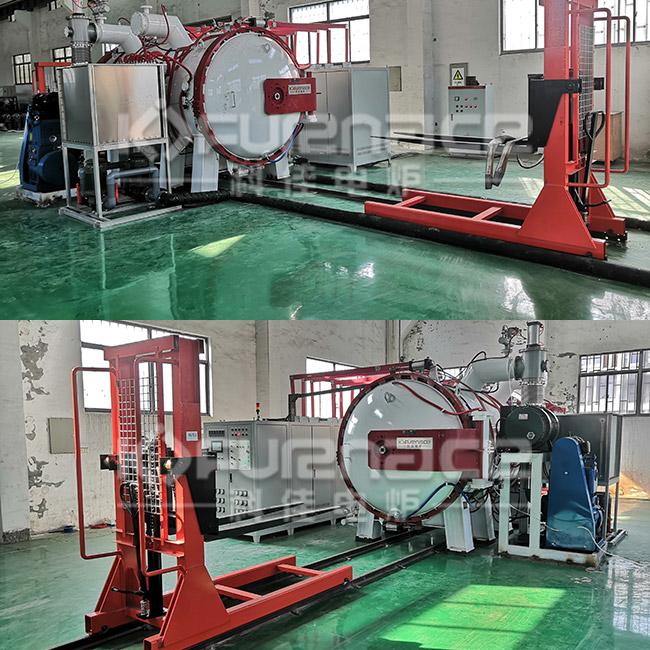
Industrial vacuum furnace (click on the image to view product details)
7. Summary: Under what circumstances must a vacuum sintering furnace be selected?
Processing materials contain easily oxidizable alloy elements such as tungsten, cobalt, titanium, silicon, rare earths, etc;
The product requires high density, low porosity, high hardness, and high toughness, with strict requirements for mechanical properties;
Electronic, medical, and optical materials have strict standards for product purity and impurity free;
Need to degreasing sintering, simplify production processes, and reduce scrap rates;
Ceramic and metal materials that are prone to decomposition, decarburization, and surface oxidation under high temperatures.
If it is only ordinary low-temperature rough processing without antioxidant requirements, an air muffle furnace can be used; But as long as it involves mass production or scientific research and development of hard alloys, special ceramics, precision powder metallurgy parts, vacuum sintering furnaces are the core equipment that can stably produce qualified products.Click to learn more vacuum furnaces! Or click on online customer service to learn more about product information!
Contact Information
E-mail: