English
 简体中文
简体中文 Français
 日本語
日本語 한국어
한국어 Português
 Русский
 Español




Tel Number
181-3719-5600
In the industries of new material sintering, ceramic preparation, lithium battery material calcination, metal heat treatment, and powder metallurgy processing, muffle furnace is a very basic and high-frequency heating equipment. There are mainly two categories of muffle furnaces on the market: ordinary muffle furnaces (air atmosphere box furnaces) and vacuum muffle furnaces. Many users are not clear about the differences in hardware structure, usage environment, and finished product processing effects between the two when choosing heating equipment, and are particularly curious about the changes that anaerobic working conditions bring to sintering processes. Below is a detailed explanation of the differences between vacuum muffle furnaces and ordinary muffle furnaces from multiple dimensions, including structural differences, working environment, applicable materials, finished product quality, and production costs, as well as the impact of anaerobic environment on heat treatment processes.
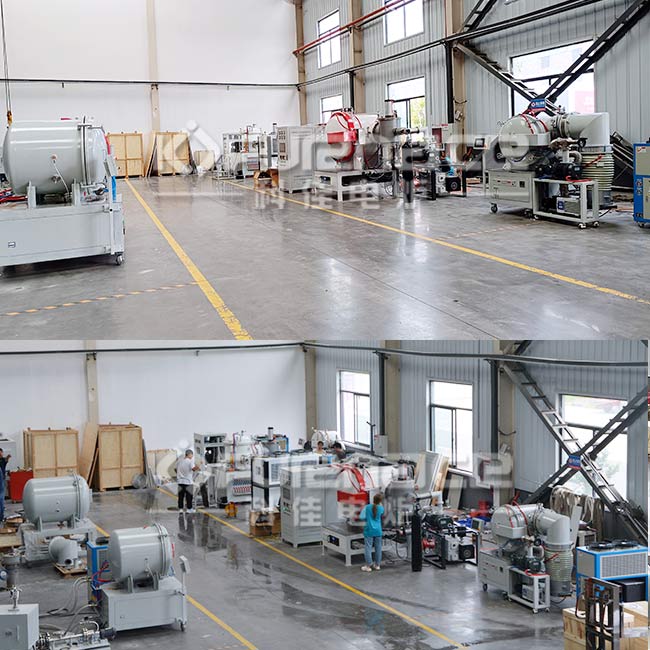
Regular maintenance of the vacuum furnace is also an important means to reduce malfunctions
1. The difference between the core of vacuum muffle furnace and ordinary muffle furnace
(1) The furnace sealing structure is different
The ordinary muffle furnace is a conventional box type heating chamber, with gaps and ventilation openings in the furnace door. The furnace is interconnected with the outside air, and the interior of the furnace is in a normal pressure air environment throughout the heating process. It does not have a sealed vacuum function and can only complete heating, annealing, and sintering operations under air.
The overall cavity of the vacuum muffle furnace adopts a fully sealed pressure bearing structure, and the furnace door is equipped with a high-temperature resistant sealing rubber ring. The furnace body is equipped with vacuum pipelines, vacuum pumps, and pressure monitoring components, which can extract the air inside the furnace, create a negative pressure vacuum environment, and can also be filled with inert protective gases such as nitrogen and argon, easily achieving oxygen free, low oxygen, and controllable atmosphere processing conditions.
(2) Differences in atmosphere and environment
Ordinary muffle furnace: atmospheric pressure air environment, containing oxygen, water vapor, and carbon dioxide inside. At high temperatures, the oxygen activity is significantly increased, leading to oxidation reactions of easily oxidizable powders, lithium based materials, and active metal powders.
Vacuum muffle furnace: It can achieve a vacuum and inert gas oxygen free atmosphere, isolate oxygen and water vapor, and can artificially control the gas composition inside the furnace to avoid interference from air impurities in the heat treatment process.
(3) Heating principle and temperature field performance
Ordinary muffle furnaces rely on air convection and radiation heat transfer, and air flow can cause temperature fluctuations; Moisture and hot air convection can easily cause large temperature differences inside the furnace.
The vacuum muffle furnace in a vacuum environment mainly relies on thermal radiation heat transfer, without air convection interference. The furnace temperature field has higher uniformity, stable heating, and higher temperature control accuracy, making it suitable for high-precision sintering of new materials.
(4) Security configuration and hardware materials
The material of ordinary muffle furnace chamber is mostly conventional refractory insulation material;
The vacuum muffle furnace needs to withstand negative pressure, with a thicker steel plate for the furnace body, high-temperature resistant special materials for sealing components, and nickel based alloys and high-purity alumina materials for some parts in contact with materials, suitable for processing corrosive and active powders.
(5) Suitable for different processing materials
Ordinary muffle furnace: suitable for alumina ceramics, refractory materials, ordinary sand and gravel calcination that are not afraid of oxidation, conventional sample annealing, and high-temperature experiments that do not require air isolation;
Vacuum muffle furnace: used for lithium-ion cathode materials, sulfide electrolytes, metallic lithium powder, magnetic powder, hard alloys, silicon nitride ceramics, and special powders that are easily hydrolyzed and oxidized.
2. What are the differences in heat treatment process effects under anaerobic environment
(1) Eliminate high-temperature oxidation of materials and prevent material deterioration
After the temperature exceeds 500-600 ℃, the chemical activity of most metal powders, lithium salts, rare earth powders, and silicon-based materials becomes stronger.
The ordinary muffle furnace is heated at high temperatures in the air environment, and the surface of the material will react with oxygen to generate oxidized impurities, resulting in a decrease in the purity of the finished product and unstable performance;
The oxygen free and inert environment of the vacuum muffle furnace isolates oxygen, and the powder does not oxidize during the entire process of heating, insulation, and cooling. The raw material composition can be stably retained, which is also the condition required for lithium battery materials and lithium salt sintering.
(2) Isolate water vapor and solve the problem of easily hydrolyzed materials deteriorating
The air contains moisture all year round, and many powders such as sulfide solid electrolytes and lithium metal negative electrode materials are prone to hydrolysis and decomposition failure when exposed to high temperature water vapor.
The anaerobic vacuum environment can remove the water vapor inside the furnace in advance, and the entire powder heat treatment process is dry and oxygen free, eliminating hydrolysis defects and greatly improving the product qualification rate.
(3) Sintering results in higher density and better crystal structure
When sintering in an air environment, air bubbles are adsorbed on the surface of the powder particles, and high-temperature gases tend to overflow outward, leaving pores and pinhole defects inside the billet.
Under anaerobic vacuum conditions, the air trapped between powder gaps can be expelled, and the contact surfaces between particles are tightly adhered. The sintered ceramic bodies and powder metallurgy workpieces have higher density, uniform grain size, controllable shrinkage, and optimized material mechanical and electrical properties.
(4) Reduce impurities, avoid carbon pollution and gas impurity defects
Carbon dioxide, sulfide impurities, and floating dust in the air are prone to adhere to the surface of the workpiece at high temperatures, forming impurity phases.
Vacuum anaerobic inert atmosphere belongs to a clean and sealed environment, without external air impurities, especially suitable for precision sintering of high-purity ceramics, battery grade lithium salts, and semiconductor raw materials, ensuring material purity.
(5) Can complete exclusive processes that ordinary muffle furnaces cannot achieve
Many heat treatment processes require an oxygen free environment, including metal annealing degassing, alloy decarburization, oxide reduction sintering, nitriding treatment, and lithium based material precursor pyrolysis.
Ordinary air muffle furnaces will produce reverse oxidation-reduction products; The anaerobic environment of the vacuum muffle furnace can smoothly complete reduction, degassing, and impurity removal, achieving diversified atmosphere processes.
3. Summary and Suggestions for Choosing Equipment
If only ordinary refractory materials, ordinary ceramics, or samples are annealed regularly, the materials are not afraid of high-temperature oxidation, and ordinary air muffle furnaces can be selected, with low investment costs and convenient operation;
As long as lithium battery materials, active metal powders, easily hydrolyzed sulfides, high-purity nitride ceramics, and hard alloys are processed, and a stable oxygen free sintering environment is desired, a sealed vacuum muffle furnace must be selected.
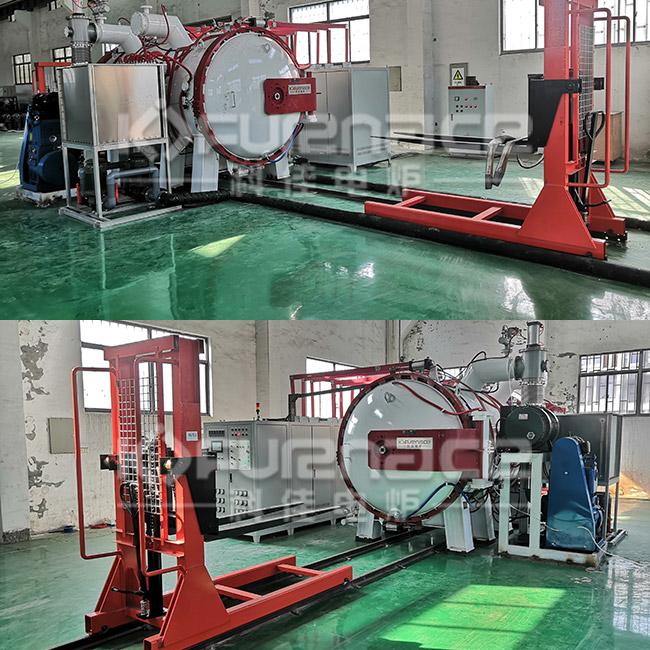
Industrial vacuum furnace (click on the image to view product details)
Zhengzhou Kejia Electric Furnace specializes in customizing heat treatment equipment such as vacuum muffle furnace, atmosphere furnace, rotary tube furnace, lifting bell cover furnace, glove box sintering furnace, etc. It can customize equipment according to customer sintering process, furnace size, temperature range, and atmosphere conditions, serving major industries such as new material research institutes, lithium battery new materials, advanced ceramics, and powder metallurgy.Click to learn more vacuum muffle furnaces! Or click on online customer service to learn more about product information!
Contact Information
E-mail: