English
 简体中文
简体中文 Français
 日本語
日本語 한국어
한국어 Português
 Русский
 Español




Tel Number
181-3719-5600
When selecting equipment for quenching mold steel, heat treatment of tool steel, annealing of stainless steel, or brazing and sintering processes, the dilemma often lies in whether to buy an atmosphere furnace or a vacuum furnace?
Both types of furnaces are “high-temperature+oxidation resistant” equipment, but one relies on “atmosphere protection” and the other relies on “vacuum protection”, with significant differences in principles and results. Choosing the wrong one can result in mild oxidation and decarburization of the workpiece, while severe cases may result in substandard heat treatment quality. Now let’s explain the difference between the two and help you choose the right one at a time.
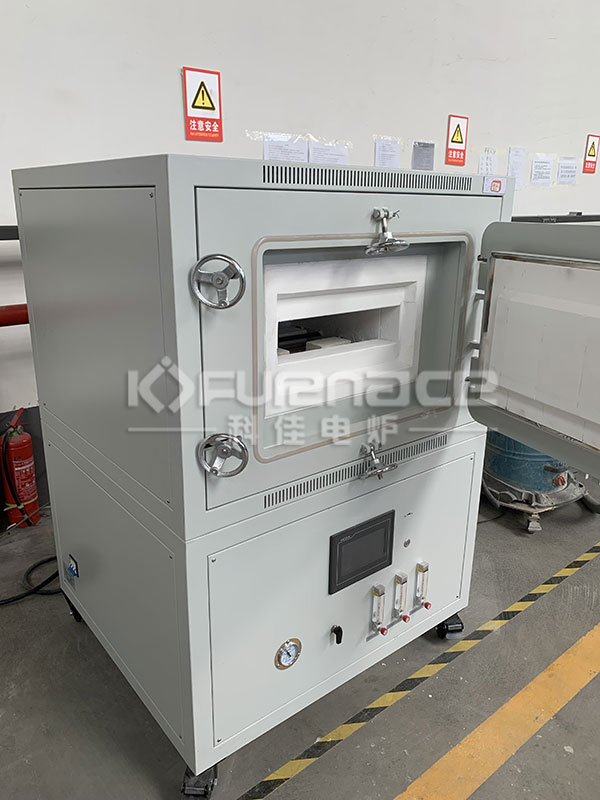
Customized furnace size and atmosphere furnace (click on the image to view product details)
1. Working principle: One for creating atmosphere, one for evacuating
Atmosphere furnace: A specific atmosphere is introduced into the furnace for heat treatment, which not only provides protection but may also participate in chemical reactions. Common atmospheres include nitrogen, argon (inert protection), hydrogen (reduction), air (oxidation), etc.
Vacuum furnace: The furnace is evacuated (low-pressure environment) and heated in an oxygen free and gas free state, fundamentally eliminating oxidation and decarburization; Some vacuum furnaces also support inflation cooling.
The core difference is that atmosphere furnaces are protected by “atmosphere”, while vacuum furnaces are protected by “vacuum”.
2. Protection mechanism: Different ways of preventing oxidation
| Comparison item | Atmosphere Furnace | Vacuum furnace |
| Anti oxidation principle | Isolate oxygen with inert/reducing atmosphere | Vacuum pumping, no oxygen available for oxidation |
| Decarbonization control | By controlling the atmosphere composition, precise gas distribution is required | Almost no decarburization under vacuum |
| Atmosphere consumption | Continuous gas consumption, high operating costs | No atmosphere consumption, low energy consumption |
| Surface quality | Good, depending on the purity of the atmosphere | Better, no oxidation or decarburization |
| Sealing requirements | High, air leakage affects the atmosphere | Very high, vacuum degree is the key indicator |
3. Cooling method: Vacuum furnace can “quickly cool”
This is the difference in practicality between two types of stoves:
-Atmosphere furnace: generally cooled with the furnace or assisted by the atmosphere, with a slow cooling rate, suitable for annealing and sintering processes that do not require high cooling rates;
-Vacuum furnace: supports gas quenching (high-pressure gas cooling) and even oil quenching, with fast cooling speed, strong controllability, and small workpiece deformation – this is the main reason for choosing a vacuum furnace for quenching mold steel and high-speed steel.
4. Comparison of typical application scenarios
| Craftsmanship/Materials | Recommended furnace type | Reason |
| Mold steel, high-speed steel quenching | Vacuum furnace | Fast cooling+no oxidation, small deformation |
| Titanium alloy, stainless steel heat treatment | Vacuum furnace | High anti oxidation requirements |
| Precision bearings, aviation parts | Vacuum furnace | High surface quality requirements |
| Brazing (copper brazing/silver brazing) | Both are acceptable | Both atmosphere brazing and vacuum brazing have advantages |
| Ceramic sintering | Atmosphere Furnace | Often requires a specific atmosphere |
| Powder metallurgy sintering | Both are acceptable | See the requirements for the craftsmanship atmosphere |
| Ordinary steel annealing | Atmosphere Furnace | Low cost, sufficient |
5. Selection suggestion: judge according to these 4 dimensions
(1). Check if the process requires atmosphere to participate in the reaction: CVD coating and other processes that rely on atmosphere chemical reactions can only choose atmosphere furnaces;
(2). Requirements for material oxidation prevention: For titanium alloys, precision mold steels, and high alloy steels that are sensitive to oxidation and decarburization, priority should be given to vacuum furnaces;
(3). Check if rapid cooling is needed: If the process requires rapid cooling, choose a vacuum furnace; Annealing and sintering slow cooling process, atmosphere furnace is sufficient;
(4). Looking at budget and operating costs: Vacuum furnace equipment requires higher investment, but the long-term gas consumption cost of atmosphere furnaces is high – to calculate the overall cost, don’t just look at the purchase price.
6. Purchase reminder (regardless of which one you choose, check these points)
-Maximum temperature and long-term operating temperature margin (process temperature+10%~15%)
-Atmosphere furnace: gas path configuration (N ₂/Ar/H ₂), flow control, sealing, and exhaust gas treatment
-Vacuum furnace: ultimate vacuum degree, pressure rise rate (leakage rate), pressure
-Temperature control accuracy and number of program temperature control segments
-Does the furnace size match the batch size of the workpiece
-Safety protection: overheating, disconnection, explosion-proof, etc
-Manufacturer qualifications, consumables supply, and after-sales support
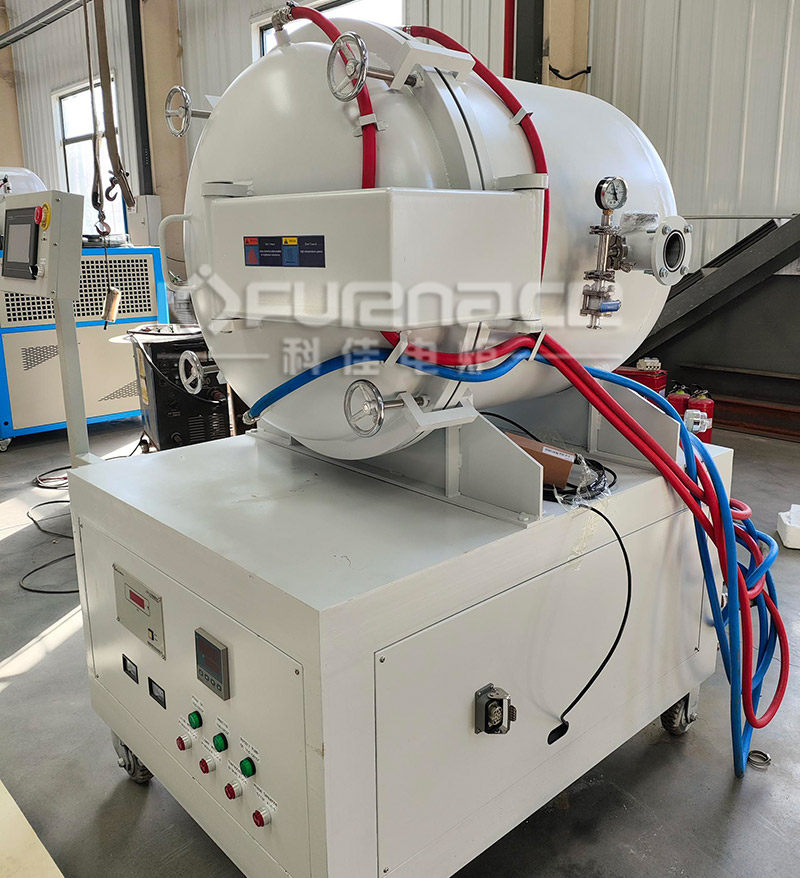
Commonly used vacuum sintering furnaces (click on the image to view product details)
Conclusion
There is no absolute superiority or inferiority between atmosphere furnaces and vacuum furnaces, only a mismatch. For processes that require atmosphere to participate in chemical reactions (gas sintering, gas annealing, CVD), atmosphere furnaces should be selected; Choose a vacuum furnace for more precise heat treatment (quenching of mold steel, titanium alloy, precision parts) that requires strong oxidation resistance and rapid cooling.
When selecting, inform the manufacturer of the material, process, temperature, cooling requirements, and budget, and let professionals help you come up with a solution – selecting the right heat treatment equipment ensures quality.Click to learn more Vacuum Furnaces! Or click on online customer service to learn more about product information!
Contact Information
E-mail: