English
 简体中文
简体中文 Français
 日本語
日本語 한국어
한국어 Português
 Русский
 Español




Tel Number
181-3719-5600
In material experiments in university laboratories, research institutes, and enterprise R&D centers, small tube furnaces are widely used as basic heat treatment equipment. Many first-time researchers and laboratory teachers often wonder: What is the difference between small tube furnaces and large industrial tube furnaces? What experiments can it perform and what materials can it adapt to?
Below is a brief explanation of the definition, core advantages, and working principles of small tube furnaces used in experiments. The focus is on dismantling the materials and heat treatment experimental scenarios that they are compatible with, helping researchers quickly determine whether the equipment matches their experimental needs and avoid selection waste and experimental failure problems.
1. What is a small tube furnace used in experiments?
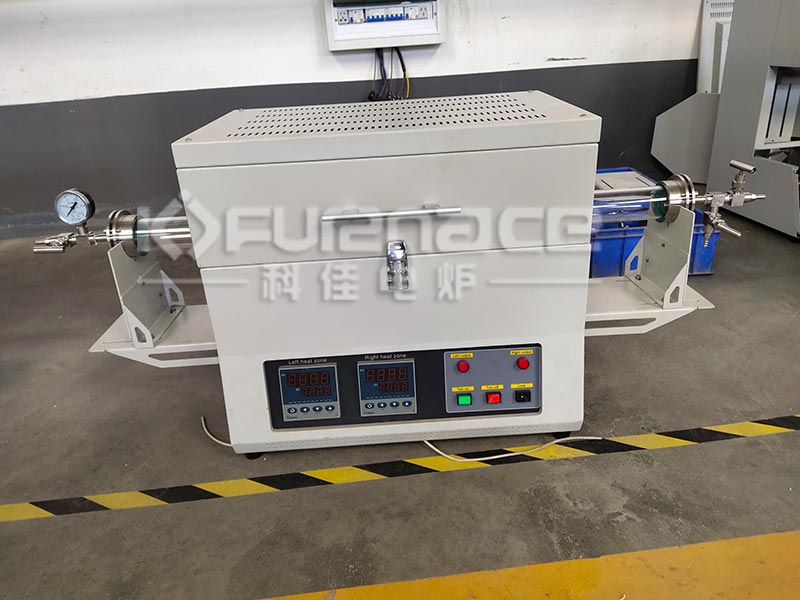
Experimental small tube furnace, also commonly known as desktop small tube furnace or scientific research micro tube furnace, is a small precision heating equipment developed for laboratory small samples and small-scale experiments. Different from mass-produced tube furnaces with large diameters and furnaces in industry, it has the characteristics of small size, fast heating speed, high temperature control accuracy, low energy consumption, atmosphere permeability, and vacuum pumping. It is specifically designed to serve material research and development, sample trial production, teaching experiments, and other scenarios, and is not used for large-scale industrial production.
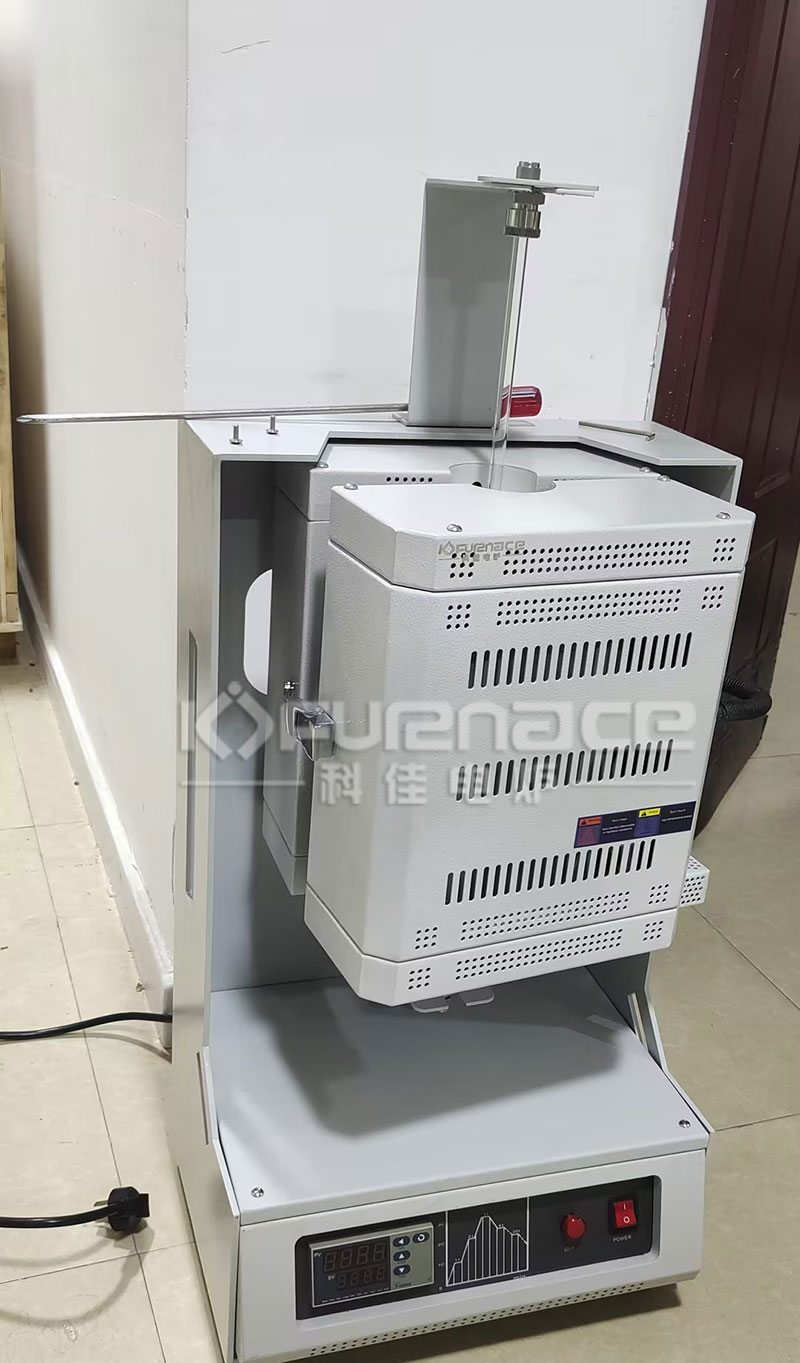
The core structure of the equipment consists of quartz/corundum furnace tubes, heating furnace chambers, intelligent temperature control systems, and gas path sealing systems. It adopts two classic structures, horizontal and vertical, and supports multi-stage program temperature control. It can accurately simulate the complete heat treatment curve of heating, insulation, and cooling, and better adapt to various precision scientific research experiment needs.
Core characteristics of small tube furnace used in experiments:
(1) Compact size, suitable for laboratory scenarios: desktop design, small footprint, no need for dedicated large computer rooms, ordinary laboratory tables can be placed, easy to install;
(2) Accurate temperature control and strong experimental repeatability: Equipped with intelligent programmable temperature control instruments, the temperature control accuracy can reach ± 1 ℃, supporting custom heat treatment curves, and stable and traceable experimental data;
(3) Supporting atmosphere/vacuum environment: can be filled with protective gases such as nitrogen, argon, hydrogen, etc., and can also be pre evacuated to achieve non oxidizing and non polluting heat treatment;
(4) Efficient heating and lower energy consumption: Small furnaces have fast heating speed and low heat loss, making them more suitable for short-term, high-frequency small sample experiments compared to industrial furnaces;
(5) Flexible and customizable parameters: pipe diameter, constant temperature zone length, temperature range, and heating rate can all be customized according to needs, suitable for diverse niche experimental processes.
2. Working principle of experimental small tube furnace
The small tube furnace used in the experiment uniformly heats up the samples inside the sealed furnace tube through heating elements (resistance wires, silicon carbon rods, silicon molybdenum rods) inside the furnace. Paired with a customized gas path system, it can replace the air inside the furnace tube, isolate oxygen, and avoid high-temperature oxidation, decarburization, and pollution of the sample; Partial vacuum models can extract air and impurity gases from the furnace, creating a high-purity heat treatment environment. In conjunction with an intelligent temperature control system, the temperature and insulation duration are controlled to complete various heat treatment processes such as sintering, annealing, pyrolysis, carbonization, and reduction.
3. What materials are suitable for heat treatment experiments using a small tube furnace for experiments?
Small tube furnaces are specifically adapted for small-scale, high-precision, and multi frequency scientific research sample experiments, covering multiple fields such as new materials, chemical engineering, lithium batteries, metallurgy, environment, and semiconductors. The mainstream adapted materials and experimental scenarios are as follows:
(1) Powder material sintering and carbonization experiment
This is a common experimental scenario for small tubular furnaces, which is suitable for various nano powders, ceramic powders, metal oxide powders, graphene, carbon materials and other materials. It can complete experiments such as high-temperature sintering, carbonization, activation, and crystal structure control of powders. Under inert atmosphere protection, it effectively prevents powder oxidation and deterioration, ensures powder purity and stable performance, and is a commonly used equipment for basic scientific research in materials science.
(2) Heat treatment of lithium batteries and new energy materials
Annealing, sintering, and modification experiments for new energy materials such as lithium-ion positive electrode materials, negative electrode materials, electrolyte precursors, and energy storage powders. It can optimize the crystal structure of materials, improve their conductivity and stability through precise temperature control and controllable atmosphere environment, and is widely used in the research and development of new energy materials.
(3) Catalyst Preparation and Modification Experiment
The high-temperature calcination, reduction, and activation experiments of various metal catalysts, non-metal catalysts, and carrier materials can be completed using a small tube furnace. Especially hydrogen reduction and inert atmosphere calcination processes can effectively remove material impurities, enhance catalyst activity, and adapt to scientific research experiments in the fields of chemical engineering and environmental catalysis.
(4) Biomass and solid waste pyrolysis experiment
Small scale pyrolysis, cracking, and carbonization experiments can be conducted on materials such as straw, sawdust, plastic pellets, and organic solid waste for research on solid waste resource utilization and biomass energy development. The equipment can accurately control the pyrolysis temperature and atmosphere, providing precise experimental data support for large-scale process development.
(5) Annealing of Semiconductors and Precision Materials
Suitable for high-temperature annealing, stress relief, and densification treatment of silicon wafers, thin film materials, ceramic substrates, and precision alloy small parts. The dual protection environment of vacuum and atmosphere can prevent sample surface oxidation, scratches, and impurity contamination, ensuring the surface quality and mechanical properties of precision parts.
(6) College Teaching Fundamentals Experiment
Suitable for teaching and practical training in materials science, chemical engineering, environmental engineering, metallurgical engineering and other majors, it can complete demonstration experiments such as metal annealing, material sintering, atmosphere protection heating, high-temperature pyrolysis, etc. The operation is simple, safe and controllable, fully meeting the needs of teaching and practical training in universities.
4. Scenarios unsuitable for small tube furnaces
Many procurement misconceptions stem from mismatched scenarios, and clearly defining applicable boundaries can effectively avoid pitfalls:
(1) Not suitable for large-scale industrial production: only suitable for small samples and trial experiments, unable to meet the needs of large-scale workpiece and mass production;
(2) Not suitable for oversized samples: limited by the diameter of small furnace tubes and the size of the constant temperature zone, it is not possible to process large-sized workpieces;
(3) High corrosion, high volatility and no treatment experiment: The basic model without supporting exhaust gas and anti-corrosion configuration is not suitable for experiments on strongly corrosive and high volatility materials.
5. Summary
Simply put, the experimental small tube furnace is a precision atmosphere heating equipment designed specifically for laboratory experiments, scientific research and development, and teaching and training. It has small size, high precision, low energy consumption, and flexible process. It is mainly suitable for scientific research experiments such as powder sintering, material carbonization, catalyst reduction, lithium battery material modification, biomass pyrolysis, precision sample annealing, etc. It is a commonly used equipment for new material research and development, university teaching, and enterprise new product trial production.
If your experiment focuses on small samples, high precision, and multi frequency trial production, a small tube furnace can fully meet the needs; If it involves large-scale production and processing of large-sized workpieces, industrial grade large tube furnace equipment needs to be selected.Click to learn more customized tube furnaces! Or click on online customer service to learn more about product information!
next: the latest article
Contact Information
E-mail: