English
 简体中文
简体中文 Français
 日本語
日本語 한국어
한국어 Português
 Русский
 Español




Tel Number
181-3719-5600
In precision process scenarios such as high-end new material research and development, special ceramic sintering, carbon material heat treatment, and hard alloy preparation, conventional quartz and corundum tube furnaces are limited by materials and cannot achieve ultra-high temperature processing above 1800 ℃. As a new generation of vertical tube type high-temperature sintering furnace, the 2000 ℃ high temperature vertical carbon tube furnace uses graphite carbon tubes as the core heating element, breaking through the upper limit of traditional equipment temperature and achieving stable 2000 ℃ ultra-high temperature heat treatment. Combined with vacuum and controllable atmosphere system, it is better adapted to various sintering, pyrolysis, carbonization, and annealing processes of ultra-high purity and ultra-high temperature materials. It is a core precision equipment for university research institutes, new material enterprises, and powder metallurgy industry.
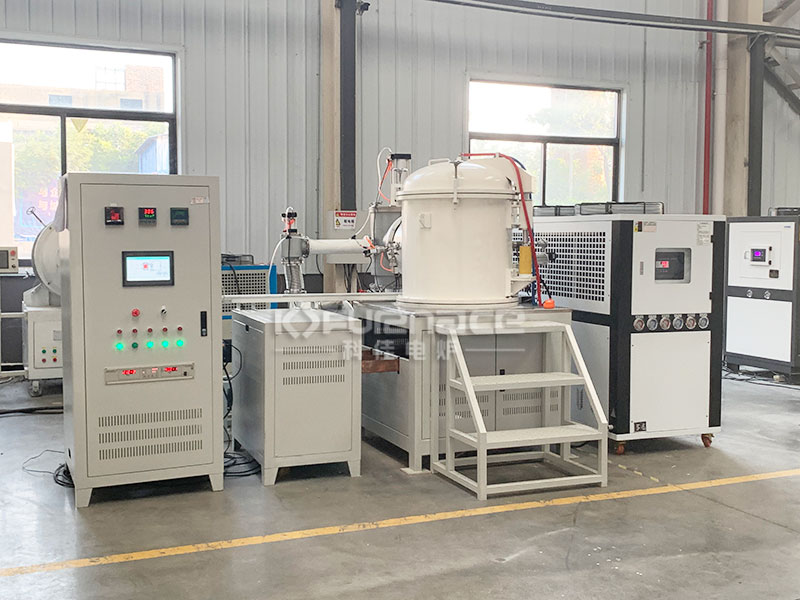
Vertical graphite vacuum furnace (click on the picture to view product details)
1. Core working principle of 2000 ℃ high-temperature vertical carbon tube furnace
The 2000 ℃ high-temperature vertical carbon tube furnace is different from the ordinary resistance tube furnace. The core relies on the heating principle of graphite carbon tube resistance. The equipment adopts a vertical integrated structure, matched with a closed vacuum water-cooled furnace body, which runs stably and has precise temperature control. The device drives graphite carbon tubes to generate Joule heat through low voltage and high current, uniformly heating the samples inside the furnace through thermal radiation, abandoning the traditional resistance wire heating mode, and greatly improving the high temperature resistance and attenuation resistance performance.
The equipment can operate in a vacuum or inert protective atmosphere throughout the process, extracting air and impurity gases from the furnace through a vacuum unit to prevent high-temperature oxidation, decarbonization, and impurity pollution. At the same time, the vertical structure relies on the principle of natural settling by gravity to ensure that the powder and columnar samples are heated more evenly without dead corners and accumulated temperature, effectively ensuring the stability and repeatability of ultra-high temperature sintering and pyrolysis processes, and can maintain a high temperature of 2000 ℃ for a long time.
2. Core structure configuration of vertical tube type high-temperature sintering furnace
The 2000 ℃ high-temperature vertical carbon tube furnace is designed specifically for ultra-high temperature precision processes, with a sturdy overall structure, strong sealing, and better high-temperature resistance. The core configuration is suitable for precision scientific research and small-scale production needs
(1) Core heating unit: high-purity graphite carbon tube
Using high-density and high-purity graphite carbon tubes as heating elements, it can operate stably at 2000 ℃ for a long time, with the advantages of uniform thermal conductivity, strong thermal stability, thermal shock resistance, and resistance to deformation and cracking. There is no metal impurity precipitation, and it will not contaminate high-purity experimental samples, which is suitable for the heat treatment needs of ultra-high purity materials.
(2) Furnace body protection structure: double-layer water-cooled stainless steel furnace body
The furnace body adopts a double-layer 304 stainless steel sealed structure, with a built-in circulating water cooling system. During high-temperature operation, the low temperature of the furnace shell is controllable, eliminating the risk of high-temperature burns. At the same time, it effectively reduces the temperature difference inside and outside the furnace, reduces heat loss, and improves the overall insulation performance and service life of the equipment.
(3) Vacuum and Atmosphere System
Standard high vacuum unit, with a maximum vacuum degree of up to 10 ⁻ Pa, supporting processes such as pre vacuum pumping, vacuum insulation, and atmosphere replacement; Inert protective gases such as argon and nitrogen can be introduced, and it can also be adapted to weak reducing atmosphere conditions to meet diverse process requirements such as vacuum sintering, atmosphere protected sintering, and high-temperature pyrolysis.
(4) Intelligent and precise temperature control system
Equipped with an industrial grade multi-stage programmable PID temperature controller with a temperature control accuracy of ± 1 ℃, it supports custom heating, insulation, and cooling curves, can store multiple sets of process parameters, and can be easily retrieved and reused with one click. The experimental data is traceable and reproducible, making it better suited for scientific research paper development and standardized process trial production.
3. Core advantages of 2000 ℃ high-temperature vertical carbon tube furnace
Compared to horizontal carbon tube furnaces and ordinary high-temperature tube furnaces, this vertical tube type high-temperature sintering furnace has obvious advantages in ultra-high temperature process scenarios and better solves industry process pain points:
(1) Ultra high temperature stable operation, suitable for precision processes
Breaking through the temperature bottleneck of traditional tube furnaces at 1600 ℃, it can work stably for a long time at 2000 ℃, meeting the sintering modification needs of ultra-high melting point materials such as silicon carbide, aluminum nitride, and high-purity carbon materials, and filling the process gap of medium and high temperature equipment.
(2) Vertical structure, more uniform sample processing
Vertical furnace design, with samples placed vertically to avoid uneven heating and localized overburning of horizontal furnace samples. Powder samples are less likely to accumulate and clump, while tubular and columnar samples are uniformly heated throughout the process, resulting in higher density and more stable performance of sintered products.
(3) High purity and impurity free, with high purity of the finished product
The graphite heating system has no metal element precipitation, combined with a vacuum oxygen free environment, completely eliminating sample oxidation and doping pollution, especially suitable for precision heat treatment of high-purity nanomaterials, special ceramics, and semiconductor materials.
(4) Low energy consumption, long lifespan, and simple operation and maintenance
Graphite carbon tubes have high heating efficiency, low heat storage, and fast heating rate, and lower energy consumption compared to traditional high-temperature furnaces; Good resistance to high temperature aging and thermal shock, not easily damaged by long-term high-frequency use, requiring only routine cleaning and maintenance in the later stage, with low operation and maintenance costs.
(5) Comprehensive safety protection
Built in multiple safety mechanisms including over temperature power-off, couple breaking protection, over-current overload protection, water pressure protection, and vacuum abnormal alarm, with intelligent monitoring of equipment operation status throughout the process, eliminating safety hazards such as over temperature, air leakage, and overload, and adapting to long-term stable laboratory operation.
4. Main application areas and adaptation processes
The 2000 ℃ high-temperature vertical carbon tube furnace, with its advantages of ultra-high temperature, high vacuum, high cleanliness, and flexible process, is widely used in the fields of precision research and precision manufacturing
(1) In the field of carbon materials: high-temperature carbonization and modified annealing of graphene, carbon nanotubes, carbon fibers, and high-purity graphite materials;
(2) In the field of special ceramics: ultra-high temperature dense sintering and crystal structure optimization of silicon carbide, silicon nitride, zirconia, and alumina ceramics;
(3) In the field of new energy and semiconductors: ultra-high purity heat treatment of high-purity powder materials, semiconductor ceramics, and energy storage materials;
(4) In the field of metallurgy and hard alloys: high-temperature sintering and vacuum impurity removal of hard alloys, refractory metals, and powder metallurgy products;
(5) University research experiments: research on high-temperature phase transition of new materials, ultra-high temperature pyrolysis experiments, development of gradient sintering technology, teaching and practical training.
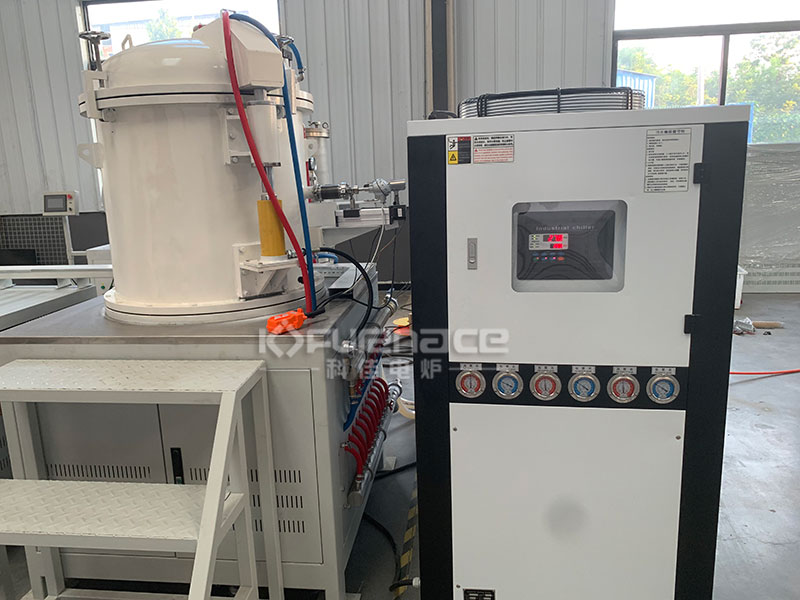
Vertical graphite vacuum furnace (click on the image to view product details)
5. Key points of equipment selection
When purchasing a 2000 ℃ high-temperature vertical carbon tube furnace, it is necessary to accurately select based on one’s own process requirements to avoid experimental failure caused by parameter mismatch:
(1) Temperature parameters: The conventional maximum temperature is 2000 ℃, and it is recommended to control it within 1900 ℃ for long-term operation to extend the service life of the equipment; Choose the heating rate and constant temperature accuracy as needed;
(2) Vacuum configuration: High purity materials and precision experiments use high vacuum units, while conventional sintering and carbonization processes can choose low vacuum configurations to reduce procurement costs;
(3) Furnace specifications: Select the furnace tube diameter and effective heating height based on the sample size and single feeding amount to ensure that the sample is in a constant temperature range;
(4) Atmosphere adaptation: Inert atmosphere is the standard configuration, and special sealing and gas circuit systems need to be customized in advance for reducing atmosphere and special gas working conditions;
(5) Customized services: Non standard configurations such as multi zone temperature control, extended constant temperature zone, multi-channel gas distribution, and automatic material lifting can be customized according to process requirements.
FAQ Frequently Asked Questions
Can a 2000 ℃ vertical carbon tube furnace work continuously at high temperatures for a long time?
A: Sure, the equipment uses high-purity graphite carbon tubes and good insulation materials, which can work stably in the range of 1800-2000 ℃ for a long time, with stable temperature control and no obvious thermal attenuation, meeting the needs of high-frequency experiments and small-scale production.
Q2: How to choose between vertical carbon tube furnace and horizontal carbon tube furnace?
A: For powder, easy to accumulate, and elongated samples, vertical structures are preferred for more uniform heating and less likely to contaminate; Large block samples can be selected with a horizontal structure to adapt to the process scenario as needed.
Q3: Can the device conduct reduction experiments with hydrogen gas?
A: Support, customizable explosion-proof gas path systems, exhaust gas treatment devices, and safety relief structures to meet special process requirements such as hydrogen reduction.Click to learn more customized vacuum furnaces! Or click on online customer service to learn more about product information!
next: the latest article
Contact Information
E-mail: