English
 简体中文
简体中文 Français
 日本語
日本語 한국어
한국어 Português
 Русский
 Español




Tel Number
181-3719-5600
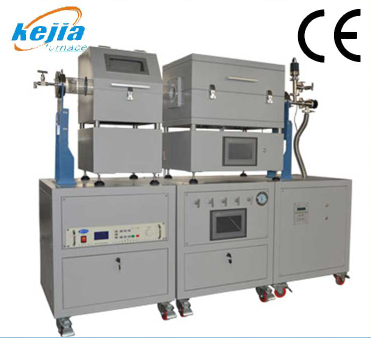
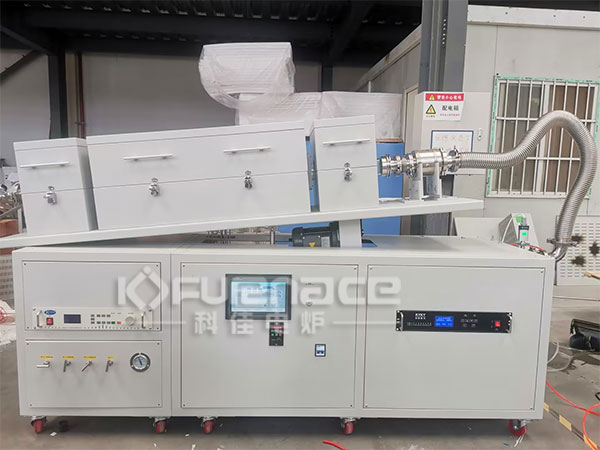
PECVD (Plasma Enhanced Chemical Vapor Deposition) electric furnace deposits the desired thin film material by introducing specific gases and undergoing chemical reactions under the action of plasma. It can introduce a wide range of gases, including reaction gases, carrier gases, doping gases, dilution gases, and special functional gases. Let’s take a detailed look below!
1. Reactive gas (source of core sedimentary material)
Silicon-based gas
Silane (SiH ₄): The most commonly used silicon source for depositing thin films such as amorphous silicon, polycrystalline silicon, silicon nitride (Si ∝ N ₄), and silicon oxide (SiO ₂). For example, in solar cells, SiH ₄ reacts with NH ∝ to form a Si ∝ N ₄ anti reflective passivation layer.
Disilane (Si ₂ H ₆): has a lower decomposition temperature and is suitable for low-temperature deposition of silicon-based thin films.
Silicon tetrafluoride (SiF ₄): used for depositing fluorinated silicide films, such as SiOF (silicon fluoride glass), to reduce the dielectric constant of the film.
Nitrogen based gas
Ammonia gas (NH ∝): reacts with SiH ₄ to generate Si ∝ N ₄, which serves as a passivation layer or insulation layer.
Nitrogen (N ₂): As a nitrogen source, it participates in the deposition of nitrides or serves as a diluent gas to regulate reaction rates.
Oxygen based gas
Oxygen (O ₂): reacts with SiH ₄ to generate SiO ₂, which serves as a dielectric layer or protective layer.
Nitrous oxide (N ₂ O): Provides both nitrogen and oxygen for depositing silicon oxynitride (SiON) thin films, possessing the characteristics of both SiO ₂ and Si ∝ N ₄.
Carbon based gas
Methane (CH ₄): Used for depositing silicon carbide (SiC) or diamond-like carbon (DLC) thin films to improve material hardness and wear resistance.
Acetylene (C ₂ H ₂): decomposes to produce carbon radicals, used for depositing high hardness carbon based films.
Metal organic gas
Tetramethylsilane (Si (CH3) ₄, TMMS): used for depositing carbon containing silicide films, such as SiC: H.
Trimethylaluminum (Al (CH3) 2O3, TMA): As an aluminum source, deposit aluminum oxide (Al ₂ O3) or aluminum nitride (AlN) thin films.
2. Carrier gas (conveying reaction gas)
Hydrogen (H ₂)
Function: As a carrier gas, it transports reaction gases such as SiH ₄ and participates in reactions (such as reducing oxygen in SiO ₂) to improve the purity of the film.
Application: When depositing amorphous silicon thin films, H ₂ can dilute SiH ₄, control the deposition rate, and passivate dangling bonds in the film to improve electrical performance.
Argon gas (Ar)
Function: Inert carrier gas, does not participate in reactions, only used for transporting gases or maintaining plasma stability.
Application: When depositing high-purity metal thin films (such as Al, Ti), Ar is used as a carrier gas to avoid the introduction of impurities.
Helium (He)
Function: Similar to Ar, but with higher thermal conductivity, suitable for processes that require rapid heat dissipation.
Application: In high-frequency PECVD, He can enhance plasma uniformity and improve film quality.
3. Doping gas (regulating the electrical properties of thin films)
Phosphorane (pH ∝)
Function: Provide phosphorus dopant for depositing n-type semiconductor thin films (such as n-type amorphous silicon).
Application: In solar cells, doping with PH3 can improve the conductivity of amorphous silicon layers and reduce series resistance.
Borane (B ₂ H ₆)
Function: Provide boron dopant for depositing p-type semiconductor thin films (such as p-type amorphous silicon).
Application: In heterojunction solar cells, B ₂ H ₆ doping can form p-n junctions, improving cell conversion efficiency.
Other doping gases
Boron trifluoride (BF ∝): used for depositing p-type gallium nitride (GaN) thin films.
Diethyl Zinc (DEZ): As a zinc source, zinc oxide (ZnO) thin films are deposited and doped with aluminum (Al) or magnesium (Mg) to regulate conductivity.
4. Diluting gas (controlling reaction rate)
Nitrogen (N ₂)
Function: Dilute reaction gases (such as SiH ₄), reduce deposition rate, and improve film uniformity.
Application: When depositing Si ∝ N ₄ thin films, N ₂ and NH ∝ jointly serve as nitrogen sources, and the film composition is controlled by adjusting the ratio.
Carbon dioxide (CO ₂)
Function: As an oxygen source or diluent gas, it participates in the deposition of carbon oxides or regulates the reaction environment.
Application: When depositing carbon based films, CO ₂ can inhibit graphitization and improve film hardness.
5. Special functional gases (meeting specific needs)
Fluorinated gases (such as CF ₄, SF ₆)
Function: Used for etching or cleaning furnace chambers to remove residues.
Application: Before depositing multi-layer films, CF ₄ plasma is introduced to clean the furnace tube to avoid cross contamination.
Water vapor (H ₂ O)
Function: Participate in oxidation reactions, deposit hydroxide or hydrate films.
Application: In the field of biomedicine, hydrogel containing films are deposited for drug release or tissue engineering.
Organic gases (such as C ₆ H ₆, C ₈ H ₁₀)
Function: Deposition of polymer or carbon based films, such as Parylene, for electronic packaging.
Application: In microelectronic packaging, Parylene film can provide good moisture resistance and insulation performance.Click to learn more PECVD devices! Or click on online customer service to learn more about product information!
Contact Information
E-mail: