English
 简体中文
简体中文 Français
 日本語
日本語 한국어
한국어 Português
 Русский
 Español




Tel Number
181-3719-5600
In laboratory and industrial applications, tube furnaces and box furnaces each have their own applicable scenarios. The experimental scenario of prioritizing tube furnaces over box furnaces is usually closely related to the structural advantages of tube furnaces, such as long tube design, atmosphere control, uniform heating, etc. Let’s take a detailed look below!
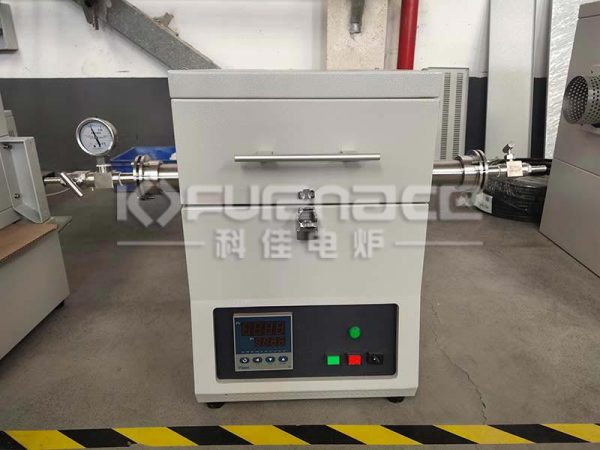
A commonly used small mini desktop tube furnace (click on the image to view product details)
1. Experiments that require good control of the reaction atmosphere
Chemical Vapor Deposition (CVD)
Scenario: Deposition of thin films on material surfaces (such as graphene, carbon nanotubes, semiconductor films).
Reason:
Tube furnaces can better control the flow rate and proportion of reaction gases (such as methane, silane, ammonia) through gas flow meters, achieving uniform growth of thin films.
Box type furnaces are difficult to maintain low pressure or specific gas environments due to poor sealing, which can lead to uneven deposition or impurity doping.
Heat treatment under atmosphere protection (such as metal reduction, annealing)
Scenario: Annealing, quenching, or reduction treatment of metals or alloys in an inert (nitrogen, argon) or reducing (hydrogen) atmosphere.
Reason:
Tube furnaces can be equipped with gas circulation systems to ensure uniform distribution of atmosphere and avoid material oxidation or incomplete reactions.
Box type furnaces have a large volume, long atmosphere replacement time, and are difficult to achieve local atmosphere control.
High temperature corrosion experiment
Scenario: Study the corrosion behavior of materials in molten salts (such as NaCl KCl) or strong bases (such as NaOH).
Reason:
Tube furnaces can directly contact corrosive media through quartz or silicon carbide furnace tubes, while introducing protective gases (such as argon) to isolate oxygen and reduce side reactions.
The open structure of the box furnace can easily lead to the volatilization of corrosive media or reaction with air, which affects the experimental results.
2. Experiments that require long samples or continuous feeding
Processing of long rod-shaped/fibrous samples
Scenario: Heat treatment or surface coating of samples such as carbon fiber, ceramic fiber, and metal rod.
Reason:
The length of the furnace tube of the tube furnace can be customized (such as 1-3 meters), suitable for placing long samples, and the heating uniformity is better than that of the box furnace.
The heating chamber of a box furnace is usually cubic, and long samples need to be bent or cut, which may damage the sample structure.
Continuous feeding experiments (such as catalyst preparation, powder sintering)
Scenario: Continuous heat treatment of powders or particles (such as catalyst activation, ceramic powder sintering) is achieved by rotating or moving furnace tubes.
Reason:
Tube furnaces can be equipped with rotating devices or spiral feeders to evenly mix or react samples during the heating process.
Box type furnaces are difficult to achieve dynamic feeding, and powder accumulation can lead to uneven heating.
3. Experiments that require rapid temperature rise and fall or gradient temperature
Rapid heat treatment (such as quenching, flash firing)
Scenario: Study the phase transformation kinetics of metals or ceramics by rapidly heating and quenching them in seconds.
Reason:
The furnace tube wall of the tube furnace is thin and the heat capacity is small. When combined with slide heating or halogen heating, it can achieve rapid temperature rise and fall.
Box type furnaces have a large heat capacity and slow heating and cooling speed (usually ≤ 10 ℃/min), which cannot meet the requirements of rapid heat treatment.
Temperature gradient experiment (such as material phase transition research)
Scenario: Set up different temperature zones inside the furnace tube (such as 1000 ℃ at the front and 500 ℃ at the back) to study the diffusion or phase transition behavior of materials under temperature gradients.
Reason:
Tube furnaces can be designed with multiple temperature zones for independent temperature control, allowing for better control of temperature gradients.
The heating elements of a box furnace are usually evenly distributed, making it difficult to achieve local temperature differences.
4. Experiments requiring observation or transparency requirements
In situ optical observation (such as high-temperature phase transition, melting behavior)
Scenario: Observing the melting, crystallization, or phase transition process of materials at high temperatures through a microscope or spectrometer.
Reason:
Tube furnaces can use quartz furnace tubes with good transparency, allowing laser or visible light to penetrate and achieve in-situ observation.
The door of a box furnace is usually made of metal material, which cannot transmit light, and the internal structure may obstruct the view.
Photocatalytic Reaction Experiment
Scenario: Study the degradation efficiency of catalysts on organic pollutants under illumination.
Reason:
Tube furnaces can be equipped with quartz windows or fiber optic introduction devices to directly illuminate the sample with a light source.
Box type furnaces require additional design of lighting systems, and the distribution of light is uneven.
5. Special structure or miniaturization requirements
Microreactor or chip level experiments
Scenario: Performing high-temperature reactions on microfluidic chips or nanodevices (such as catalyst screening, chemical sensing).
Reason:
The diameter of the furnace tube in a tube furnace can be as small as a few millimeters, making it suitable for placing microreactors, and the heating uniformity is better than that of a box furnace.
The heating chamber of the box furnace is relatively large, making it difficult to achieve precise temperature control locally.
Portable or on-site experiments
Scenario: Conduct rapid thermal analysis in the field or near production lines (such as ore identification, material quality inspection).
Reason:
The tube furnace has a compact structure, light weight, and is easy to transport and integrate into a mobile platform.
The box furnace has a large volume and requires fixed installation, which is not suitable for on-site use.
6. Summary: Selection principles of tube furnace vs box furnace
| Selection dimension | Advantages of tube furnace scenes | Advantages of Box Furnace Scenarios |
| Atmosphere control | Precise control of reaction gas or protective atmosphere is required | Low atmosphere requirements (such as air atmosphere heat treatment) |
| Sample size | Long rod-shaped, fibrous, or miniature samples | Block, plate, or large-sized samples |
| Heating method | Quick temperature rise and fall, gradient temperature | Uniform heating, long-term insulation |
| Observe requirements | In situ optical or spectroscopic observation is required | No need for transparency observation |
| Structural flexibility | Continuous feeding, rotary heating | Static heating, parallel processing of multiple samples |
| Portability | Miniaturization, on-site experiments | Fixed installation, regular laboratory use |
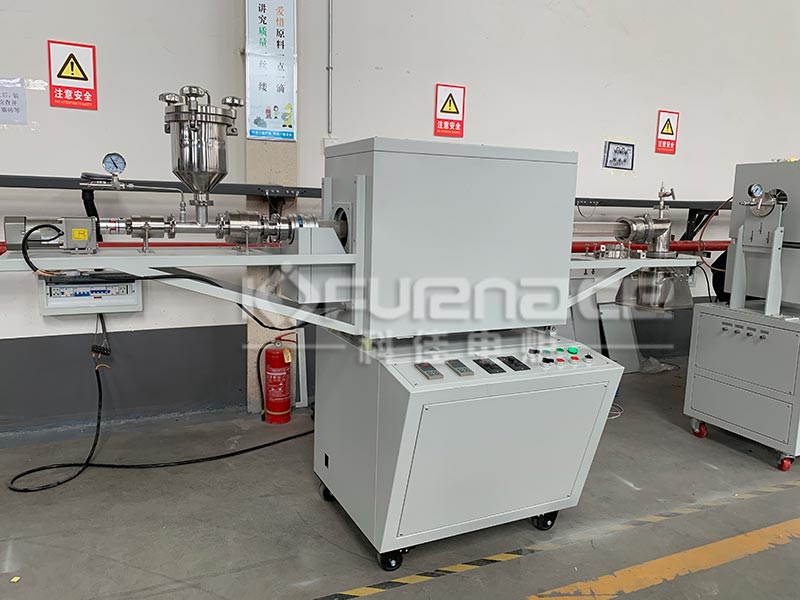
Commonly used laboratory rotary furnaces (click on the image to view product details)
Conclusion: When better atmosphere control, long sample processing, rapid temperature rise and fall, in-situ observation, or special structures are required for experiments, a tube furnace is a better choice; Box type furnaces are more suitable for large-scale samples, uniform heating, or conventional heat treatment scenarios with low atmosphere requirements.Click to learn more tubular furnaces! Or click on online customer service to learn more about product information!
Contact Information
E-mail: