English
 简体中文
简体中文 Français
 日本語
日本語 한국어
한국어 Português
 Русский
 Español




Tel Number
181-3719-5600
In scenarios such as university scientific research, new material development, and laboratory small-scale production, experimental rotary furnaces are commonly used as core heat treatment equipment. With advantages such as continuous operation, uniform heating of materials, and stable atmosphere environment, they are widely used in processes such as powder roasting, material sintering, oxidation-reduction, activated carbon activation, and preparation of nanomaterials. Let’s take a detailed look at the working principle and core technical parameters of the experimental rotary furnace. At the same time, we recommend professional rotary furnace manufacturers to help promote scientific research and production.
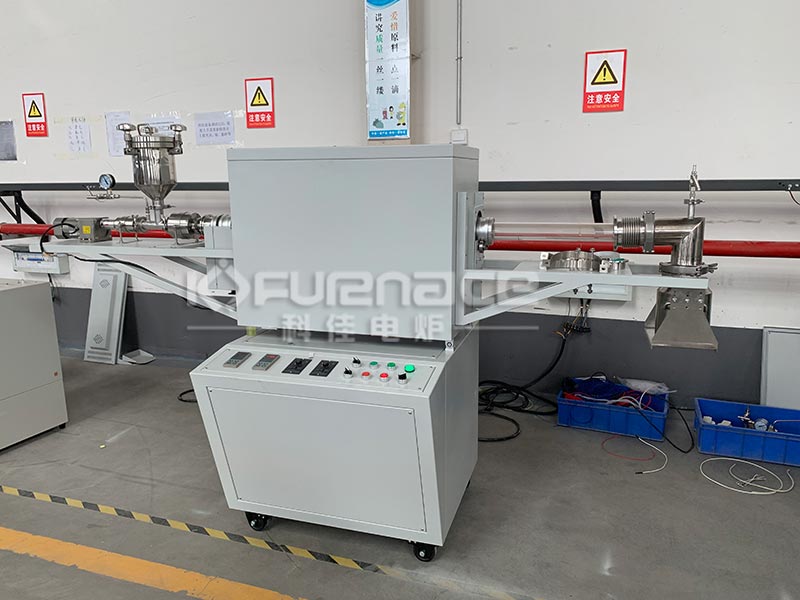
A commonly used 1600 ℃ experimental rotary tube furnace (click on the image to view product details)
1. Working principle of experimental rotary furnace
The core working principle of the experimental rotary furnace is to slowly rotate the drum furnace, allowing the material to continuously flip and be uniformly heated inside the drum. It is combined with an electric heating system to provide stable high temperature and can be equipped with atmosphere protection or vacuum pumping devices to achieve continuous heat treatment of powder and granular materials.
Its workflow can be divided into three core stages:
a. Heating and heat transfer
The experimental rotary furnace uses high-temperature resistant alloys, quartz or corundum tubes as the furnace chamber, and external heating elements such as resistance wires and silicon carbon rods are arranged to generate high-temperature heat energy after being powered on. During the rotation of the drum, heat is evenly transferred to the material through radiation and conduction, avoiding local overheating or uneven sintering, ensuring experimental repeatability and product consistency.
b. Rotation and material flipping
The motor drives the drum to slowly rotate at an adjustable speed, and the material continuously rolls and moves forward under the action of gravity and rotation, achieving continuous feeding, continuous roasting, and continuous discharging. This dynamic processing method allows every part of the material to fully contact the temperature field and atmosphere, making it particularly suitable for the research and development of new materials such as nanomaterials, positive electrode materials, and ceramic powders.
c. Atmosphere protection and environmental control (optional)
For materials that are prone to oxidation and reduction, the experimental rotary furnace can be equipped with an atmosphere control system. By introducing atmospheres such as nitrogen, argon, hydrogen, ammonia decomposition gas, etc., the air inside the furnace is discharged to create an inert or reducing environment, preventing material oxidation and deterioration. Some models can also achieve micro positive pressure control, further improving experimental stability and adapting to special material sintering processes.
2. Core technical parameters of experimental rotary furnace
Technical parameters are an important basis for selecting experimental rotary furnaces, and different experimental requirements correspond to different configurations. The following are the standard technical parameters of mainstream experimental rotary furnaces in the industry, which are convenient for users to quickly match.
a. Temperature parameters
Maximum operating temperature: 1000 ℃, 1200 ℃, 1400 ℃ can be customized
Temperature control accuracy: ± 1 ℃
Heating rate: adjustable from 1 ℃/min to 20 ℃/min
Support multi-stage program heating, insulation, and cooling
b. Furnace tube and structural parameters
Furnace tube material: quartz glass, corundum ceramic, high-temperature resistant alloy
Furnace tube diameter: Φ 50mm to Φ 500mm
Furnace tube length: 300mm to 3000mm
Tilt angle: adjustable manually/electrically, controlling material retention time
Speed range: 1-10r/min continuously adjustable
c. Control and safety parameters
Control method: intelligent touch screen+PLC program control
Operating mode: intermittent/continuous
Protection functions: overtemperature alarm, leakage protection, disconnection protection
Operation interface: Real time display of temperature, speed, time, atmosphere flow rate and other data
d. Atmosphere and vacuum parameters (optional)
Atmosphere type: N ₂, Ar, H ₂, inert/reducing atmosphere
Gas flow rate: adjustable from 0 to 5L/min
Sealing method: flange double sealing ring, good air tightness
Can be paired with a vacuum system to achieve low or high vacuum environments
e. Other parameters
Compact structure, small footprint, suitable for use in university laboratories and research and development centers
3.Recommended by professional experimental rotary furnace manufacturers
Choosing a reliable experimental rotary furnace manufacturer directly determines equipment stability, experimental success rate, and long-term operating costs. We focus on the research and manufacturing of experimental rotary furnaces, atmosphere protection rotary furnaces, and rotary furnaces for sintering new materials, serving universities, research institutes, and new material enterprises. Our core advantages are as follows:
a. Strong customization ability
Temperature, speed, atmosphere, furnace tube material, and feeding and discharging methods can be customized according to experimental processes, supporting single temperature zone and dual temperature zone designs to meet the sintering needs of various materials such as positive electrode materials, negative electrode materials, catalysts, ceramic powders, and metal oxides.
b. High equipment stability
The core accessories adopt branded temperature control instruments, reduction motors, and sealing components. The drum rotates smoothly, the temperature field is uniform, and the atmosphere is leak free. The long-term continuous operation has a low failure rate and good data repeatability.
c. Full technical support throughout the process
We provide one-stop services such as installation and debugging, operation training, and process guidance. The equipment is repaired free of charge during the warranty period, and we offer lifelong technical support and parts supply to make scientific research experiments more worry free.
d. High cost-effectiveness, directly supplied by the manufacturer
There is no intermediary price difference, and the price is more advantageous under the same configuration, while also considering equipment accuracy and durability. It is suitable for small batch testing in university laboratories and enterprise R&D departments.
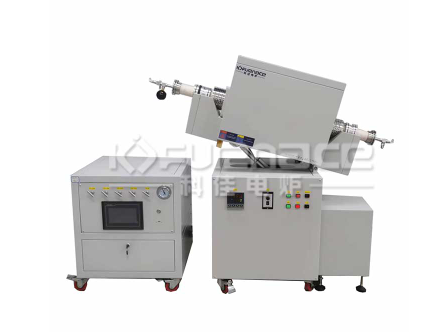
Small experimental rotary tube furnace (click on the picture to view product details)
4. Conclusion
The experimental rotary furnace has the core advantages of “dynamic rotation, uniform heating, stable atmosphere, and continuous operation”, and is particularly suitable for material experimental scenarios such as new material sintering, powder calcination, and atmosphere reduction. It is a widely used equipment in modern material research and development. The key parameters such as temperature, rotational speed, and atmosphere directly affect the experimental results and sample quality.
As a professional manufacturer of experimental rotary furnaces, we can provide a full range of products and customized solutions such as atmosphere protection rotary furnaces and new material sintering rotary furnaces. If you are selecting or have experimental needs, please feel free to consult for detailed technical parameters and exclusive solutions.Click to learn more customized tube furnaces! Or click on online customer service to learn more about product information!
Contact Information
E-mail: