English
 简体中文
简体中文 Français
 日本語
日本語 한국어
한국어 Português
 Русский
 Español




Tel Number
181-3719-5600
Tube furnaces are commonly used core equipment in laboratory and industrial production processes such as high-temperature heat treatment, material sintering, CVD deposition, and annealing oxidation. When selecting, many users will face a key question: which is more suitable for your process, a vertical tube furnace or a horizontal tube furnace? There are significant differences between the two in terms of structure, usage, and applicable scenarios. Choosing the wrong equipment not only affects the experimental results, but also increases the cost of use and maintenance difficulty. Below, a detailed comparison will be made in terms of structural characteristics, performance differences, applicable processes, selection points, etc., to help you quickly select a tube furnace that is suitable for your own process.
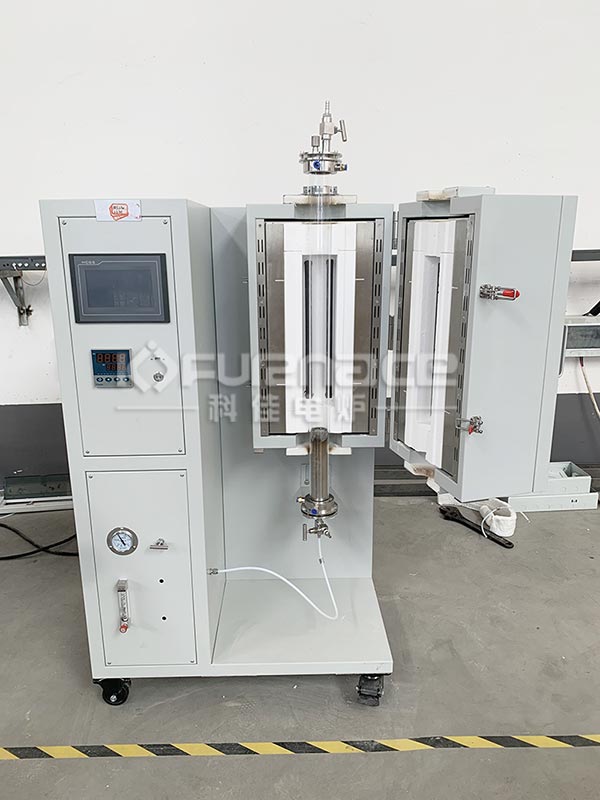
KJ-1100-V60 fluidized bed tube furnace (click on the picture to view product details)
1. The difference in core structure between vertical tube furnace and horizontal tube furnace
The layout of a tube furnace directly determines its usage scenario and operation mode. The core difference between vertical and horizontal furnaces lies in the installation direction and space occupation of the furnace tubes.
Vertical tube furnace
The furnace tube is installed vertically, and the heating furnace body is distributed around the furnace tube, forming a vertical column structure as a whole. The equipment has a small footprint and is suitable for compact laboratories and clean workshops; Vertical layout of furnace tubes can reduce sample shaking, and some models support bottom loading and top discharging, suitable for heat treatment of powder, particle, and small sample.
Horizontal tube furnace
Horizontal placement of furnace tubes, with the furnace body wrapped around the tubes in a horizontal direction, is a more widely used traditional structure in the industry. The loading and unloading operations are more intuitive, and can be directly pushed into the furnace tube with quartz boats and crucibles, suitable for processing sheet, block, and large-sized samples. The uniformity of the temperature field is easy to control, and the process stability is stronger.
2. Performance comparison: temperature field, loading, operation and maintenance
a. Uniformity of temperature field
Horizontal tube furnace has a smaller temperature gradient and better temperature field consistency due to its horizontal layout, making it suitable for processes that require strict temperature accuracy; The vertical tube furnace is affected by the rising airflow, and the high temperature zone is relatively concentrated, making it more suitable for scenarios that require moderate temperature field uniformity.
2. Compatibility between loading and sample
Vertical tube furnaces have high vertical space utilization and are suitable for powders, nanomaterials, and small workpieces. They can effectively prevent sample spillage, and some vertical tube furnaces can also achieve uniform heating of materials; The horizontal tube furnace supports the loading of large-sized samples and boats, and is suitable for processing large items such as block materials, ceramic substrates, and electrode plates.
c. Space and Operations
The vertical tube furnace has a small footprint and is suitable for users with limited laboratory space; Horizontal tube furnace operation is more ergonomic, with convenient sample retrieval and placement, and higher continuous operation efficiency.
d. Sealing and Atmosphere Protection
Both can achieve vacuum and atmosphere protection for the environment, but the sealing structure of the horizontal tube furnace tube is more mature and the airtightness is more stable, making it suitable for processes that require long-term passage of protective gases such as hydrogen, argon, and nitrogen; The vertical tube furnace has a compact sealing structure, which also meets the requirements of conventional atmosphere heat treatment.
3. Should I choose a vertical or horizontal tube furnace for different process scenarios?
a. Prioritize the process of selecting a vertical tube furnace
Powder metallurgy, ceramic powder sintering, catalyst calcination
Nano material synthesis, CVD small sample experiment
Use in laboratories and clean rooms with limited space
Process that requires vertical heating to prevent sample displacement
Small batch small piece heat treatment
b. Prioritize the process of selecting a horizontal tube furnace
Material annealing, oxidation, diffusion, alloying treatment
Processing of large-sized samples, sheet materials, and ceramic substrates
A scientific research experiment with high requirements for temperature field uniformity
Industrial batch continuous heat treatment production
High temperature technology for new energy materials and semiconductor devices
4. Selection key: Choose more cost-effective based on process requirements
Choosing between a vertical tube furnace or a horizontal tube furnace, there is no need to blindly pursue high configurations. The key is to consider three points:
Sample form: powder, small piece selection vertical; Choose horizontal for block and long sizes.
Space conditions: The site is compact and vertical; Pursuing convenient operation, choose horizontal mode.
Process requirements: Conventional atmosphere and optional vertical powder sintering; High precision temperature field, priority given to horizontal handling of large items.
At the same time, when selecting, attention should also be paid to parameters such as equipment temperature range, temperature control accuracy, furnace tube material, vacuum degree, and whether it supports multiple temperature zones. Combined with the manufacturer’s customization capabilities, it should be adapted to its own special process requirements.
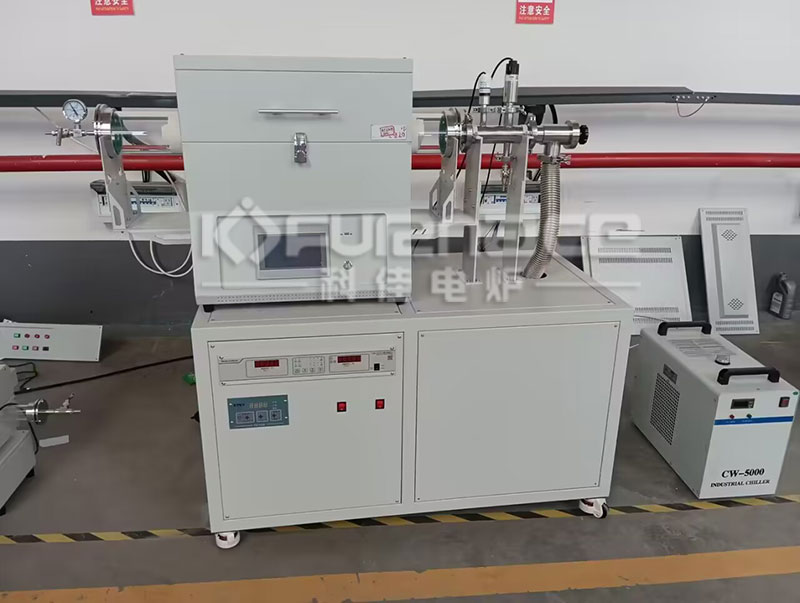
Commonly used gas tube furnaces (click on the image to view product details)
5. Summary
There is no absolute superiority or inferiority between vertical and horizontal tube furnaces, only differences in process adaptability. For powder materials, limited space, and simple heat treatment, a vertical tube furnace can be selected; Long size samples, high-precision processes, and large-scale production are more suitable for horizontal tube furnaces.
When selecting a tube furnace, it is recommended to make a comprehensive judgment based on the sample type, process parameters, and usage environment. Professional manufacturers can also be consulted to provide customized solutions to ensure that the equipment not only meets the needs of production experiments, but also improves efficiency and reduces costs.Click to learn more customized tube furnaces! Or click on online customer service to learn more about product information!
Contact Information
E-mail: