English
 简体中文
简体中文 Français
 日本語
日本語 한국어
한국어 Português
 Русский
 Español




Tel Number
181-3719-5600
Tube furnace is a commonly used high-temperature heating equipment for laboratory new material research and development, powder heat treatment, and small batch sintering. It is divided into two categories according to the arrangement of the furnace body: horizontal tube furnace and vertical tube furnace. Many procurement personnel cannot distinguish the core difference between the two, and blindly selecting materials can easily lead to problems such as material sticking to the wall, uneven heating, powder dust, and substandard reaction effects. Below, we will sort out the differences between the structure, temperature control characteristics, atmosphere flow, and material placement methods one by one, and compare them with various heat treatment processes for scene adaptation, making it convenient to choose according to needs.
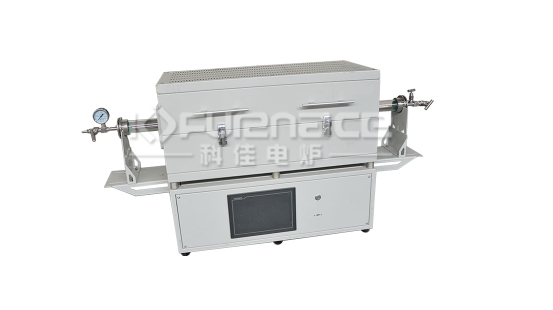
A commonly used small horizontal tube furnace (click on the image to view product details)
1. Seven major differences between vertical tube furnace and horizontal tube furnace core
(1). Overall structure and placement method
Horizontal tube furnace: The furnace tubes are horizontally and transversely erected, and the heating zone of the furnace is distributed on both sides. The quartz/corundum furnace tubes pass through the left and right furnace plugs, and the materials are placed in the ceramic boat and pushed horizontally into the furnace. Simple structure, convenient disassembly and assembly of samples, is a common style in the market.
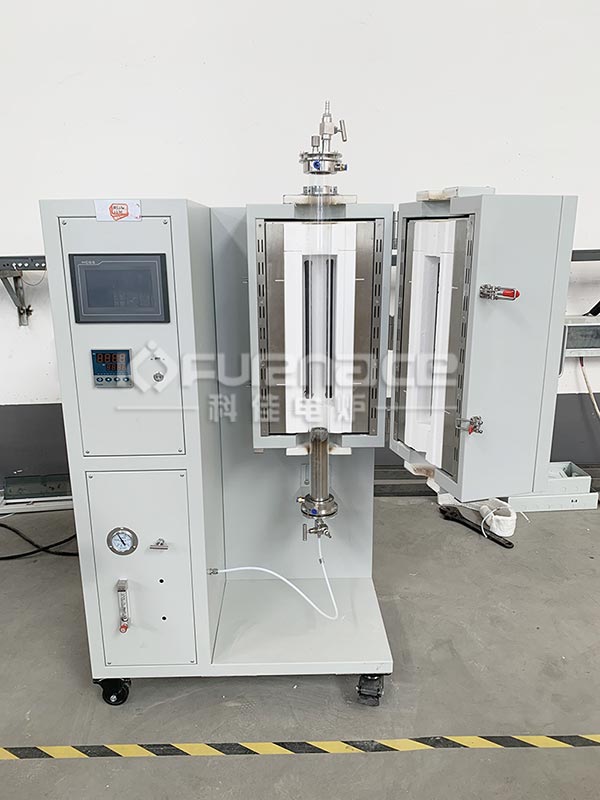
Vertical tube furnace: The furnace tubes are placed vertically and vertically, and the heating chamber is arranged vertically. The materials are fed from the top or bottom of the furnace body, and the samples are lifted and placed by the bottom tray and crucible, occupying less horizontal space as a whole.
(2). Difference in uniformity of material heating
Horizontal furnace: The material is laid flat inside the porcelain boat, with a slight difference in heating between the upper and lower surfaces; Long term high-temperature firing can cause temperature differences in the surface powder due to the influence of airflow, making it suitable for conventional sintering. However, it requires high temperature uniformity and weak uniformity.
Vertical furnace: The material is vertically located at the center of the constant temperature field, surrounded by 360 ° heating, with a small temperature difference between the top and bottom, and a higher consistency of the temperature field; The overall sintering color difference of powder and granular materials is small, and precision experiments can be prioritized.
(3). Atmosphere circulation and airflow direction
Horizontal tube furnace: Gas flows horizontally from left to right, and the airflow continuously blows on the surface of the material. The ultrafine powder is easily carried and flown by the airflow, and then adheres to the quartz tube wall to form a white powder wall; There is a tendency for dead corners of airflow to occur inside the furnace.
Vertical tube furnace: The protective gas circulates slowly from top to bottom or from bottom to top, with a gentle airflow. The vertical airflow does not blow away fine powder over a large area, which can greatly reduce powder dust, pipe wall adhesion, and material loss problems; It is also more suitable for vapor deposition and gas-solid chemical reaction processes.
(4). Powder material processing capability
Horizontal furnace: The use of ultra-fine powder and nanomaterials to produce short boards is evident, with frequent occurrences of dust, agglomeration, and wall sticking; Solid blocks, ceramic tiles, and hard specimens have better firing effects.
Vertical furnace: specially optimized for various types of ultrafine inorganic powders, lithium battery powders, and nano oxide calcination, which can effectively avoid powder agglomeration and wall hanging, and achieve more uniform discharge particle size.
(5). Convenience of loading and unloading operations
Horizontal furnace: Open one side of the furnace plug and directly push and pull the porcelain boat to load and unload samples. The operation threshold is low, making it very convenient for frequent daily sampling and phased experiments. It can also achieve continuous feeding and discharging design.
Vertical furnace: requires lifting the crucible to lift and feed, with more loading and unloading steps and slightly longer time consumption; The advantage is its small footprint, suitable for laboratories with limited space, and high efficiency.
(6). Adaptability to pressure and negative pressure experiments
Horizontal furnace: There are many sealing points, and the airtightness deteriorates faster under long-term high negative pressure environment, which is not suitable for long-term vacuum insulation experiments.
Vertical furnace: The furnace body is uniformly compressed vertically, and the sealing structure design is more suitable for high vacuum and high-pressure atmosphere environments. The airtightness is more stable, and it can maintain a vacuum or positive pressure protective atmosphere for a long time.
(7). Site occupation and installation conditions
Horizontal furnace: With a large horizontal length, it requires a longer tabletop for placement, making it suitable for spacious laboratory workbench areas.
Vertical furnace: It occupies a small area and vertically utilizes space, making it more suitable for small laboratories and compact workstations.
2. Comparison Table for Adaptation of Various Heat Treatment Process Scenarios
| Process application scenarios | Recommended furnace type | Reason for selection |
| Ceramic tiles, hard alloy blocks, solid block samples annealed and sintered | Horizontal tube furnace | Convenient loading and unloading, high cost-effectiveness, and no dust pollution problem for block materials |
| Calcination of nano powder, inorganic oxide, lithium anode and cathode materials | Vertical tube furnace | Vertical airflow prevents dust, eliminates pipe wall adhesion, and ensures uniform powder sintering |
| Gas phase reaction, CVD vapor deposition, gas-solid synthesis experiments | Vertical tube furnace | The airflow direction is stable, the gas is in full contact with the material, and the reaction is complete |
| Daily teaching experiments, basic material exploration, multiple batch small sample testing | Horizontal tube furnace | Easy to operate, frequent opening and closing, not easily damaged, lower procurement cost |
| High vacuum annealing, long-term inert atmosphere insulation experiment | Vertical tube furnace | Good air tightness, stronger vertical structure sealing durability |
| Bright annealing, brazing and oxidation removal treatment for metal small parts | Horizontal tube furnace | Fast feeding and discharging, suitable for intermittent heat treatment production |
| Purification experiment of volatile materials and sublimation materials | Vertical tube furnace | Segmented temperature control, reasonable layout of condensation area, more convenient collection of products |
3. Summary and Suggestions for Purchasing
Mainly focused on block samples, routine teaching experiments, and intermittent annealing, with limited budget: horizontal high-temperature tube furnaces are preferred for their strong versatility, simple operation, and affordable price;
Long term firing of ultrafine powders and nanomaterials requires gas-phase reactions, strict control of wall sticking defects, and pursuit of high-precision experimental data. It is recommended to use a vertical tube furnace, which has stronger process adaptability and can effectively avoid common problems in powder sintering;
Small space placement and long-term high vacuum atmosphere operation: A vertical tube furnace is more suitable.
Both types of furnaces can achieve a maximum temperature range of 1200 ℃, 1400 ℃, and 1700 ℃, with the core difference concentrated in the airflow layout and material heating form. The selection can be based on the morphology of the experimental materials.Click to learn more customized tube furnaces! Or click on online customer service to learn more about product information!
Contact Information
E-mail: