English
 简体中文
简体中文 Français
 日本語
日本語 한국어
한국어 Português
 Русский
 Español




Tel Number
181-3719-5600
New material research, powder metallurgy sintering, ceramic heat treatment, and lithium battery precursor reduction experiments, many laboratories and production enterprises are prone to pitfalls when purchasing high-temperature atmosphere furnaces. Many users only focus on the highest temperature parameter, ignoring the adaptability of the atmosphere and the sealing performance of the furnace. After the equipment arrives, problems such as sample oxidation, gas leakage, uneven temperature zone, and failure to meet process requirements may occur. To choose a high-temperature atmosphere furnace that is suitable for one’s own process, the key is to comprehensively evaluate it from the three dimensions of “temperature, atmosphere, and sealing”. Below is a detailed explanation of the key points for selecting a high-temperature atmosphere furnace.
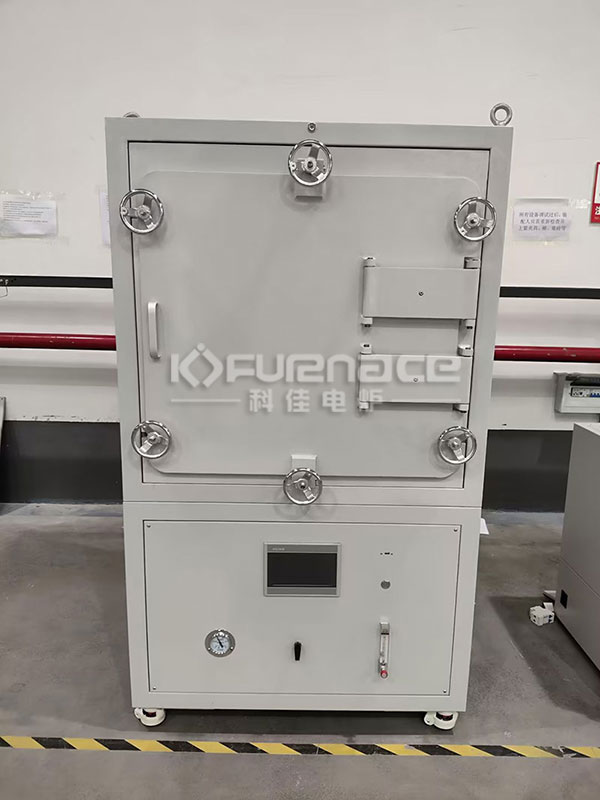
A commonly used atmosphere furnace (click on the image to view product details)
1. Temperature parameters: not only the highest temperature, but also the commonly used working temperature
When many procurement personnel select, the first concern is the maximum temperature of the high-temperature atmosphere furnace. Here, it is important to remember a selection principle: the maximum temperature of the equipment should be 50-100 ℃ higher than the actual operating temperature of your process, and do not operate at the maximum temperature of the equipment for a long time.
For example, if your experiment is stable at 1400 ℃ heat treatment for a long time, do not choose a furnace with a nominal maximum temperature of 1400 ℃. Instead, prioritize models with a temperature of 1500 ℃ or 1600 ℃. Long term full load extreme use will significantly reduce the service life of heating elements and insulation layers, deteriorate temperature stability, and increase maintenance costs.
In addition to the maximum temperature, it is also important to focus on these indicators:
(1). Constant temperature zone length: directly determines how many samples can be placed simultaneously. Small sample laboratory experiment, short constant temperature zone is sufficient; Batch sample sintering must confirm the effective constant temperature zone size to avoid excessive temperature difference in the sample placement area, which may result in poor repeatability of experimental data.
(2). Heating rate: Different processes require different heating rates. Slow sintering process requires controllable low-speed heating; Rapid pyrolysis and short-term annealing require support for high rate adjustable heating. Confirm whether the temperature rise can be programmed for segmented temperature control during selection.
(3). Temperature control accuracy and temperature field uniformity: Scientific research experiments require high data, and high-temperature atmosphere furnaces with temperature control accuracy of ± 1 ℃ and good furnace temperature uniformity are preferred. Industrial mass production can relax the indicators appropriately according to the process.
The type of heating element is also linked to its temperature resistance: resistance wires are commonly used in the low-temperature range; Silicon carbon rods are commonly used for temperatures between 1200 and 1400 ℃; For high temperature environments above 1400 ℃, silicon molybdenum rods are generally used for heating, and the selection should be based on the atmosphere conditions. Some heating elements cannot be used for a long time in specific atmospheres.
2. Atmosphere conditions: Match the furnace body and pipeline materials according to the heat treatment process
The core advantage of high-temperature atmosphere furnace is controllable atmosphere protection heat treatment. Whether it can adapt to your process gas is the second key to selection. Common usage atmospheres are divided into three categories: inert atmosphere, reducing atmosphere, and oxidizing atmosphere.
-Inert atmosphere: nitrogen, argon, used to prevent high-temperature oxidation of samples, belongs to universal working conditions, and can be adapted to most high-temperature atmosphere furnaces.
-Restoring atmosphere: Hydrogen gas, ammonia decomposition gas, etc. require high equipment requirements. The furnace body, seals, and pipelines must be made of hydrogen resistant materials, and explosion-proof and exhaust gas treatment devices must be equipped. Safety configurations cannot be omitted.
-Oxidation atmosphere: air, oxygen. It is necessary to confirm that the furnace material is resistant to oxidation. Some insulation materials will accelerate aging in oxygen rich and high-temperature environments.
Key confirmation items for selection:
(1). Is it necessary to pre evacuate. If it is necessary to first evacuate the air inside the furnace and then fill it with protective gas, a pre evacuated high-temperature atmosphere furnace should be selected; Simple gas replacement and low oxygen content requirements are sufficient for ordinary atmosphere furnaces. The higher the requirements for oxygen content control, the higher the requirements for the entire gas circuit system.
(2). Gas path control method. The simple model adopts a float flowmeter for manual adjustment; Research precision technology, recommend MFC with mass flow meter, multi-channel gas ratio, automatic flow control, to achieve precise atmosphere ratio.
(3). Exhaust gas treatment. Hydrogen and organic pyrolysis gases require supporting exhaust combustion and purification devices to ensure laboratory safety and avoid direct discharge of exhaust gases.
Reminder for avoiding pitfalls: Do not directly use ordinary box type high-temperature furnaces as atmosphere furnaces. Ordinary furnaces do not have a sealed gas path, and when protective gas is introduced, it will directly leak, making it impossible to achieve atmosphere protection, and the sample will still oxidize.
3. Sealing performance: the lifeline of the atmosphere furnace, directly determining the heat treatment effect
No matter how good the temperature and atmosphere are, if the furnace seal fails, all processes cannot meet the standards. Failure of sealing in high-temperature atmosphere furnaces can result in oxygen infiltration, sample oxidation and decarburization, continuous loss of atmosphere, and increased operating costs. Seal selection should consider these points:
(1). Sealing structure of furnace door. Commonly used silicone sealing rings, suitable for medium and low temperature working conditions; For long-term use at high temperatures, high-temperature resistant vacuum sealing rings should be selected. Check the machining accuracy of the sealing surface. Even thick sealing rings with rough sealing surfaces are prone to air leakage.
(2). Sealing of furnace body welds, lead ports, and observation ports. Many people only look at the furnace door and ignore the tiny leakage points at the heating rod leads, pressure gauges, and ventilation interfaces. To carry out low oxygen environment processes, it is necessary to require equipment to undergo pressure holding and leak testing before leaving the factory.
(3). Vacuum holding pressure index. For working conditions that require pre vacuuming, it is necessary to clarify the ultimate vacuum degree and static holding rate. The smaller the holding rate, the better the overall sealing performance.
4. Other supporting selection details are easily overlooked
(1). Furnace material: alumina fiber furnace is heat-resistant and lightweight; Choose based on the atmosphere and temperature.
(2). Program control system. Programmable temperature control instruments are preferred for scientific research experiments, which can set multiple heating, insulation, and cooling curves, operate automatically, record process data, and facilitate repeated experiments and data traceability.
(3). Security protection function. Overheating power outage, gas cut-off protection, pressure over limit alarm, explosion-proof pressure relief device, involving flammable and explosive atmospheres such as hydrogen, safety protection is a mandatory requirement.
(4). Equipment size: sample size, crucible size, in addition to the internal space of the furnace, laboratory placement space, power load, and cooling water matching should also be considered (some high-temperature vacuum models require water cooling).
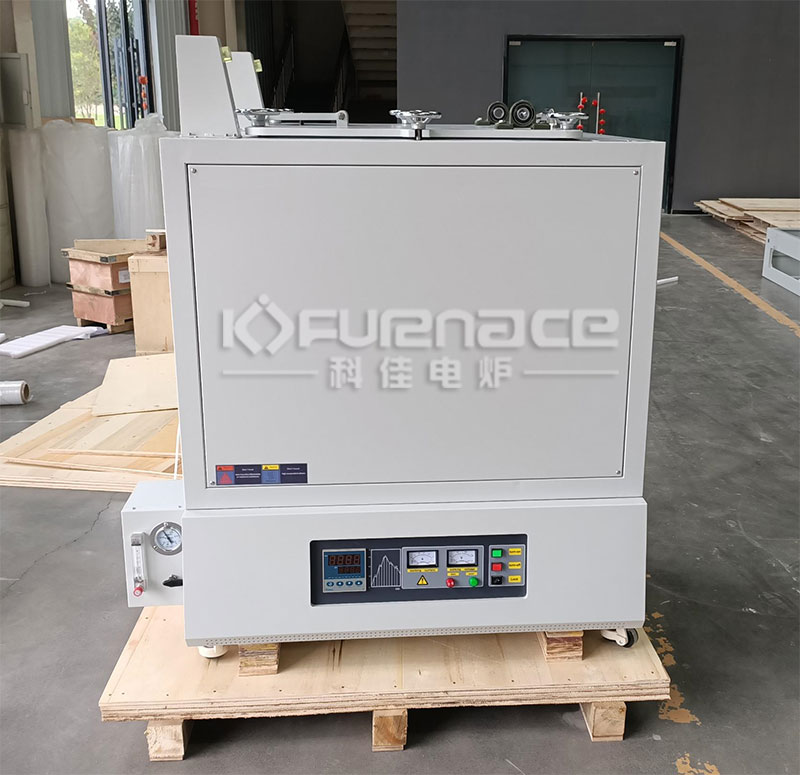
Customized top opening atmosphere furnace
5. Selection Summary
When choosing a high-temperature atmosphere furnace, prioritize clarifying your own process requirements: specifying the maximum operating temperature, the size of the constant temperature zone, the type of gas that needs to be introduced, whether pre vacuum is required, and the allowable oxygen content.
-Ordinary ceramic sintering and air heat treatment: conventional high-temperature atmosphere furnace is sufficient;
-Lithium battery materials and powder reduction require a hydrogen atmosphere: choose an atmosphere furnace with hydrogen resistant sealing and explosion-proof configuration;
-University research requires high experimental repeatability: priority is given to models with MFC multi-channel gas distribution, high-precision temperature control, and strict leak detection.
Do not simply compare prices, temperature, atmosphere, and sealing to match the process, in order to stably produce qualified samples and reduce subsequent experimental rework and equipment maintenance costs.Click to learn more atmosphere Furnaces! Or click on online customer service to learn more about product information!
next: the latest article
Contact Information
E-mail: