English
 简体中文
简体中文 Français
 日本語
日本語 한국어
한국어 Português
 Русский
 Español




Tel Number
181-3719-5600
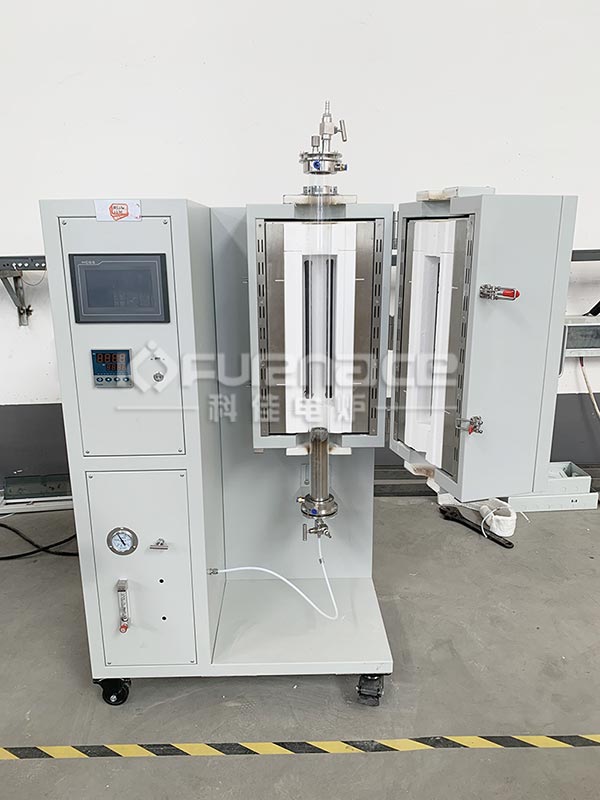
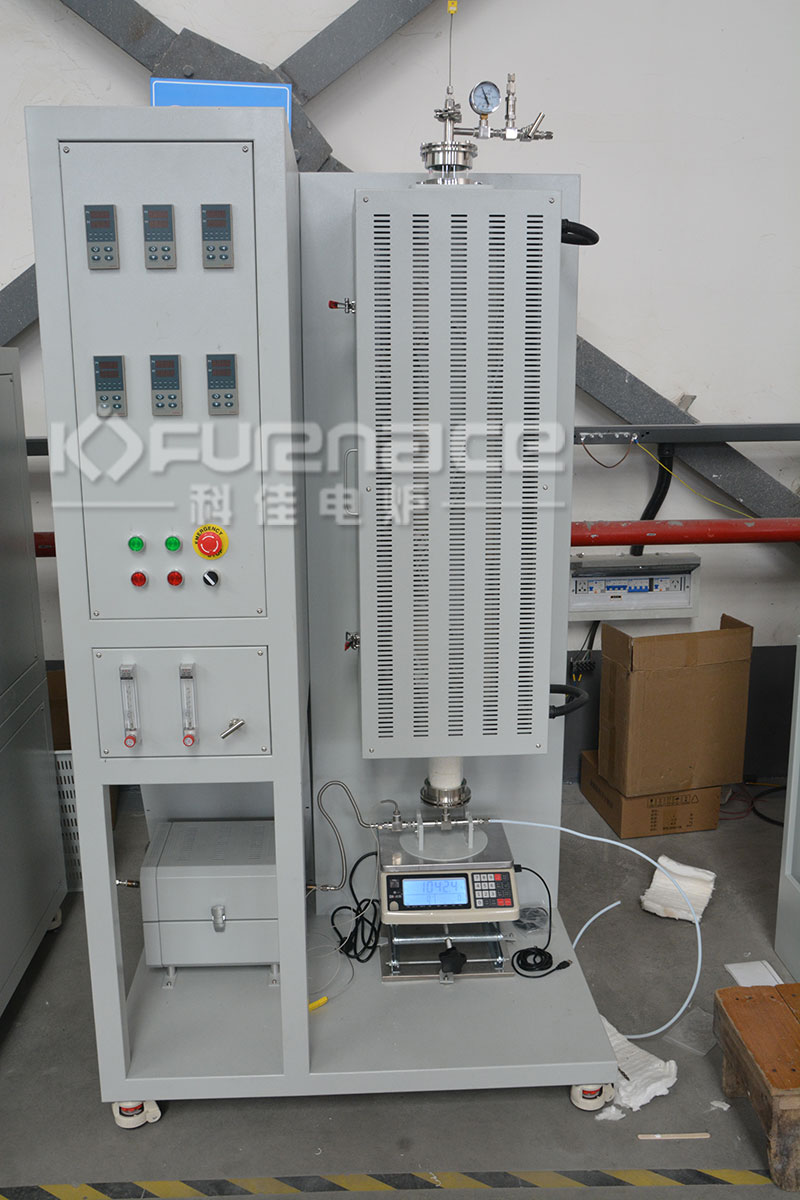
In the heat treatment experiments of university laboratories, research institutes, and new material research and development enterprises, the experimental vertical tube furnace is the core equipment for powder sintering, annealing, vapor deposition, pyrolysis, atmosphere reaction and other experiments. Compared with the horizontal tube furnace, the vertical structure of the vertical tube furnace is more suitable for scenarios such as sample vertical placement, gravity influence experiments, powder material processing, and continuous feeding. Many researchers tend to overlook key parameters when purchasing equipment, resulting in the equipment being unable to match the experimental process upon purchase. Below is a detailed explanation of the core points for selecting experimental vertical tube furnaces, helping researchers choose equipment that is suitable for their experimental needs.
1. Determine the maximum operating temperature and heating rate
Temperature is the first indicator to be selected for selection, which directly determines whether the experiment can be completed. Selection should not only consider the nominal maximum temperature of the equipment, but also distinguish between long-term operating temperature and short-term peak temperature.
(1). Peak temperature: The maximum temperature that the equipment can reach in a short period of time, and it is not recommended to operate at this temperature for a long time;
(2). Common operating temperature: The temperature for continuous use in normal experiments is generally recommended to be 100-200 ℃ lower than the maximum temperature of the equipment to extend the life of the furnace heating elements.
Pay attention to the heating rate at the same time. The requirements for heating rate are different in material pyrolysis and annealing experiments. Ordinary experiments generally run at 1-10 ℃/min; Quick heat treatment experiment, with the option to choose models that support rapid heating. In addition, it is necessary to confirm the temperature control accuracy. Scientific research experiments usually require ± 1 ℃ to ensure the reproducibility of the experiment.
2. Furnace tube material, matching atmosphere and temperature environment
The vertical tube furnace tube directly contacts the sample and process gas, and incorrect material selection can lead to corrosion, gas leakage, and high-temperature deformation, which is the key to selection.
-Quartz furnace tube: commonly used, up to 1200 ℃, suitable for inert atmosphere and vacuum experiments, not resistant to hydrogen and fluorine corrosive gases, high cost-effectiveness;
-Corundum (alumina) furnace tube: can withstand high temperatures up to 1600 ℃, withstand most atmospheres, has better acid-base resistance, and is suitable for high-temperature sintering experiments;
-Silicon carbide furnace tube: good thermal conductivity, high strength, can reach around 1400 ℃, suitable for long-term continuous high temperature experiments;
-Metal furnace tubes: stainless steel, molybdenum tubes, etc., are often used for special reducing atmospheres and have higher costs.
When selecting, the experimental atmosphere should be considered: the oxidation atmosphere should prioritize corundum; Quartz can be selected for low-temperature experiments in vacuum and inert atmosphere; Containing highly corrosive gases, it is necessary to confirm the corrosion resistance of the furnace tube with the manufacturer. The inner diameter of the furnace tube and the effective heating length should be determined based on the sample boat and sample quantity.
3. Requirements for Vacuum System and Atmosphere Control
Many material experiments require vacuum or introduction of protective or reactive gases, and the selection must confirm the vacuum and gas supply configuration.
(1). Vacuum requirements: distinguish between low vacuum and high vacuum. Simple degassing experiment with low vacuum is sufficient; CVD、 The annealing experiment of high-purity materials requires a high vacuum unit. At the same time, pay attention to the sealing structure. The flange sealing at both ends of the vertical furnace is key, and the sealing material should be resistant to temperature and gas corrosion;
(2). Atmosphere control: Confirm the types of gases that can be introduced, argon and nitrogen are conventional inert gases; Reducing gases such as hydrogen and ammonia require explosion-proof design for equipment. Multi channel gas can be configured with a mass flow meter for precise gas control, achieving proportional gas supply.
(3). Exhaust gas treatment: Some experiments may produce toxic and corrosive exhaust gases. When selecting, it is necessary to confirm whether condensation and exhaust gas absorption devices are needed.
4. Number of temperature zones and furnace structure design
The vertical tube furnace is divided into single temperature zone, double temperature zone, and multi temperature zone.
-Single temperature zone: simple structure, low price, suitable for simple annealing and sintering;
-Dual temperature zone/multi temperature zone: can establish temperature gradients, suitable for scientific research experiments such as pyrolysis, vapor deposition, gradient reactions, etc.
Vertical structure brings advantages, with samples placed from top to bottom, suitable for powder settling and infiltration experiments. Select and confirm the effective length of the constant temperature zone. The longer the constant temperature zone, the more evenly the sample is heated. If sample lifting is required, a vertical tube furnace with a lifting sample table can be selected to facilitate the rapid feeding/removal of samples into/from the constant temperature zone and achieve quenching process.
5. Thermal insulation, temperature control system and program functions
The temperature control system determines the repeatability of the experiment, and the program temperature control instrument is preferred for scientific research experiments.
Supports multi-stage program heating, insulation, and cooling, can save multiple sets of experimental formulas, and runs automatically. Some special models support computer communication, and the upper computer records temperature curves for easy archiving of experimental data.
The material of the insulation layer directly affects energy consumption and the surface temperature outside the furnace. High quality insulation materials have good insulation, low temperature of the shell, and higher safety. At the same time, check the over temperature protection and break protection to prevent the experiment from getting out of control and improve laboratory safety.
6. Sample bearing method and size limitations
The vertical furnace has a significant difference in sample placement compared to the horizontal furnace, as the sample boat, crucible, and support are all placed vertically. Confirmation before selection:
(1). Maximum sample size and single experiment loading amount;
(2). Do you need a sample lifting mechanism;
(3). Whether the sample evaporates at high temperatures, whether the volatile substances will contaminate the furnace tube, and if necessary, add a capture device.
The opening of the furnace tube at the upper or lower end can also affect the sample loading operation, and should be selected according to laboratory operating habits.
7. Other selection details
(1). Power supply: Confirm the voltage and power of the laboratory. A separate circuit is required for high-power high-temperature furnaces;
(2). Equipment occupation: The vertical furnace is placed vertically, occupying a small amount of horizontal space, but sufficient height should be reserved;
(3). Customization requirements: non-standard furnace tube length, special flange, anti-corrosion modification, explosion-proof configuration, communicate with the manufacturer in advance;
(4). After sales: For long-term use of university equipment, confirm warranty, maintenance, and parts supply.
Summary
The selection of experimental vertical tube furnace prioritizes the four core parameters of operating temperature, furnace tube material, vacuum atmosphere, and constant temperature zone length, and then matches the temperature zone and sample structure with experimental processes (sintering, pyrolysis, CVD, annealing). Do not simply compare prices, as mismatched equipment parameters can directly lead to experimental failure and affect research progress. To select a suitable vertical tube furnace, it is necessary to clarify the experimental atmosphere, maximum temperature, and sample morphology in advance, and then communicate with the equipment manufacturer.Click to learn more customized tube furnaces! Or click on online customer service to learn more about product information!
FAQ
Q1: What experiments are suitable for vertical tube furnaces compared to horizontal tube furnaces?
A: The vertical tube furnace is suitable for powder sintering, vertical vapor deposition, pyrolysis experiments, gravity related reactions, and is easy to match with a lifting sample stage. It is suitable for experiments that require rapid quenching; Horizontal furnaces are more suitable for long-term annealing of sheet-like samples.
Q2: How to choose between quartz furnace tube and corundum furnace tube?
A: Within 1200 ℃, quartz is selected for inert atmosphere and vacuum experiments; When the temperature is above 1200 ℃, sintering is carried out in an oxidizing and weakly corrosive atmosphere, with priority given to corundum furnace tubes.
Q3: What special configurations are required for a vertical tube furnace to conduct hydrogen reduction experiments?
A: Explosion proof vertical tube furnace must be selected, equipped with reliable sealing, hydrogen leak prevention monitoring, tail gas ignition or absorption treatment, and ordinary equipment without explosion-proof configuration cannot be used.
next: the latest article
Contact Information
E-mail: