English
 简体中文
简体中文 Français
 日本語
日本語 한국어
한국어 Português
 Русский
 Español




Tel Number
181-3719-5600
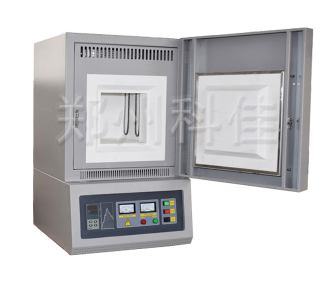
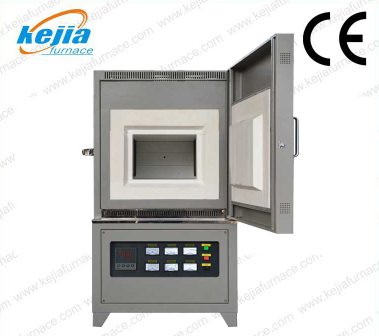
In the fields of new materials such as ceramic materials, powder metallurgy, new energy materials, and special metals, laboratory research and small-scale production have high requirements for heat treatment equipment. The parameters of standard high-temperature box furnaces are fixed, and it is often difficult to fully match special processes. Many companies directly purchase standard equipment for experimentation, which often leads to various problems such as sample oxidation, uneven temperature field, insufficient production capacity, and equipment inability to adapt to the site, affecting research and development progress and product yield. Therefore, more and more new material companies and research institutions are giving priority to non-standard customized high-temperature box furnaces.
1. Adapt to special process conditions to meet the needs of new material research and development
Special working conditions such as vacuum, inert protective gas, and reducing atmosphere are often used for sintering, annealing, and quenching heat treatment of new materials. Most of the commonly used standard box furnaces on the market only support heating in an air environment. The sealing structure and gas system have not been specifically treated, making it impossible to introduce multiple protective gases or achieve a high vacuum environment. Direct use can cause material oxidation and deterioration, resulting in invalid experimental data.
Non standard customization can be customized according to the material process, with targeted modifications to the sealing flange and furnace door structure, configured with multiple independent gas paths, flow control systems, and vacuum units. Whether it is nitrogen or argon protected sintering, or low vacuum or high vacuum annealing, matching designs can be made. For some easily corrosive materials, furnace materials and heating elements can also be adapted and selected to avoid equipment damage caused by gas corrosion at high temperatures, ensuring repeatability of experiments and stable production processes.
At the same time, there are significant differences in the requirements for heating and cooling rates in the development of new materials. Some materials require rapid heating and cooling, while standard furnaces have fixed heating and cooling rates. Customized furnaces can adjust power configuration and cooling structure to achieve the required heating and cooling curves for the process.
2. Furnace size and temperature field, matching sample specifications and production capacity
The furnace volume and internal dimensions of a standard high-temperature box furnace are fixed specifications. When facing irregular samples, large-sized workpieces, or small samples for large-scale experiments, it is easy to encounter embarrassing situations such as excessive waste of energy in the furnace or inability to fit the samples.
Customized high-temperature box furnaces can determine the effective working size of the furnace based on the actual size of the sample and the amount of material loaded per cycle, without having to accommodate standard models. More importantly, the uniformity of the temperature field is crucial. The sintering of new materials is highly sensitive to temperature differences, and if the temperature difference inside the furnace is too large, there will be significant differences in the performance of samples from the same batch. When customizing, the heating surface layout and insulation structure can be adjusted to optimize the constant temperature range, meet different temperature uniformity indicators such as ± 5 ℃ and ± 10 ℃, and ensure the consistency of heat treatment for the entire batch of samples.
During the laboratory research and development phase, small batch samples can be customized for a small desktop furnace; Switching to pilot production in the later stage can increase the furnace volume, achieve the continuity of equipment parameters from experiments to production, and reduce the cost of process re debugging.
3. Hardware and control system can be modified as needed to improve usage efficiency
The control system function of a standard box furnace is relatively basic, while new material experiments require storing a large number of process curves, recording temperature data, and in some scenarios, data export needs to be achieved by connecting to the upper computer. Customized models can upgrade intelligent touch screen temperature control instruments, expand the number of temperature control segments in multiple programs, increase data storage and record export functions, facilitate researchers to retain experimental data, and facilitate the review of process parameters.
At the same time, many laboratories and factories have limited installation space on site, with constraints on floor height and placement, and standard equipment dimensions may not be able to enter the site. Non standard customization can adjust the overall external dimensions of the equipment, the opening method of the furnace door, and choose different structures such as side opening and upward opening lifting furnace doors to adapt to on-site installation conditions. The safety module can also be added as needed, including over temperature protection, pressure alarm, exhaust gas treatment device, and safety upgrades for flammable and explosive atmosphere conditions to reduce experimental production risks.
4. Reduce post production waste and lower overall usage costs
Some customers purchase standard furnaces directly to save time, but after buying them, they find that they do not match the process and cannot be used directly. The difficulty of transformation is high, resulting in idle and wasteful equipment. In the short term, the purchase price of customized equipment is higher than that of standard models. However, from the perspective of long-term research and development and production, the equipment conforms to the process, reduces experimental failures and material scrap, and instead lowers overall costs.
Standard furnaces can only adjust parameters within a limited range, and many special processes cannot be achieved; Customized furnaces are designed around their own materials and processes to reduce the cost of later and secondary modifications. Heating elements and insulation layers are selected according to actual temperature and atmosphere, which can also extend the service life of vulnerable parts and reduce maintenance frequency.
5. Distinguish between research and development and production, flexibly connect with pilot scale production
The new materials industry generally goes through stages of laboratory trials, pilot testing, and mass production. Customize a small experimental box furnace during the small-scale trial stage, and explore and mature the sintering and annealing process; In the pilot stage, manufacturers can use the same temperature, atmosphere, and temperature control logic, enlarge the furnace size, avoid completely disconnecting the process conditions after replacing standard equipment, reduce repeated experiments, and shorten the landing cycle of new materials. This is an advantage that is difficult to achieve with general standardized equipment.
Summary
For the experimentation and production of new materials, the core value of non-standard customized high-temperature box furnaces is to accommodate the equipment to the process, rather than the process to accommodate the equipment. From the atmosphere vacuum system, furnace temperature field, control system, safety protection to the external structure, all can be designed as needed to solve the pain point of poor adaptability of standard furnaces.
When selecting and customizing, key parameters such as process temperature, atmosphere type, loading size, temperature field uniformity, and heating and cooling rate should be fully provided to the manufacturer to facilitate the production of a reasonable plan. For heat treatment process evaluation and equipment customization needs, you can contact professional electric furnace manufacturers for solutions and quotations.Click to learn more customized box furnaces! Or click on online customer service to learn more about product information!
Contact Information
E-mail: