English
 简体中文
简体中文 Français
 日本語
日本語 한국어
한국어 Português
 Русский
 Español




Tel Number
181-3719-5600
The selection of a small rotary tube furnace for laboratory use should comprehensively consider factors such as experimental requirements, equipment performance, operational convenience, and budget. Let’s take a detailed look at what to pay attention to when choosing a small rotary tube furnace for the laboratory!
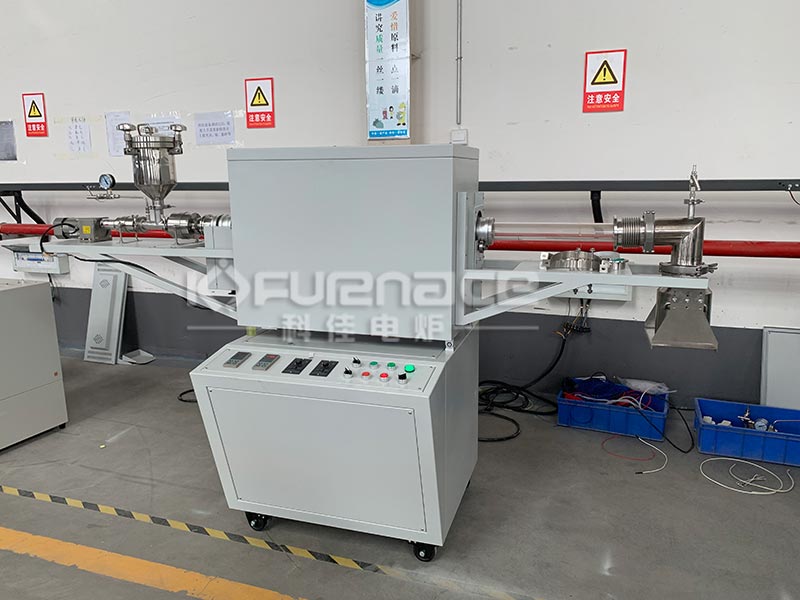
Experimental Two Gradient Rotating Tilt Tube Furnace (Click on the image to view product details)
1. Clarify experimental requirements
Temperature range:
Select the rated temperature of the tube furnace based on the maximum calcination temperature required for the experimental material. For example, if high-temperature ceramic materials need to be processed, equipment with a rated temperature of 1600 ℃ or above should be selected; If dealing with metal oxides, equipment at around 1200 ℃ may be sufficient.
Pay attention to the temperature uniformity of the equipment and ensure that the sample is uniformly heated within the constant temperature zone.
Heating rate:
Select an appropriate heating rate according to the experimental time requirements. Rapid heating can shorten the experimental cycle, but it is necessary to ensure that the equipment can withstand high-power heating.
Consider the thermal inertia of the equipment, which refers to the time required for the equipment to reach the set temperature from startup, as well as the fluctuation range after the temperature stabilizes.
Atmosphere control:
If the experiment needs to be conducted in a specific atmosphere (such as inert gas, reducing gas, or oxidizing gas), a tube furnace equipped with an atmosphere control system should be selected.
Check the sealing performance of the equipment to ensure a stable atmosphere and no leakage.
Rotation function:
The rotation function ensures that the sample is uniformly heated in the furnace, avoiding local overheating or uneven sintering.
Choose the appropriate rotation speed and stability based on the properties of the sample, such as powder, particles, or blocks.
2. Evaluate equipment performance
Heating element:
The resistance wire heating element is suitable for low-temperature (<1200 ℃) experiments and has a lower cost. Silicon carbide or MoSi2 heating elements are suitable for high-temperature (>1200 ℃) experiments, with high heating efficiency and good stability.
Consider the lifespan and replacement cost of heating elements.
Furnace tube material:
Quartz tubes are suitable for experiments below 1200 ℃, with good transparency and easy observation of samples.
Corundum tubes (alumina) can withstand higher temperatures (up to 1700 ℃), but at a higher cost.
Select the appropriate furnace tube material based on the experimental temperature and consider its chemical stability (such as reactivity with the sample).
Temperature zone design:
Single temperature zone tube furnace is suitable for experiments that do not require high temperature uniformity.
The multi zone tube furnace provides a longer constant temperature zone, suitable for experiments that require high temperature uniformity.
Select the appropriate length of the constant temperature zone based on the sample size and experimental requirements.
Sealing and atmosphere control:
Check the sealing performance of the equipment to ensure a stable atmosphere and no leakage.
If accurate control of atmosphere composition and flow rate is required, choose equipment equipped with quality flow meters and atmosphere control systems.
3. Consider the convenience and safety of operation
Operation interface:
Choose devices equipped with touch screens or digital control panels for setting parameters such as temperature, time, and rotation speed.
Consider the programming functions of the device, such as multi-stage heating programs, to adapt to complex experimental requirements.
safeguard:
Ensure that the equipment is equipped with safety devices such as over temperature protection and leakage protection.
Check the emergency stop button and fault alarm function of the equipment to ensure safe operation.
Maintenance and Cleaning:
Choose equipment with simple structure, easy disassembly and cleaning to reduce maintenance costs.
Consider the durability of the equipment, such as the lifespan of heating elements and furnace tubes.
4. Budget and cost-effectiveness
Equipment cost:
Select appropriate equipment models and configurations based on the budget range.
Note that equipment costs include not only the purchase price, but also operating costs (such as energy consumption, maintenance costs) and the cost of replacing parts.
cost performance:
On the premise of meeting experimental requirements, choose equipment with high cost-effectiveness.
Consider the long-term value of the device, such as whether it supports upgrading or expanding functionality.
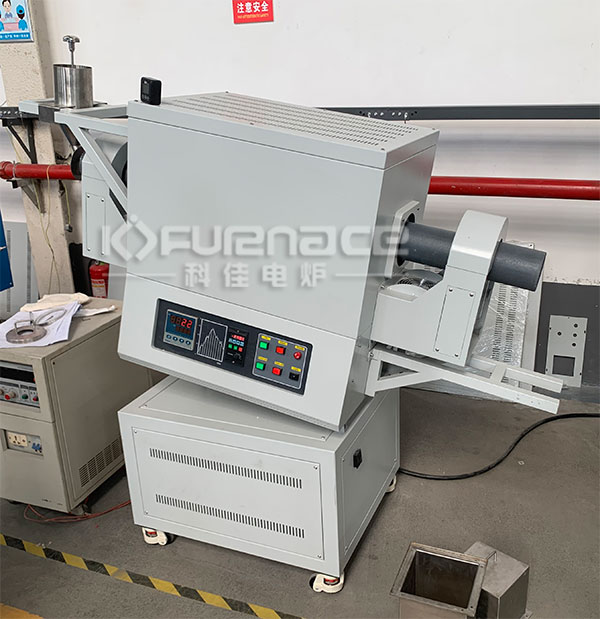
A commonly used experimental rotary tube furnace (click on the image to view product details)
5. Brand and after-sales service
Brand reputation:
Choose equipment produced by reputable brands and manufacturers to ensure stable and reliable quality and performance.
Refer to the evaluations and usage experience of other users to understand the actual performance of the device.
After-sales service
Ensure that the manufacturer provides comprehensive after-sales services, such as equipment installation, debugging, training, and maintenance.
Understand the manufacturer’s response time and problem-solving ability in order to promptly resolve equipment malfunctions.Click to learn more customized tube furnaces! Or click on online customer service to learn more about product information!
Contact Information
E-mail: