English
 简体中文
简体中文 Français
 日本語
日本語 한국어
한국어 Português
 Русский
 Español




Tel Number
181-3719-5600
When selecting an RTP (Rapid Thermal Processing) semiconductor rapid annealing furnace, it is necessary to comprehensively consider four core factors: process requirements, equipment performance, brand and after-sales service, as well as cost and cost-effectiveness. Additionally, evaluation should be conducted based on specific application scenarios. Let’s take a closer look!
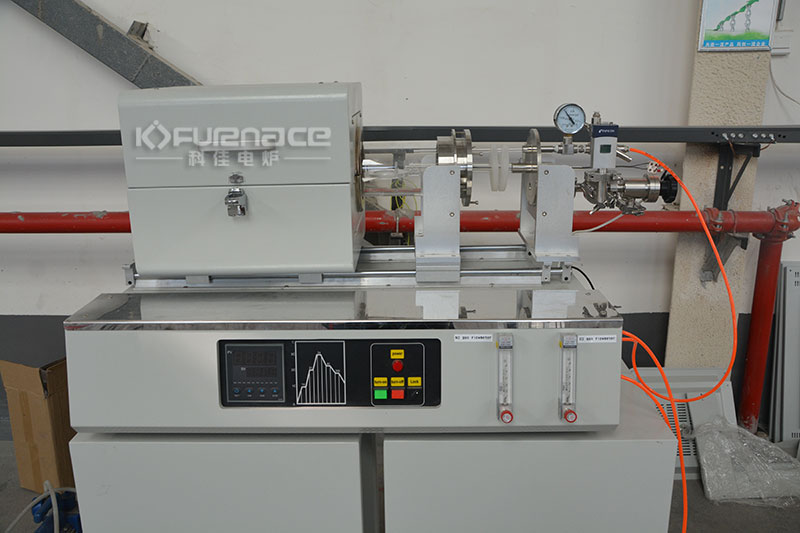
Commonly used RTP fast annealing furnace (click on the image to view product details)
1. Clarify process requirements
Material type and size
Determine the materials to be processed (such as semiconductors like silicon, gallium arsenide, gallium nitride, etc.) and their dimensions (such as 4-inch, 6-inch, 8-inch wafers), ensuring that the heating area and capacity of the equipment are matched.
Example: If a 12-inch wafer needs to be processed, an equipment with a heating zone length of ≥200mm should be selected.
Annealing purpose and parameters
Temperature range: Semiconductor annealing may require high temperatures above 1200℃, while metal processing may require lower temperatures.
Heating rate: Rapid annealing requires a high heating rate (such as ≥100°C/s), and it is necessary to confirm whether the equipment supports it.
Heat preservation and cooling rate: The need for short-term heat preservation (in seconds) or rapid cooling (such as air cooling or water cooling) should be clearly defined.
Atmosphere control: Whether a vacuum, inert gas (N₂, Ar), or reactive gas (O₂, NH₃) environment is required.
2. Core performance indicators
Heating method and temperature uniformity
Infrared lamp heating: suitable for semiconductor materials, featuring fast temperature rise (up to 300°C/s) and high temperature uniformity (within ±5°C).
Temperature uniformity: The temperature distribution difference within the furnace (such as ±1℃ to ±5℃) directly affects the annealing effect, so it is necessary to prioritize the selection of equipment with high uniformity.
Temperature control accuracy and stability
Utilizing PID control or fuzzy control algorithms, the accuracy needs to be within ±1℃, and support for multiple temperature control curves (heating-holding-cooling) is required.
cooling system
Active cooling methods: air cooling, water cooling, or gas cooling (inert gas injection). The cooling rate directly affects the microstructure of the material (such as the quenching effect of metals).
Cooling uniformity: Avoid material deformation or cracking caused by uneven cooling.
Vacuum and atmosphere control
Vacuum requirement: It is necessary to specify whether a high vacuum or low vacuum environment is required.
Gas supply: Multi-channel float flowmeter or mass flowmeter, supporting mixed gas supply system.
3. After-sales service
Confirm whether the supplier provides equipment installation, debugging, training, and technical support, and give priority to suppliers with a long warranty period (such as 1 year).
4. Cost-effectiveness
Avoid excessively pursuing high parameters, which may lead to cost wastage.
Pay attention to energy consumption indicators, and consider the electricity cost in continuous production scenarios.
A commonly used RTP rapid annealing furnace (click on the image to view product details)
5. Summary of selection steps
Requirements analysis: Clarify the materials, process parameters (temperature, time, atmosphere), sample size, and production volume.
Technical comparison: Select equipment that meets the temperature range, heating/cooling rate, and uniformity requirements.
Supplier evaluation: Request technical documentation, compare performance parameters with actual measured data (e.g., request the supplier to provide a temperature distribution test report).
Sample testing: Verify the effectiveness of the equipment through actual process testing (such as the electrical properties and surface morphology of the material after annealing).
Comprehensive decision-making: Select the optimal solution by combining performance, cost, and service considerations.Click to learn more RTP Tube Furnaces! Or click on online customer service to learn more about product information!
Contact Information
E-mail: