English
 简体中文
简体中文 Français
 日本語
日本語 한국어
한국어 Português
 Русский
 Español




Tel Number
181-3719-5600
Customizing a rotary furnace based on material characteristics requires targeted configuration of six core modules: temperature control, atmosphere management, furnace structure, transmission and speed, feeding and discharging system, and safety and environmental design. Let’s analyze them in detail below!
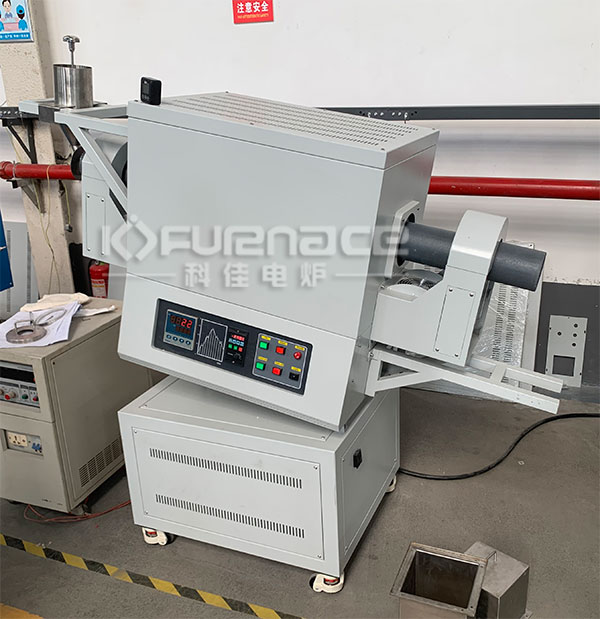
A commonly used experimental rotary tube furnace (click on the image to view product details)
1. Temperature control module
Maximum temperature and heating rate
High melting point materials (such as quartz sand and ceramic materials): A rotary furnace with a maximum temperature of ≥ 1600 ℃ should be selected, and graphite or molybdenum heating elements should be used to ensure high temperature stability.
Thermally sensitive materials (such as lithium positive and negative electrode materials): A segmented temperature control system should be equipped with a heating rate of ≤ 5 ℃/min to avoid material decomposition caused by thermal shock.
Case: When a lithium battery company customized a rotary furnace, it required temperature uniformity of ± 5 ℃, which was achieved by optimizing the layout of heating elements and adding thermocouple temperature measurement points.
cooling system
Materials that require rapid cooling (such as metal powders): equipped with an air-cooled+water-cooled composite system, the cooling rate can be adjusted to 10-50 ℃/min.
Materials that require slow cooling (such as glass): Use natural cooling or segmented cooling curves to prevent cracking.
2. Atmosphere management module
Atmosphere type and purity
Oxidative atmosphere (such as metal oxidation): When air or pure oxygen is introduced, flow meters and pressure sensors should be installed to ensure stable oxygen concentration.
Reductive atmosphere (such as carbon coating): Nitrogen+hydrogen or methane is introduced, and an online gas analyzer needs to be installed to monitor the hydrogen concentration in real time.
Vacuum environment (such as high-purity ceramic sintering): equipped with a combination of molecular pump and mechanical pump, with a maximum vacuum degree of ≤ 10 ⁻⁴ Pa.
Atmosphere circulation and sealing
Volatile materials (such as organic materials): Adopting a fully sealed structure, equipped with exhaust gas treatment system (such as activated carbon adsorption+condensation recovery).
Long cycle operation: Choose metal dynamic sealing or magnetic fluid sealing technology to reduce gas leakage rate.
3. Furnace structure module
Materials and refractory materials
Acidic materials (such as slag): The furnace lining is made of high alumina bricks or silicon carbide bricks, which improves corrosion resistance.
Alkaline materials (such as cement clinker): Use magnesium bricks or magnesium iron bricks to enhance their corrosion resistance.
Case: When customizing a rotary furnace in a cement plant, magnesium aluminum spinel bricks were used for lining, which extended the service life.
Size and inclination
Large grained materials (such as ore): The furnace diameter is enlarged, the inclination is adjusted to avoid material accumulation.
Fine powder materials (such as activated carbon): The length of the furnace body is shortened, the inclination is reduced, and the residence time is extended.
4. Transmission and speed module
Drive Type
Heavy duty materials (such as metal smelting): Choose a variable frequency motor+gear reducer to increase torque and avoid material blockage.
Lightweight materials (such as powder metallurgy): using chain transmission, cost reduction, and easier maintenance.
speed control
Materials that need to be thoroughly mixed (such as catalysts): The speed range is 5-15 rpm to ensure that the materials roll evenly.
Materials that require quick passage (such as dry raw materials): Increase the speed to 20-30 rpm to shorten the processing time.
5. Feeding and discharging system
feeding method
Materials prone to agglomeration (such as wet metallurgical slag): equipped with a spiral feeder and vibrating screen to prevent blockage.
High temperature materials (such as molten metal): hydraulic push rods are used for feeding, with a temperature resistance of ≥ 1200 ℃.
Discharge design
Continuous production: equipped with air lock valve and spiral discharge machine to achieve airtight discharge.
Intermittent production: using hydraulic flap valve, with adjustable discharge speed.
6. Safety and Environmental Design
safety protection
High pressure environment: Install safety valves and pressure alarm devices, and automatically release overpressure.
Environmental emissions
Dust containing exhaust gas: equipped with bag filter and wet desulfurization, with dust emission concentration exceeding the standard.
Organic waste gas: using incineration system to remove harmful waste gas.
Click to learn more customized tube furnaces! Or click on online customer service to learn more about product information!
Contact Information
E-mail: