English
 简体中文
简体中文 Français
 日本語
日本語 한국어
한국어 Português
 Русский
 Español




Tel Number
181-3719-5600
In the field of new material research and industrial heat treatment, the 1700 ℃ atmosphere furnace is a widely used medium to high temperature heating equipment. Thanks to the controllable atmosphere environment, stable temperature control accuracy, and sufficient high-temperature load capacity, it has now been extensively invested in university research laboratories, new material research institutes, fine powder processing plants, advanced ceramic production workshops, and metal heat treatment workshops.
Many customers who are new to high-temperature processes are not clear about which sintering, calcination, annealing, and synthesis processes are suitable for a 1700 degree Celsius atmosphere furnace. Below, we will comprehensively sort out the materials that can be processed, applicable processes, and process precautions from several directions, including advanced ceramics, high-temperature alloys, special powders, and other niche experimental materials, to facilitate everyone’s selection of equipment and planning of firing schemes.
1. What is a 1700 ℃ atmosphere furnace and what are its technological advantages?
The maximum working temperature of the 1700 degree atmosphere furnace can reach 1700 ℃, supporting the introduction of nitrogen, argon, oxygen, inert or reducing atmospheres, which can isolate air and prevent high-temperature oxidation of the sample.
Most mainstream furnaces use polycrystalline fiber insulation materials, which have fast heating speed and uniform insulation; Equipped with PID intelligent temperature control, supporting multi-stage temperature rise and fall programs, it can more accurately control the heating rate, insulation time, and cooling rate; The equipment is equipped with over temperature alarm, thermocouple circuit breaker protection, and is suitable for various heat treatment processes such as long-term constant temperature sintering, solid-state synthesis, degreasing, annealing, quenching, etc.
Compared to conventional atmosphere furnaces at 1200 ℃ and 1400 ℃, with a high temperature range of 1700 ℃, high-density inorganic materials can be densified and sintered, making it an essential processing equipment for many high-performance new materials.
2. Advanced ceramic materials (common firing categories in 1700 ℃ atmosphere furnace)
The sintering temperature of advanced structural ceramics and functional ceramics is generally high, with most of the dense sintering range concentrated between 1300-1650 ℃. The 1700 ℃ atmosphere furnace leaves sufficient temperature margin, resulting in higher density of sintered products. The following are common categories:
(1) Oxide ceramics
Alumina ceramics: high-purity corundum, wear-resistant alumina substrate, ceramic components;
Zirconia ceramics: stable zirconia, zirconia sensors, ceramic tool blanks;
Magnesium oxide, yttrium oxide, zinc oxide based functional ceramics, rare earth oxide ceramics.
Air or oxygen atmosphere is preferred for firing oxide ceramics, which can prevent blackening and phase defects caused by oxygen deficiency in the body.
(2) Non oxide special ceramics
Non oxide ceramics are afraid of high-temperature air oxidation and must be fired in an inert and reducing protective atmosphere
Silicon nitride ceramics: high-temperature resistant structural components, bearings, wear-resistant ceramic parts;
Silicon carbide ceramics: SiC sintered bodies, semiconductor substrates, corrosion-resistant ceramic components;
Aluminum nitride ceramics: high thermal conductivity aluminum nitride ceramic substrate, electronic packaging substrate;
Boride ceramics such as zirconium boride and titanium boride.
(3) Composite ceramics, ceramic based composite materials
Alumina zirconia composite ceramics, silicon carbide ceramic matrix composites, ceramic fiber bodies, porous ceramics, foam ceramics.
Suitable for completing rubber stripping, degreasing, and high-temperature dense sintering under nitrogen and argon atmospheres.
3. Heat treatment processing of various high-temperature alloys and metal materials
Many refractory alloys and powder metallurgy metal parts need to be heated under a protective atmosphere to isolate oxygen and prevent surface oxidation and peeling. The 1700 ℃ atmosphere furnace is suitable for the following metal materials:
Sintering of refractory metal bodies of molybdenum, tungsten, niobium, and tantalum;
Annealing treatment of nickel based and iron-based high-temperature alloy samples;
Heat treatment of hard alloy, tungsten cobalt alloy, and titanium alloy specimens;
High temperature test of precious metal alloy and platinum rhodium alloy samples.
The metal sintering process generally uses argon gas to protect the atmosphere, and some debonding and degreasing processes can use hydrogen gas reduction atmosphere.
4. Calcination and synthesis of special powder, nano powder and inorganic powder
Solid phase synthesis, high-temperature calcination, impurity removal, and crystal transformation of powder materials are one of the main uses of 1700 degree atmosphere furnaces, with high demand in scientific research and powder factories
High temperature modification of rare earth fluorescent powder, rare earth oxide powder, and lithium battery cathode precursor powder;
Calcination and purification of silicon carbide powder, boron nitride powder and alumina nano powder;
Solid phase synthesis of ceramic pigments, inorganic pigments, and high-temperature glazes;
Graphene precursor, carbon powder, and high-temperature modification of graphite powder;
High temperature activation of catalyst powder, molecular sieve, and porous adsorbent materials.
By controlling the heating curve and furnace atmosphere, the grain size of the powder can be controlled, impurities inside the powder can be removed, and the crystal structure can be promoted to complete the phase transition.
5. Other combustible experimental materials
In addition to the three mainstream materials mentioned above, university laboratories often use 1700 ℃ atmosphere furnaces to conduct various scientific research experiments:
Refractory body: corundum refractory brick, composite refractory sample sintering test;
Melting and crystallization treatment of glass raw materials and microcrystalline glass;
High temperature adhesive carbonization of carbon materials, composite materials, and resin based blanks;
Experiments on ore roasting, high-temperature phase transformation of minerals, and high-temperature calcination of metallurgical raw materials.
6. Choosing the appropriate atmosphere for different materials
Oxide ceramics, ordinary inorganic pigments: air, oxygen atmosphere;
Aluminum nitride, silicon nitride, boride ceramics: high-purity nitrogen gas;
Silicon carbide and carbon materials: argon gas isolates the air;
Sintering of metal alloys and hard alloys: argon gas, hydrogen gas can be used during the degreasing stage;
Nano powder easy to be oxidized: whole process inert gas protection.
7. Key points to pay attention to when choosing a 1700 ℃ atmosphere furnace
Furnace material: Polycrystalline fiber furnace heats up quickly and saves energy; The corrosion resistance of the corundum furnace chamber is stronger;
Atmosphere sealing performance, if reducing gas needs to be introduced, check the sealing of the furnace body;
Number of temperature control program segments, priority should be given to selecting 30 temperature control program segments for scientific research experiments;
Based on the fired materials, confirm whether corrosion-resistant furnace tubes, pressure control, and exhaust gas discharge devices are required.
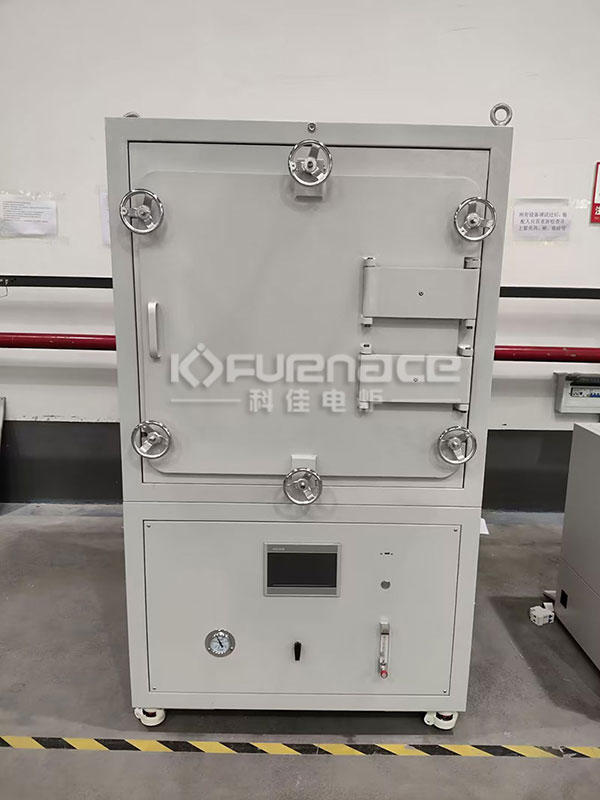
1600 ℃ Box type Atmosphere Furnace (Click on the picture to view product details)
Summary
Overall, the 1700 ℃ atmosphere furnace is suitable for sintering, calcination, annealing, and solid-state synthesis of the vast majority of advanced ceramics, refractory metal alloys, and special inorganic powders.
Choosing an oxidizing atmosphere for daily firing of oxide ceramics; Non oxide ceramics and metal bodies are protected by an inert atmosphere. As a manufacturer of high-temperature electric furnaces, we can customize tube atmosphere furnaces and box atmosphere furnaces. We offer non-standard processing equipment based on furnace volume, maximum temperature, and ventilation requirements. If you have any parameter or quotation needs, please feel free to consult.Click to learn more customized atmosphere furnaces! Or click on online customer service to learn more about product information!
Contact Information
E-mail: