English
 简体中文
简体中文 Français
 日本語
日本語 한국어
한국어 Português
 Русский
 Español




Tel Number
181-3719-5600
The sintering, calcination, and roasting processes of powder materials require high continuity of heat treatment equipment, uniformity of temperature field, and sealing of atmosphere. The continuous tube furnace relies on automatic feeding, continuous discharging, and multi zone gradient temperature control, making it suitable for the continuous sintering production of large quantities of powders such as lithium battery powder, ceramic powder, catalysts, rare earth materials, etc. Many procurement selections only focus on the highest temperature, ignoring residence time, furnace tube material, and sealed feeding system, resulting in poor consistency of finished products and frequent equipment failures. Below, we will combine the powder sintering process to sort out the key points for selecting the core of a continuous tube furnace, helping researchers and production personnel choose the right equipment.
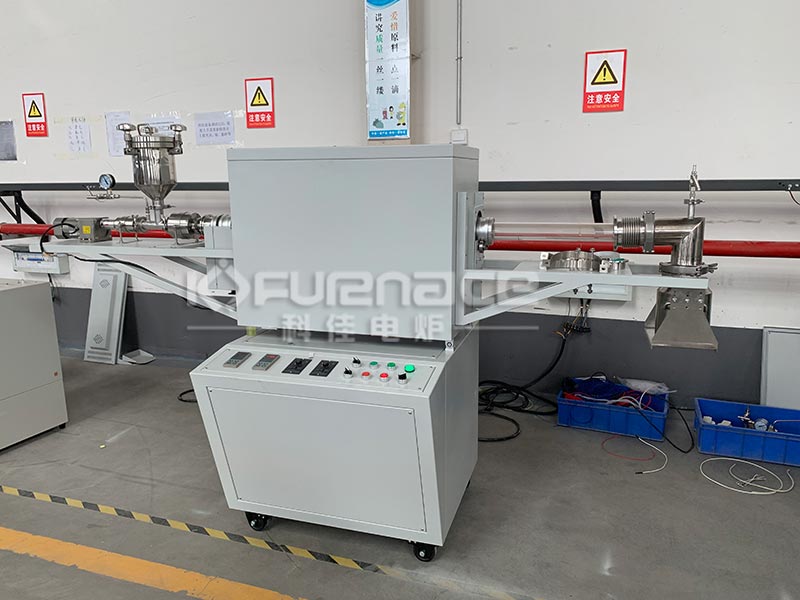
A commonly used 1600 ℃ experimental rotary tube furnace (click on the image to view product details)
1. Determine the process temperature and reserve a temperature margin
The first step in selecting a high-temperature electric furnace is to distinguish between “maximum temperature limit” and “long-term continuous use temperature”, which is the basis for selecting a high-temperature electric furnace.
The continuous tube furnace operates continuously for a long time without interruption, and the powder sintering insulation cycle is long. It is recommended to reserve a temperature of 50-100 ℃ for long-term use of the equipment compared to the actual process sintering temperature.
-Within 1100 ℃: quartz furnace tube or metal alloy tube can be selected, mostly used for low-temperature powder roasting;
-1200~1500 ℃: High purity corundum furnace tube, mostly sintered with ceramic and lithium battery powder;
-High temperature sintering above 1500 ℃: high-purity alumina and composite ceramic furnace tubes are selected, combined with silicon molybdenum rod heating elements.
>Attention: Do not use the maximum temperature of the equipment as the long-term operating temperature. Continuous 24-hour production will accelerate the aging of the heating element and shorten the service life of the equipment.
2. The design of temperature zone and the uniformity of temperature field directly affect the sintering quality of powder
Powder continuous sintering, the material enters from the feeding end and goes through preheating, high-temperature constant temperature, and slow cooling stages in sequence. “Independent temperature control in multiple temperature zones is the core advantage of continuous tube furnaces.
(1). Single temperature zone: suitable for simple low-temperature calcination, not suitable for gradient sintering process;
(2). Dual temperature zone/triple temperature zone: mainstream powder sintering configuration, independent PID temperature control in each zone, forming a gradient temperature field to achieve segmented processing of dehydration, rubber removal, and sintering;
(3). Uniformity of temperature field: It is required that the temperature difference in the constant temperature zone of the furnace be controlled within ± 5 ℃ to ensure that all powder materials are heated uniformly and avoid overburning, raw burning, and uneven crystal phase of products in the same batch.
Confirm temperature control system during selection: supports multi segment process curve storage, can automatically control heating, insulation, and cooling, and is convenient for solidification powder sintering process.
3. Furnace tube material, diameter, and powder residence time
The material of the continuous tube furnace tube must be suitable for the powder temperature, atmosphere, and chemical corrosiveness of the powder:
-Quartz tube: ≤ 1100 ℃, clean and free of impurities, suitable for high-purity powder, but brittle and not resistant to high temperature for long-term use;
-99 corundum tube: 1200~1600 ℃, resistant to high temperature, acid and alkali corrosion, commonly used for powder sintering;
-Alloy furnace tube: commonly used for powder treatment in medium temperature reducing atmosphere.
The inner diameter, length, rotation speed, and inclination angle of the furnace tube jointly determine the “residence time” of the powder in the furnace, which is a key parameter for powder sintering. Continuous tube furnaces are generally designed with variable frequency rotation and adjustable tilt angle. By adjusting the speed and tilt angle, the duration of powder residence in the high-temperature zone can be more accurately controlled. If the residence time of the powder is insufficient and the sintering is not sufficient; Prolonged residence time can easily cause coarse powder grains.
Suggestion for powder loading: The thickness of the powder layer should not be too large, and the furnace tube should rotate with the animal material rolling to avoid powder accumulation, agglomeration, and wall sticking.
4. Atmosphere and airtightness to prevent powder oxidation pollution
Many powder materials (lithium positive and negative electrodes, metal powders, nitride ceramics) are prone to oxidation at high temperatures and require inert protective atmospheres, reducing atmospheres, or vacuum environments.
Key selection confirmation:
(1). Gas supply system: Multiple gas channels can be used to introduce protective gases such as nitrogen and argon. Some processes require reducing gases such as hydrogen; Configure gas flow meters to control gas ratios;
(2). Sealing structure: The dynamic sealing of the inlet and outlet ends is a difficult point for continuous tube furnaces. Under continuous rotation conditions, if the sealing is not tight, air may backflow, causing powder oxidation;
(3). Exhaust gas treatment: Powder gelatinization and calcination will produce volatiles, and the equipment needs to be equipped with exhaust gas collection devices to prevent volatiles from polluting the furnace and blocking pipelines.
If the process requires vacuuming before ventilation, it is necessary to confirm the configuration of the equipment vacuum unit and the pressure holding capacity under high temperature conditions.
5. Feed and discharge system, matching production capacity requirements
The core of a continuous tube furnace is automated continuous feeding and discharging, with different feeding structures corresponding to different production capacities:
-Small scale/pilot scale: Micro screw feeding, adjustable feeding amount, suitable for laboratory research and development, small batch powder testing;
-Industrial mass production: High flow sealed screw feeding+continuous feeding tank, fully sealed to prevent powder from flying and coming into contact with air.
When selecting, determine the feeding specifications based on the hourly production capacity and confirm the anti blocking design of the feeding system. Powder absorbs moisture and is prone to sticking to walls at high temperatures. Without anti blocking structures, the production process is prone to material breakage, causing process interruptions.
6. Security protection, maintenance costs, and customization requirements
The industrial continuous tube furnace operates continuously for a long time, and safety protection is indispensable: functions such as over temperature power-off protection, gas pressure interlock, water leakage alarm, overload shutdown, etc.
Powder sintering also needs to consider later maintenance: whether it is convenient to replace furnace tubes, whether heating elements, seals, and feeding screws are easy to repair and replace.
If there are special processes, non-standard customization can be carried out: extending the constant temperature zone, adding multiple atmosphere interfaces, installing powder lifting structures, special feeding devices, etc.
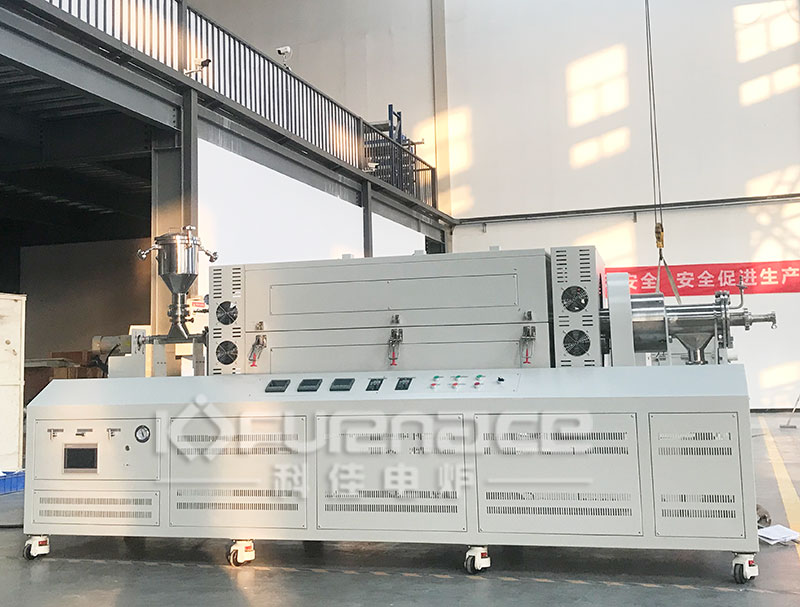
Multi temperature zone rotary tube furnace (click on the picture to view product details)
Summary
When choosing a continuous tube furnace for powder sintering, one should not only compare equipment prices. Prioritize matching the six core indicators of “process temperature, temperature zone structure, furnace tube material, powder residence time, atmosphere sealing performance, and feeding and discharging methods”. Small scale R&D has selected a trial type continuous tube furnace, while large-scale production has chosen a multi temperature zone industrial continuous tube furnace. Only by fully combining the characteristics of powder materials, hourly production capacity, and atmosphere process requirements can we select sintered powders with good consistency and reduce the production defect rate.Click to learn more customized tube furnaces! Or click on online customer service to learn more about product information!
prev: What are the key points to consider when selecting an experimental vertical tube furnace?
next: the latest article
Contact Information
E-mail: